Quote · Added 14 February 2026
The aim of art is to represent not the outward appearance of things, but their inward significance.
AristotlePoetics, Section 1448a
Filed underart·significance·representation
Quote · Added 14 February 2026
Filed underart·significance·representation
We tend to think of art as something decorative—a nice painting for the wall, a pretty photograph to scroll past. But this quote points at something deeper that we actually experience all the time: the best art makes you feel something true about the world that you couldn't quite access before. A portrait isn't successful because it looks photorealistic; it's successful when it captures something about what it actually feels like to be that person—the weariness, the defiance, the vulnerability hiding behind their expression.
This matters more than ever when we're drowning in perfect surfaces. Instagram shows us what things look like. Real art shows us what things mean. When you watch a film that haunts you, or read a poem that stops you cold, or hear a song that makes you cry, it's usually not because of technical perfection. It's because the artist managed to dig past the surface and present you with an inner truth—about love or loss or loneliness or joy—that suddenly feels unmistakably real.
The insight is that you don't need to be in a museum to experience this. Good design, honest storytelling, even a friend's handwritten note—these work when they skip past decoration and reach for what actually matters underneath.
d. 322
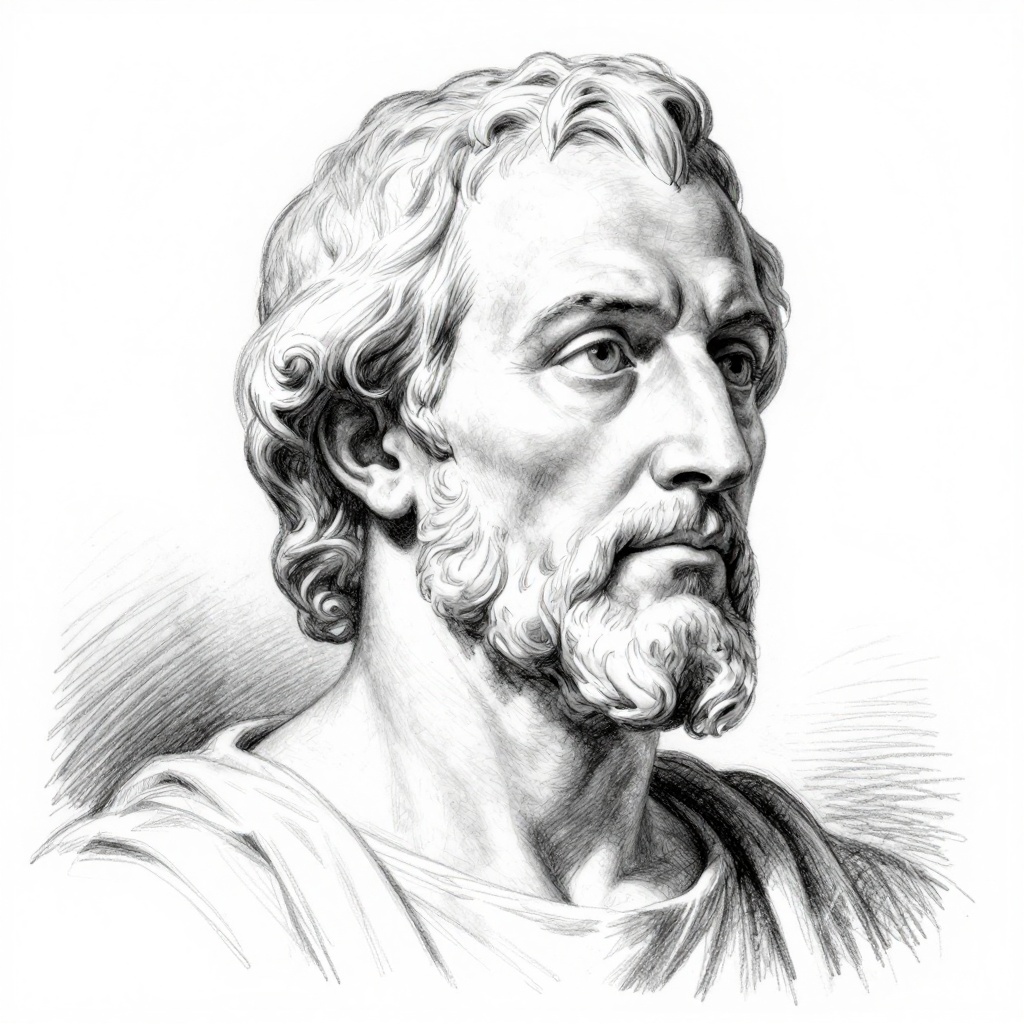
Aristotle was a Greek philosopher and polymath who lived from 384 to 322 BC. He is known for being one of the greatest thinkers in Western philosophy and for his contributions to a wide array of subjects including metaphysics, ethics, politics, biology, and logic. Aristotle was a student of Plato and the teacher of Alexander the Great.
Comments