Quote · Added 17 April 2026
Reading
AI generatedStrong ideas survive the laugh
We often treat humor and seriousness as opposites—jokes belong in one box, important ideas in another. But this insight flips that entirely. The best ideas can handle being mocked. A truly solid belief doesn't crumble when someone cracks a joke about it; in fact, it might even survive the joke better than a fragile one. Think about what happens when you defend something aggressively against any hint of lightheartedness. That defensiveness itself becomes suspicious.
The flip side matters just as much. Real wit isn't just about landing a punchline; it's about saying something true underneath the laugh. When a joke completely falls apart the moment you examine it, when all the humor evaporates if you ask "but why is that actually funny?"—that's a sign the wit was hollow. The best comedians and the wisest people share something: they can go back and forth between the laugh and the lesson without either one falling apart.
This is useful when you notice yourself either refusing to joke about something or defending a joke you made. Either reaction might signal something worth reconsidering—not because the idea or the joke is necessarily wrong, but because it might not be as solid as you thought.
The author
All 82 quotes by Aristotle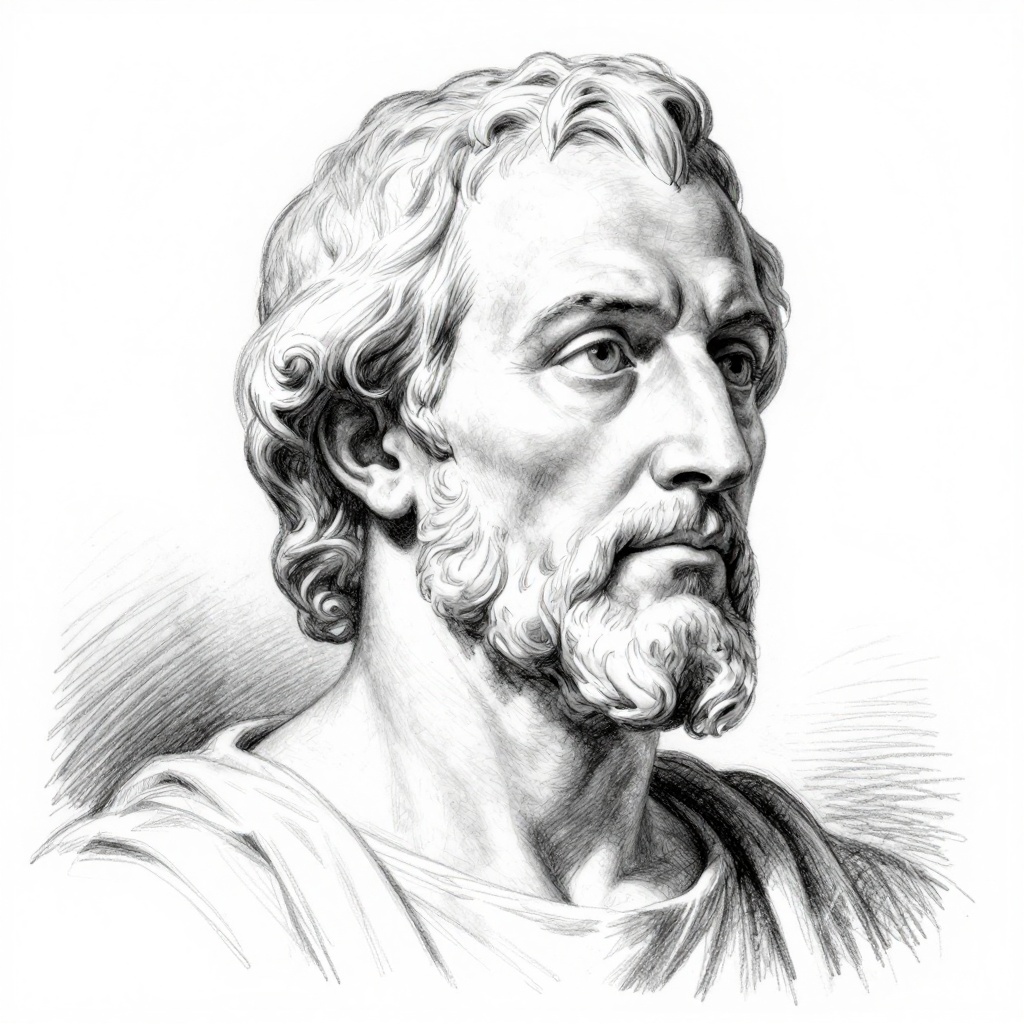
Aristotle
d. 322
Aristotle was a Greek philosopher and polymath who lived from 384 to 322 BC. He is known for being one of the greatest thinkers in Western philosophy and for his contributions to a wide array of subjects including metaphysics, ethics, politics, biology, and logic. Aristotle was a student of Plato and the teacher of Alexander the Great.
Also by Aristotle
It is a sacred duty to prefer the truth to one's friends.
Comments