Quote · Added 28 March 2026
We are what we repeatedly do. Excellence, then, is not an act, but a habit.
Filed underhabit·excellence·practice
Quote · Added 28 March 2026
Filed underhabit·excellence·practice
We like to think of excellence as something that happens in dramatic moments—the perfect presentation, the winning performance, the breakthrough achievement. But Aristotle's point cuts deeper: excellence is actually built in the unglamorous spaces between those moments. It's the daily practice, the small choice repeated a hundred times, the discipline nobody sees. Your keyboard skills don't come from one heroic typing session; they come from thousands of mundane keystrokes. Your kindness isn't proved by one grand gesture but by how you treat people when you're tired and irritable.
This matters because it flips where you should actually focus your energy. Instead of waiting to feel inspired or motivated, you're just establishing what you do. The musician who practices scales every morning, the runner who logs miles in bad weather, the person who listens carefully even when conversations bore them—they're not exceptional people doing exceptional things. They're ordinary people doing ordinary things consistently. That's the real secret.
The slightly uncomfortable part: this also means you can't really separate yourself from your habits. You can't claim to value health while never exercising, or say you're a thoughtful friend while scrolling through your phone during conversations. Your actual character is whatever you're willing to repeat.
d. 322
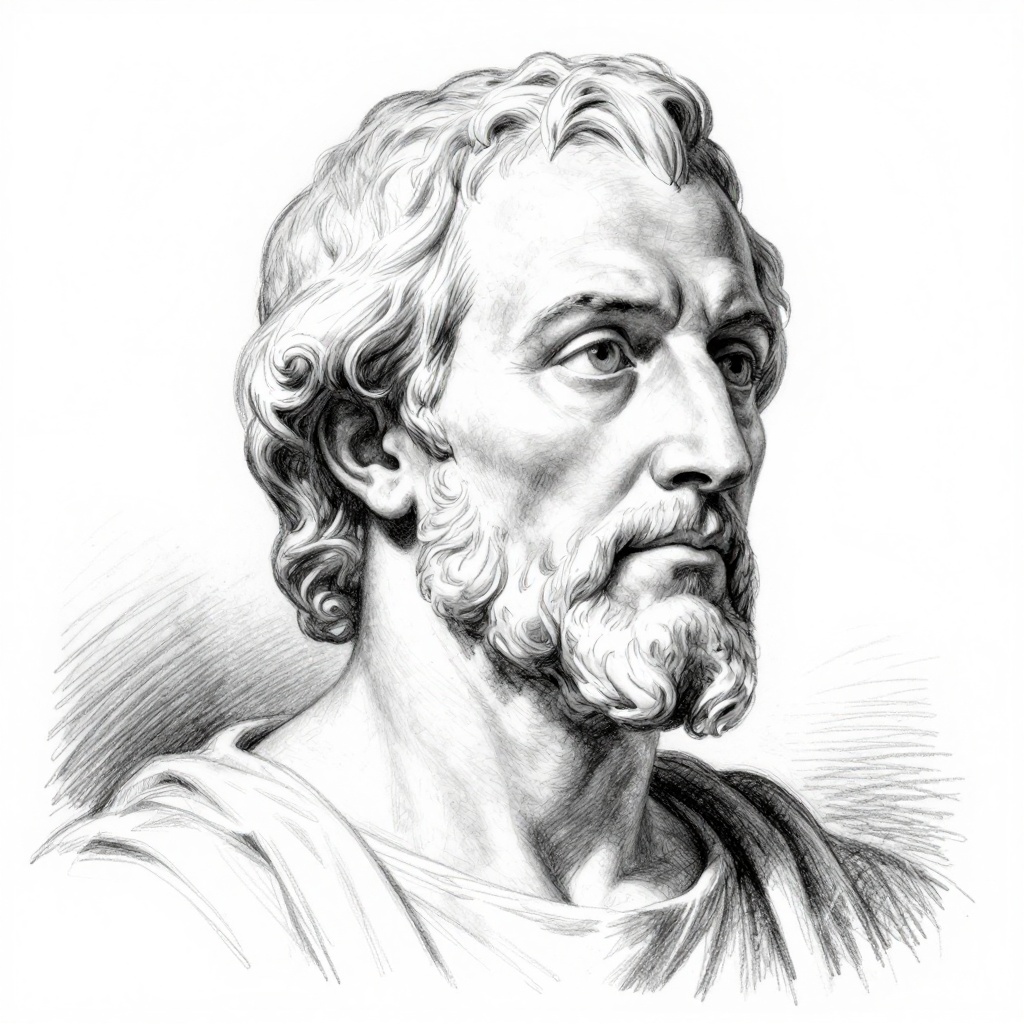
Aristotle was a Greek philosopher and polymath who lived from 384 to 322 BC. He is known for being one of the greatest thinkers in Western philosophy and for his contributions to a wide array of subjects including metaphysics, ethics, politics, biology, and logic. Aristotle was a student of Plato and the teacher of Alexander the Great.
Comments