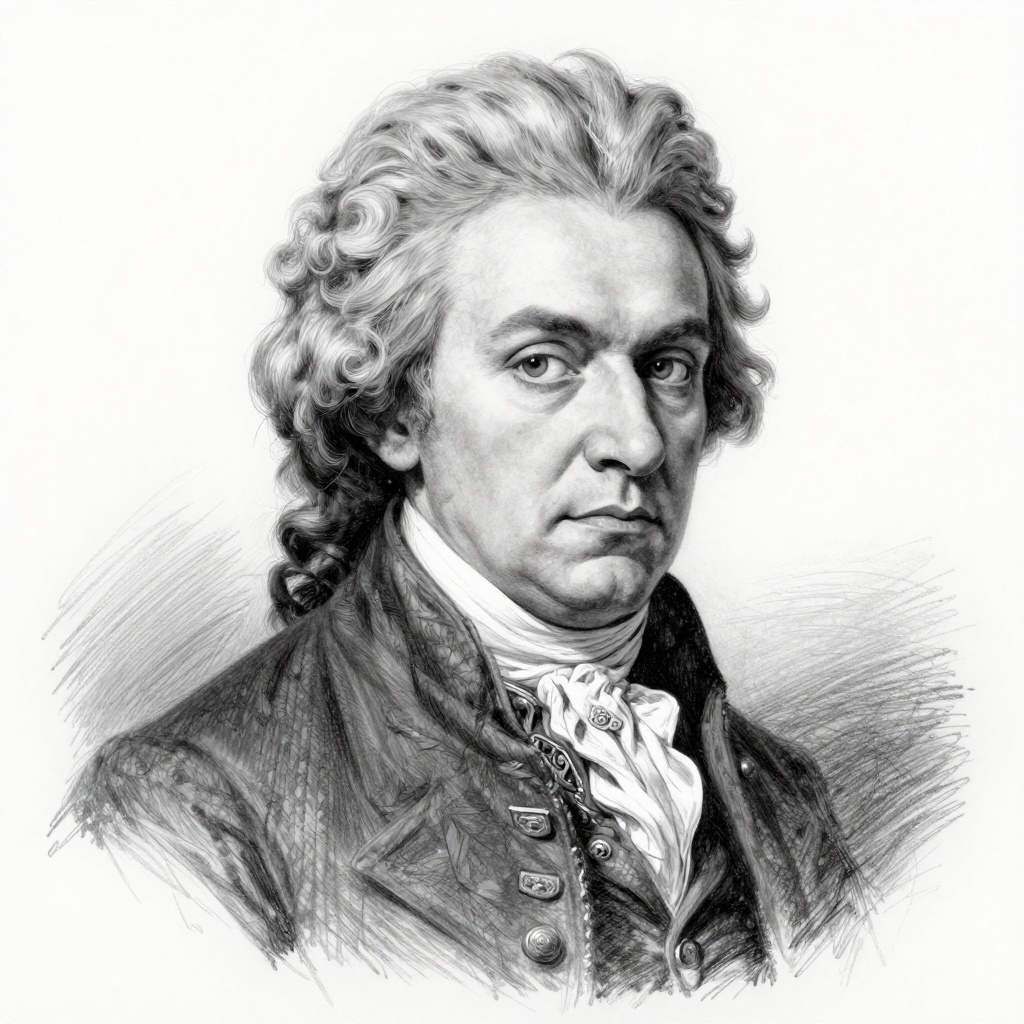
It is a great consolation for me to remember that the Lord, to whom I had drawn near in humble and child-like... — Wolfgang Amadeus Mozart

It is a great consolation for me to remember that the Lord, to whom I had drawn near in humble and child-like faith, has suffered and died for me, and that He will look on me in love and compassion.

Author: Wolfgang Amadeus Mozart

Insight: There's something deeply human about Mozart's impulse here, even if you don't share his particular faith. He's reaching for what we might call a "cosmic reassurance"—the idea that someone vastly more powerful than you has already seen your struggle and decided you matter anyway. That's not a small thing psychologically. When life feels overwhelming or when you've messed up badly, the thought that you're known and accepted despite everything can genuinely shift how you move through a day. What strikes me most is Mozart's emphasis on being "child-like" in his faith, not childish. He's not pretending the world is simple or that suffering doesn't exist. He lived through genuine hardship—illness, rejection, money troubles. But he's describing a kind of trust that coexists with realism, where you can hold both the weight of difficulty and the comfort of being cared for simultaneously. That balance—honest about struggle while anchored in something hopeful—is actually what people reach for in many different ways: whether through faith, relationships, or even art itself. The real takeaway might be this: we all need some version of this anchor, some practice of remembering that our struggles have been witnessed and matter. It doesn't have to be religious. It's just the antidote to feeling entirely alone with your problems.

Known and accepted anyway

It is a great consolation for me to remember that the Lord, to whom I had drawn near in humble and child-like faith, has suffered and died for me, and that He will look on me in love and compassion.

There's something deeply human about Mozart's impulse here, even if you don't share his particular faith. He's reaching for what we might call a "cosmic reassurance"—the idea that someone vastly more powerful than you has already seen your struggle and decided you matter anyway. That's not a small thing psychologically. When life feels overwhelming or when you've messed up badly, the thought that you're known and accepted despite everything can genuinely shift how you move through a day.

What strikes me most is Mozart's emphasis on being "child-like" in his faith, not childish. He's not pretending the world is simple or that suffering doesn't exist. He lived through genuine hardship—illness, rejection, money troubles. But he's describing a kind of trust that coexists with realism, where you can hold both the weight of difficulty and the comfort of being cared for simultaneously. That balance—honest about struggle while anchored in something hopeful—is actually what people reach for in many different ways: whether through faith, relationships, or even art itself.

The real takeaway might be this: we all need some version of this anchor, some practice of remembering that our struggles have been witnessed and matter. It doesn't have to be religious. It's just the antidote to feeling entirely alone with your problems.

AI generated

Comments

Sign in to leave a comment or reply to one.

Sign in

Wolfgang Amadeus Mozart

Wolfgang Amadeus Mozart (1756–1791) was an Austrian composer and prodigy who is widely regarded as one of the greatest composers in the history of Western music. Known for his operas, symphonies, piano concertos, and chamber music, Mozart created timeless works such as "The Magic Flute," "Piano Sonata No. 11," and "Symphony No. 40."

Graph

Related