Quote · Added 14 February 2026
I thank my God for graciously granting me the opportunity of learning that death is the key which unlocks the door to our true happiness.
Wolfgang Amadeus MozartLetter to Leopold Mozart, 4 April 1787
No ratings yet
Quote · Added 14 February 2026
Most of us spend our lives trying not to think about death, as though acknowledging it might jinx us. But Mozart stumbled onto something that ancient philosophers knew: the awareness of mortality isn't depressing—it's clarifying. When you genuinely accept that your time is finite, the petty anxieties that eat up your days start to lose their grip. That annoying email, the comparison to someone else's success, the grudge you've been nursing—they all shrink when you remember you won't be here forever to worry about them.
The tricky part is that this isn't something you figure out once and move on. It's something you have to relearn, almost accidentally, in quiet moments. You notice it when you're with someone you love and time suddenly feels precious. You feel it after a close call or a scare. The key Mozart describes isn't about becoming morbid or reckless. It's about understanding that our true happiness doesn't come from accumulating more or proving something to someone—it comes from being awake to what's actually in front of us right now, while we still have it.
1756–1791·lived 35 years
Wolfgang Amadeus Mozart (1756–1791) was an Austrian composer and prodigy who is widely regarded as one of the greatest composers in the history of Western music. Known for his operas, symphonies, piano concertos, and chamber music, Mozart created timeless works such as "The Magic Flute," "Piano Sonata No. 11," and "Symphony No. 40."
Also by Wolfgang Amadeus Mozart
The music is not in the notes, but in the silence between.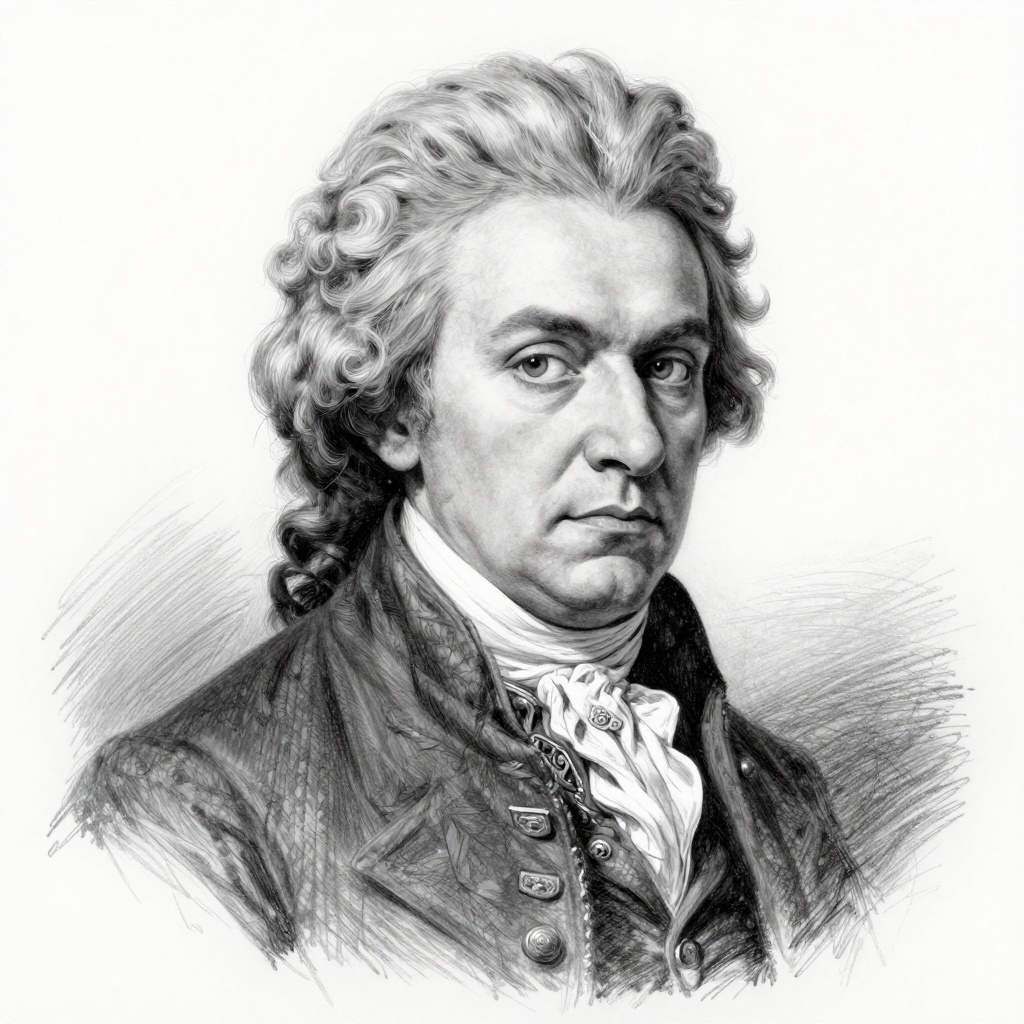
Comments