Quote · Added 7 July 2026
In the absence of any other proof, the thumb alone would convince me of God's existence.
No ratings yet
Quote · Added 7 July 2026
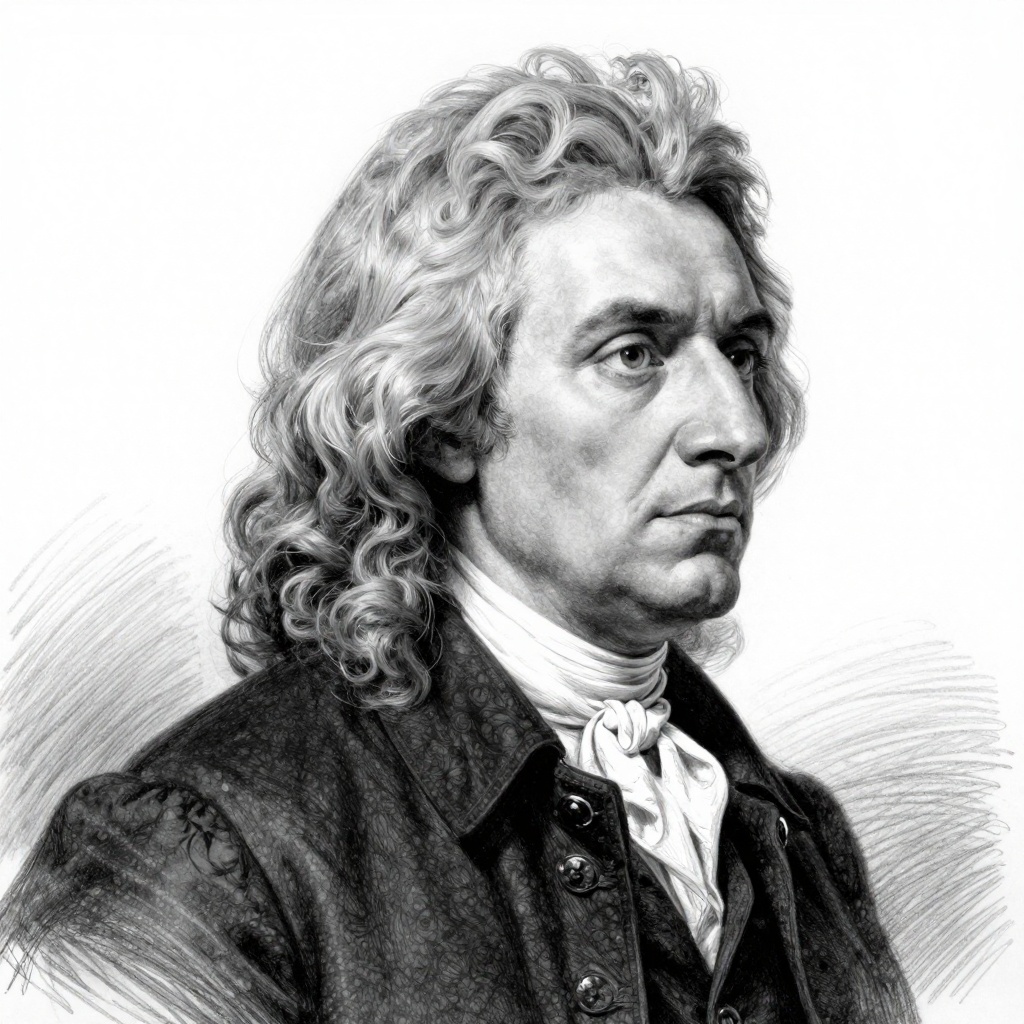
There's something oddly grounding about this image—Newton, one of history's greatest minds, pointing to his thumb as evidence of design. He's not talking about lightning bolts or miracles. He's talking about the sheer engineering of a body part so ordinary that most of us never think about it.
The counterintuitive part: Newton isn't making a naive argument. He's noticed something real. Your thumb's opposable grip, the way it cooperates with your fingers, how it lets you hold a pen, grip a rope, or comfort a child—it's genuinely hard to explain as random. This isn't religion versus science; it's a scientist genuinely struck by complexity that seems to point somewhere. The quote resonates today because we live in an age of optimization, where engineers copy nature constantly (velcro mimics seeds, airfoil designs copy birds). We understand design when we see it.
The tension worth sitting with: recognizing intricate order in the world doesn't automatically settle the God question. But it should humble us. Whether you land on design, evolution, or both, the real insight is that paying attention to how things actually work—even small things—can feel like evidence of something, if we stop long enough to notice.
1643–1727·lived 84 years
Isaac Newton (1643–1727) was an English mathematician, physicist, and astronomer, widely recognized for formulating the laws of motion and universal gravitation. His work laid the foundation for classical mechanics and greatly advanced our understanding of the natural world.
Comments