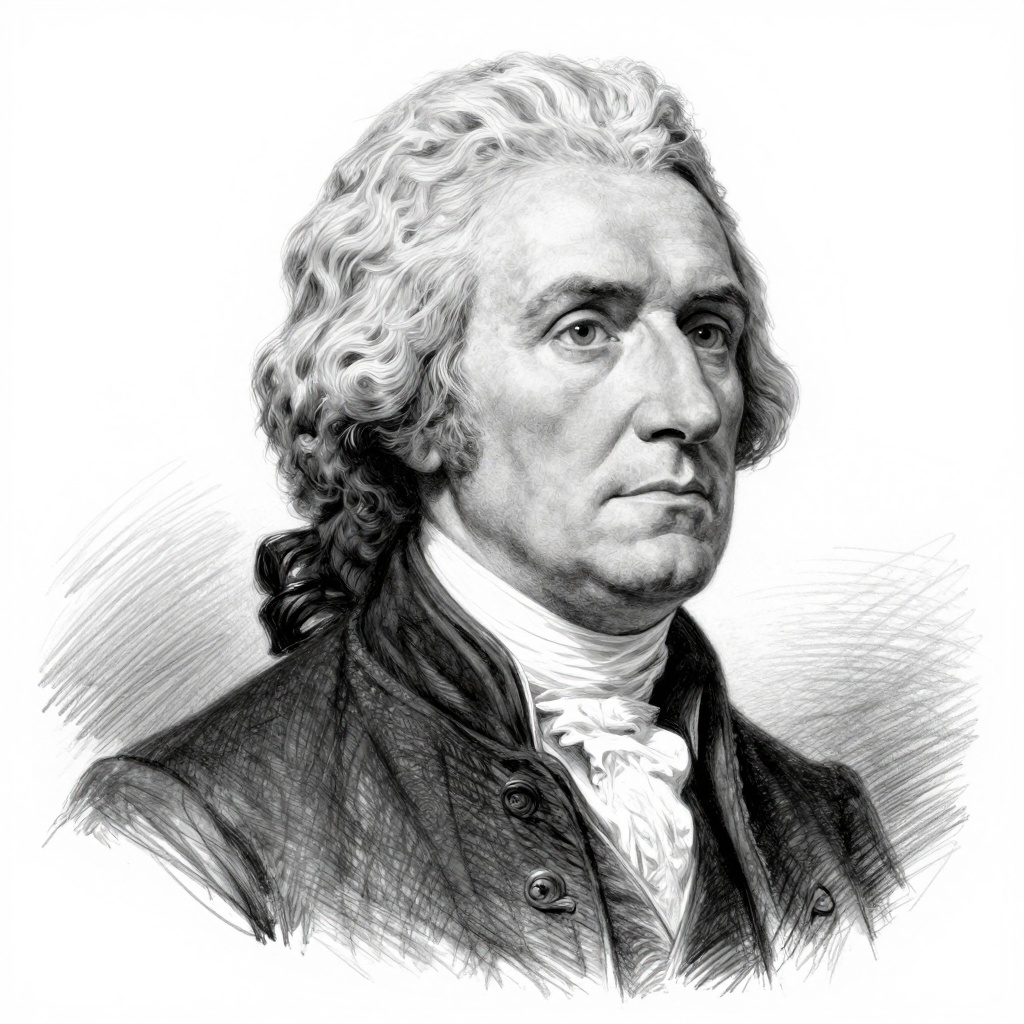
We hold these truths to be self-evident: that all men are created equal; that they are endowed by their Creato... — Thomas Jefferson

We hold these truths to be self-evident: that all men are created equal; that they are endowed by their Creator with certain unalienable rights; that among these are life, liberty, and the pursuit of happiness.

Author: Thomas Jefferson

Insight: This sentence sits at the heart of why we still believe certain things are worth fighting for—but here's the catch: Jefferson wrote it knowing full well he didn't actually live by it. That gap between the ideal and the reality is exactly what makes it powerful and why it keeps mattering. The real genius isn't the flowery language. It's that he anchored these rights not in government permission or popular vote, but in something supposedly prior to all that—something "self-evident" and beyond anyone's authority to revoke. He was building an argument that you don't need to earn your basic humanity. It's already yours. That's radical, and it still haunts us whenever we see someone denied dignity, freedom, or basic opportunity. We feel the contradiction because we know what he was claiming should be true. What's tricky about this quote now is that we often treat these rights as settled questions when they're actually still being negotiated in real time. Every conversation about who deserves protection, whose freedoms matter, whose pursuit of happiness gets blocked by circumstance or prejudice—that's the Declaration trying to do its work. It's not a finish line. It's more like a north star that keeps pulling us back toward what we said we believed.

The ideal we're still chasing

We hold these truths to be self-evident: that all men are created equal; that they are endowed by their Creator with certain unalienable rights; that among these are life, liberty, and the pursuit of happiness.

This sentence sits at the heart of why we still believe certain things are worth fighting for—but here's the catch: Jefferson wrote it knowing full well he didn't actually live by it. That gap between the ideal and the reality is exactly what makes it powerful and why it keeps mattering.

The real genius isn't the flowery language. It's that he anchored these rights not in government permission or popular vote, but in something supposedly prior to all that—something "self-evident" and beyond anyone's authority to revoke. He was building an argument that you don't need to earn your basic humanity. It's already yours. That's radical, and it still haunts us whenever we see someone denied dignity, freedom, or basic opportunity. We feel the contradiction because we know what he was claiming should be true.

What's tricky about this quote now is that we often treat these rights as settled questions when they're actually still being negotiated in real time. Every conversation about who deserves protection, whose freedoms matter, whose pursuit of happiness gets blocked by circumstance or prejudice—that's the Declaration trying to do its work. It's not a finish line. It's more like a north star that keeps pulling us back toward what we said we believed.

AI generated

Comments

Sign in to leave a comment or reply to one.

Sign in

Thomas Jefferson

Thomas Jefferson was an American Founding Father who served as the third President of the United States from 1801 to 1809. He is best known for being the primary author of the Declaration of Independence and for his advocacy of democracy, republicanism, and individual rights. Jefferson also founded the University of Virginia and was a prominent architect, inventor, and philosopher.

Graph

Related