Quote · Added 14 February 2026
What white man can say I never stole his land or a penny of his money? Yet they say that I am a thief.
Sitting BullSpeech, 1890
No ratings yet
Quote · Added 14 February 2026
There's something searingly honest in how Sitting Bull flips the script on who gets to call whom a thief. He's pointing at something that still shapes our world: the way the stronger party writes the story. The people who took everything—entire continents, resources, futures—got to label him criminal for resisting. We see this pattern everywhere, from how history books frame colonization to how modern power dynamics still work. The person with less gets blamed while the system that dispossessed them gets called natural or inevitable.
What makes this thought sting is how it exposes the gap between law and justice. Technically, Sitting Bull might have been guilty of something in the eyes of the courts that occupied his land. But those courts were tools of the theft itself. We live with versions of this contradiction daily—when rules are stacked, following them can mean accepting injustice, and breaking them can mean you're called the problem. It's a reminder that whenever someone in power calls someone else a criminal, it's worth asking: who gets to decide what counts as stealing, and from whose perspective?
1831–1890·lived 59 years
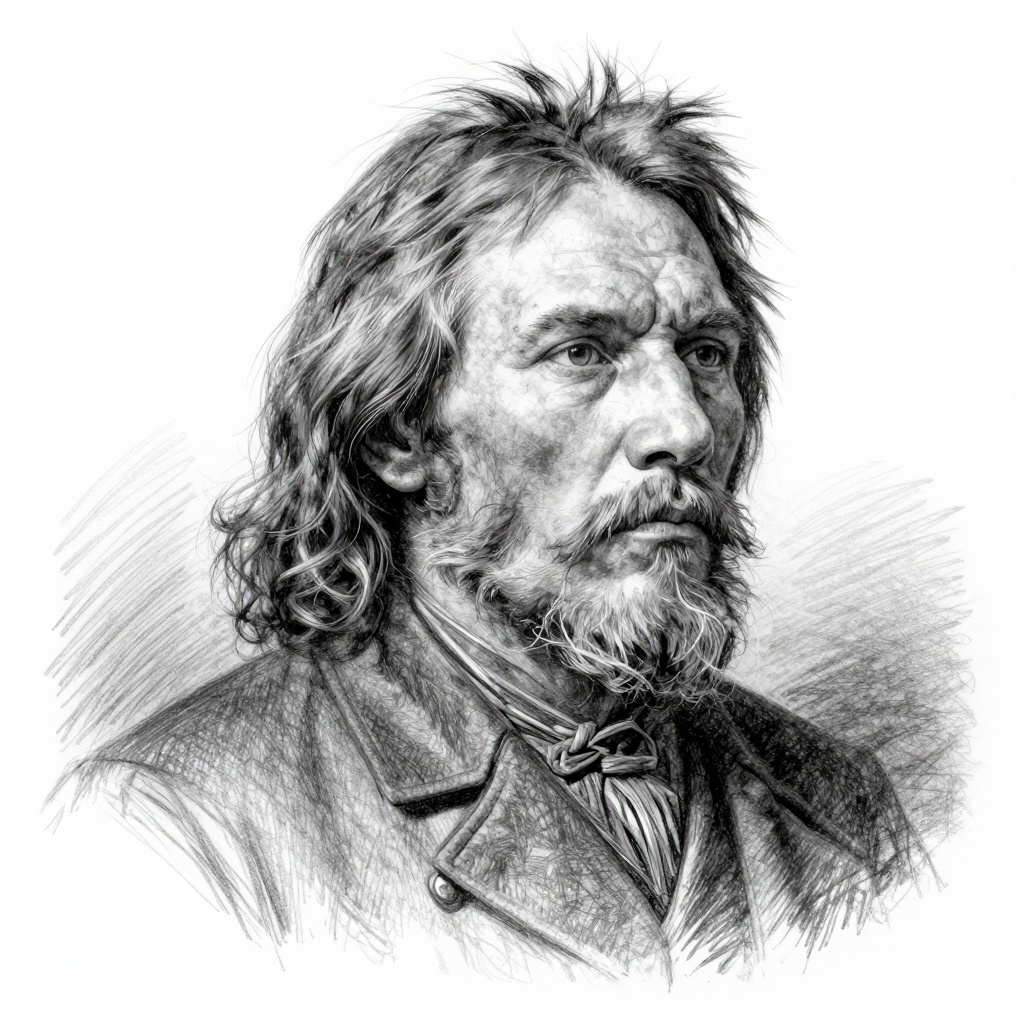
Sitting Bull (c. 1831-1890) was a Hunkpapa Lakota Sioux leader and medicine man known for his role in resisting U.S. government policies and military actions against Native American tribes. He is best remembered for his leadership during the Sioux Wars and his crucial role in the victory at the Battle of Little Bighorn in 1876. Sitting Bull was also a symbol of Native American resilience and sovereignty, later touring with Buffalo Bill's Wild West show before his death.
Comments