Quote · Added 14 February 2026
We failed, but in the good providence of God apparent failure often proves a blessing.
Robert E. LeeLetter to his son, 1866
No ratings yet
Filed underfailure·providence·blessing
Quote · Added 14 February 2026
Filed underfailure·providence·blessing
Failure stings. We feel it as definitive, as proof we're not good enough. But Lee's observation captures something many of us eventually notice: the detours forced on us by disappointment often lead somewhere better than we planned. The job we didn't get opens a door we wouldn't have walked through. The relationship that fell apart made space for something healthier. The project that flopped taught us something crucial that success would have hidden.
The tricky part is that we can't know this while we're in it. You can't feel grateful for a failure the moment it happens. What Lee's really saying is worth sitting with anyway: when you look back across enough of your life, you see a pattern. The things that felt like dead ends weren't. They were redirects. This doesn't mean every failure carries hidden blessing, or that we should be passive about our mistakes. But it does suggest that staying open to what a failure might teach us, or where it might push us next, is a form of wisdom. The apparent dead end might just be a bend in the road we couldn't see from where we were standing.
1807–1870·lived 63 years
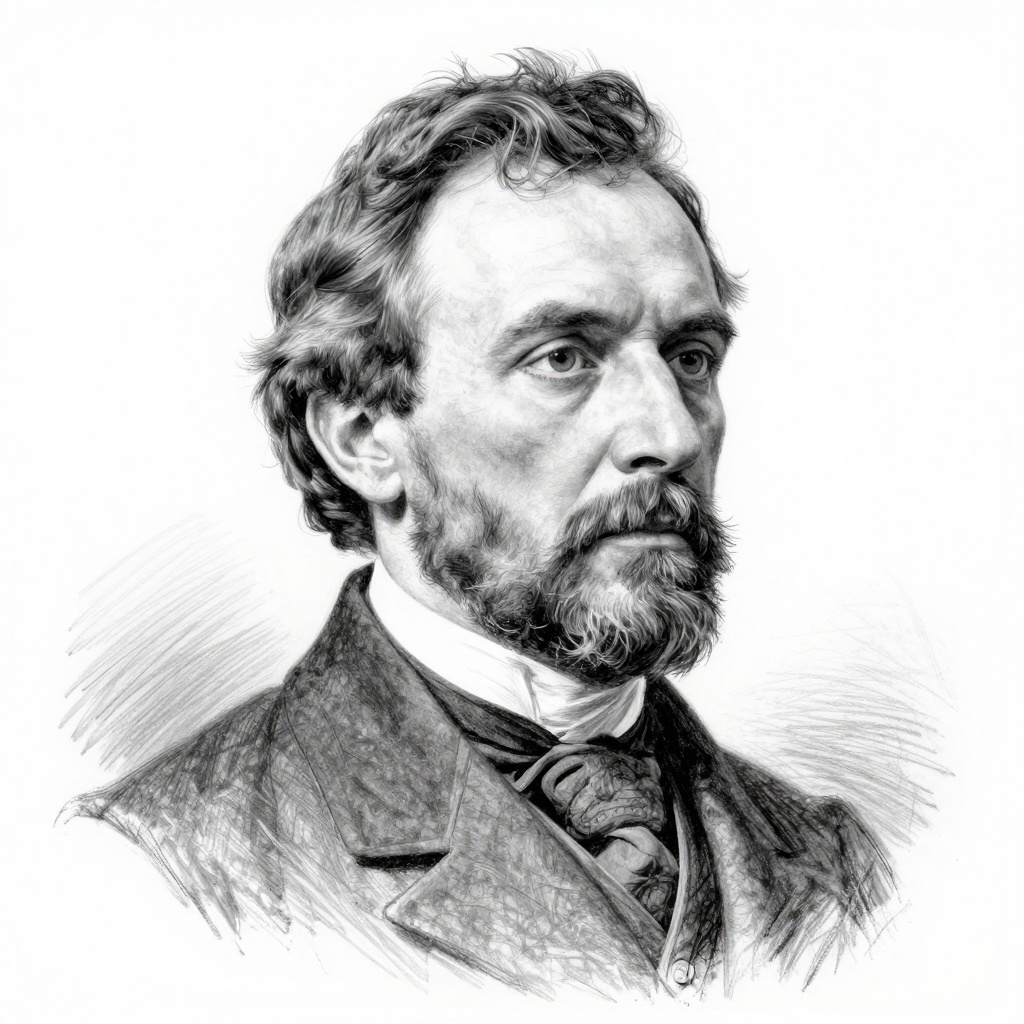
Robert E. Lee was a Confederate general during the American Civil War, best known for his leadership of the Army of Northern Virginia. Born on January 19, 1807, in Stratford Hall, Virginia, he gained a reputation for military strategy and tactics, particularly during battles such as Gettysburg and Antietam. After the war, Lee became a symbol of the South’s Confederate legacy and served as president of Washington College, now Washington and Lee University, until his death in 1870.
Comments