Quote · Added 19 February 2026
Men are not disturbed by things, but the view they take of things.
Filed underperception·mindset·disturbance
Quote · Added 19 February 2026
Filed underperception·mindset·disturbance
We blame our circumstances for making us miserable, but Epictetus points to something harder to swallow: it's often our interpretation of events, not the events themselves, that creates our suffering. Two people can experience the same setback—a missed promotion, a critical comment, a canceled plan—and one walks away shrugging while the other spirals. The difference isn't the thing itself. It's the story they tell about what it means.
This matters most when we're stuck. When you catch yourself thinking "this always happens to me" or "I'm terrible at this," you're not just observing reality—you're actively constructing a prison out of perspective. The practical insight here is that you have more control than you feel. You can't always change what happens to you, but you genuinely can shift how you frame it. That's not toxic positivity; it's recognizing where your actual power lives.
The tricky part is that our interpretations feel like facts. They don't feel like choices. But noticing the gap between the raw event and the meaning you've attached to it is where freedom starts. It's the difference between "I failed" and "I'm a failure"—one is information, the other is a verdict. Learning to catch that difference is one of the most underrated skills for staying sane.
50–135·lived 85 years
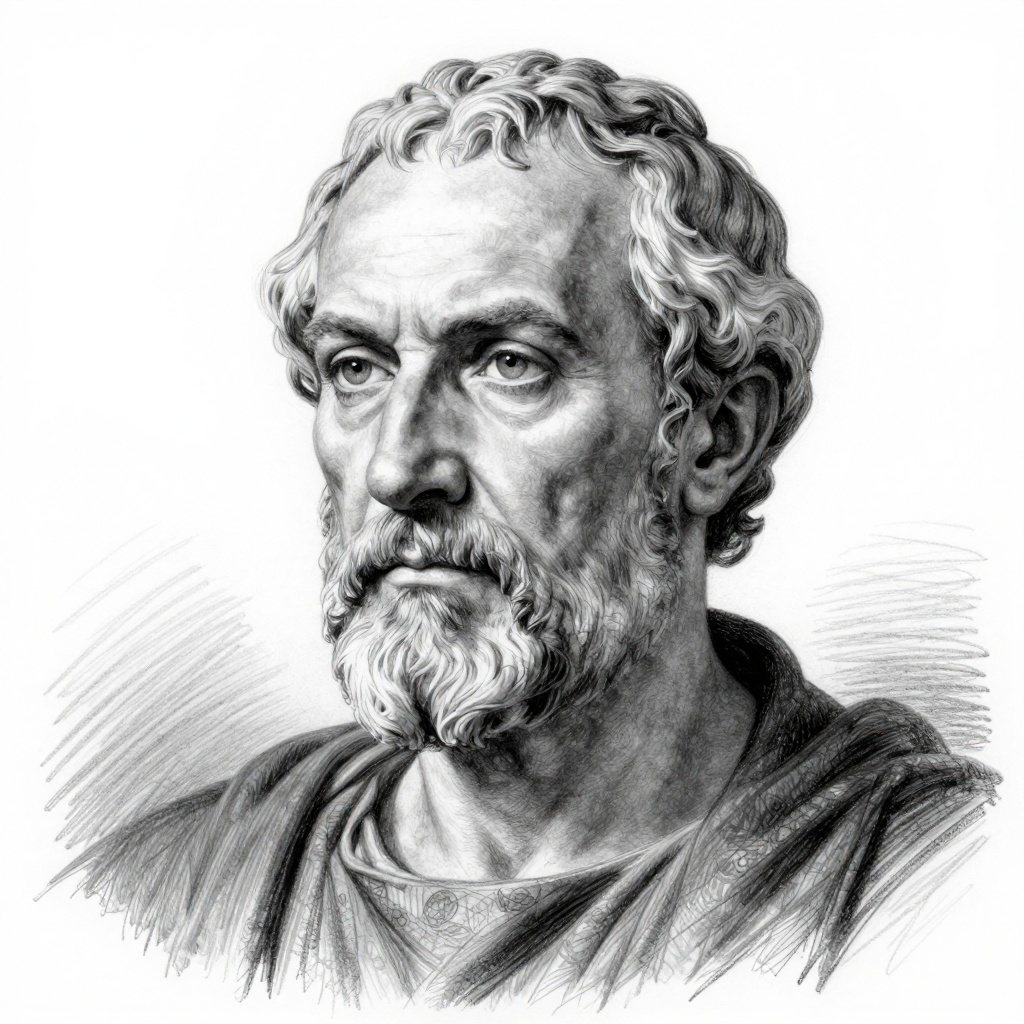
Epictetus was a Greek philosopher born around 50 AD. He was known for his teachings on Stoicism, emphasizing personal ethics, self-control, and resilience in the face of adversity. Epictetus's lectures were compiled by his student Arrian into the "Discourses," which have had a lasting impact on Western philosophy.
Comments