Quote · Added 3 October 2023
It is the supreme art of the teacher to awaken joy in creative expression and knowledge.
Albert EinsteinThe Art of Teaching, Pasadena City College dedication plaque, 1931
No ratings yet
Filed underteacher·joy·creativity
Quote · Added 3 October 2023
Filed underteacher·joy·creativity
Teaching gets reduced to so many things it isn't: transferring information, preparing for tests, managing a classroom. But watch someone genuinely teach, and you notice something else entirely—they're creating permission. Permission to wonder, to try something that might fail, to care about understanding rather than just getting the right answer. That spark of joy Einstein mentions isn't decoration. It's the actual fuel that makes learning stick.
The tricky part is that joy in learning can't be faked or forced. You can't mandate enthusiasm from a student sitting in the back row, any more than you can script genuine curiosity. What teachers actually do—the real art—is remove obstacles to that joy. They show vulnerability about what they don't know. They ask questions instead of just answering them. They create space where a half-baked idea isn't embarrassing but interesting. This applies whether you're in a classroom or mentoring someone at work, teaching your kid something new, or even learning something yourself.
The deepest part of Einstein's point is this: the goal was never the information. Information is everywhere now, free and unlimited. What's rare is the experience of feeling smart, capable, and alive while discovering something. That experience shapes how people see themselves and what they think is possible.
1879–1955·lived 76 years
Albert Einstein was a renowned theoretical physicist known for developing the theory of relativity, one of the two pillars of modern physics. He is best known for his mass-energy equivalence formula E=mc^2 and was awarded the Nobel Prize in Physics in 1921 for his explanation of the photoelectric effect.
Also by Albert Einstein
God does not play dice with the universe.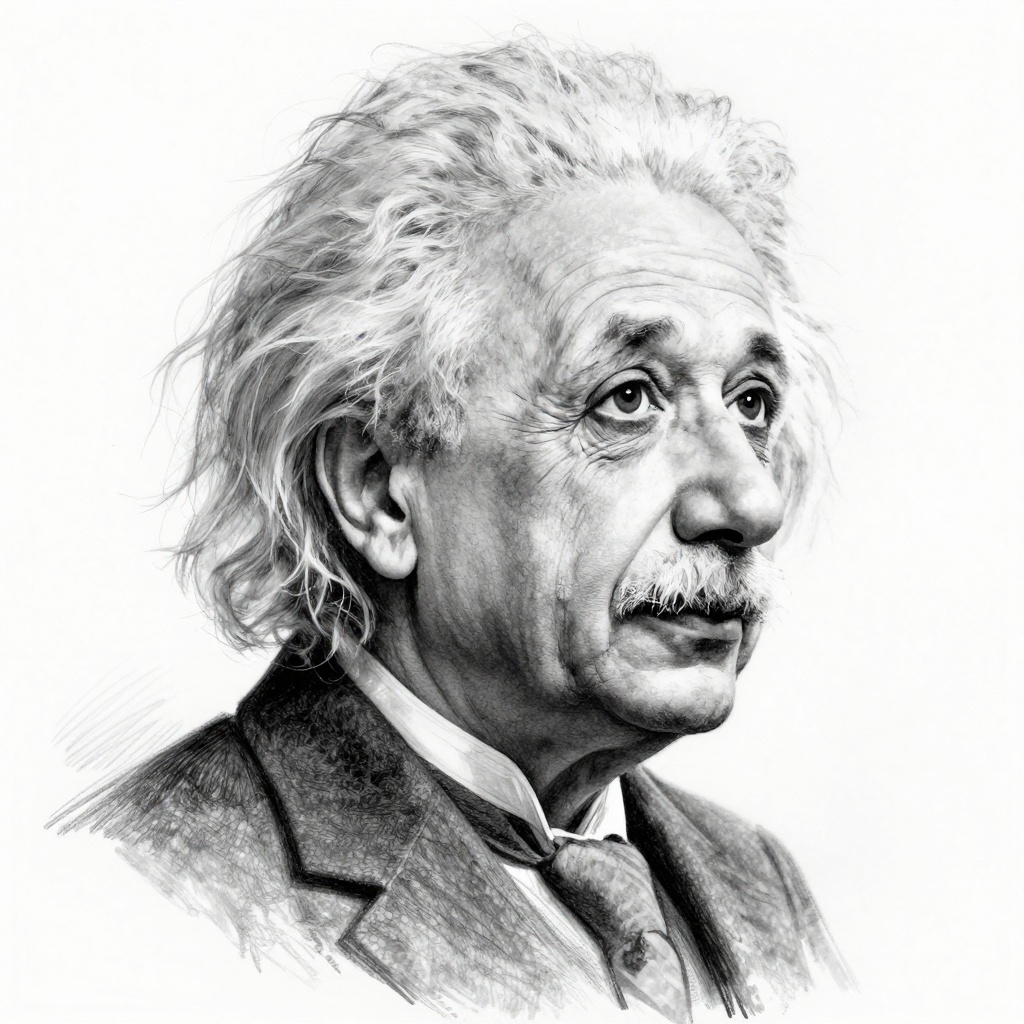
Comments