Quote · Added 2 April 2026
Bureaucracy is the death of all sound work.
No ratings yet
Filed underbureaucracy·work·efficiency
Quote · Added 2 April 2026
Filed underbureaucracy·work·efficiency
We've all felt it: the moment a good idea gets tangled in process. You want to solve a problem quickly, but first you need approval from three departments, each with their own forms and timelines. By the time you get clearance, the problem has evolved or someone's lost interest. Einstein wasn't just complaining abstractly—he was describing something real about how rigid systems strangle the actual work.
The tricky part is that bureaucracy usually starts with good intentions. Someone creates a rule to prevent mistakes or ensure fairness, and it works fine at first. But then it calcifies. People follow the procedure without asking why it exists anymore. The system becomes more important than the outcome it was designed to protect. This happens in workplaces, schools, even families—anywhere someone decides that how you do something matters more than what you're actually trying to accomplish.
The counterintuitive angle: a little structure isn't the problem. It's when process becomes disconnected from purpose that things die. The most creative people aren't usually those who reject all guidelines; they're the ones who understand which rules actually serve the work and which ones just serve themselves. The question isn't whether to have systems, but whether your systems are still in service of what actually matters.
1879–1955·lived 76 years
Albert Einstein was a renowned theoretical physicist known for developing the theory of relativity, one of the two pillars of modern physics. He is best known for his mass-energy equivalence formula E=mc^2 and was awarded the Nobel Prize in Physics in 1921 for his explanation of the photoelectric effect.
Also by Albert Einstein
God does not play dice with the universe.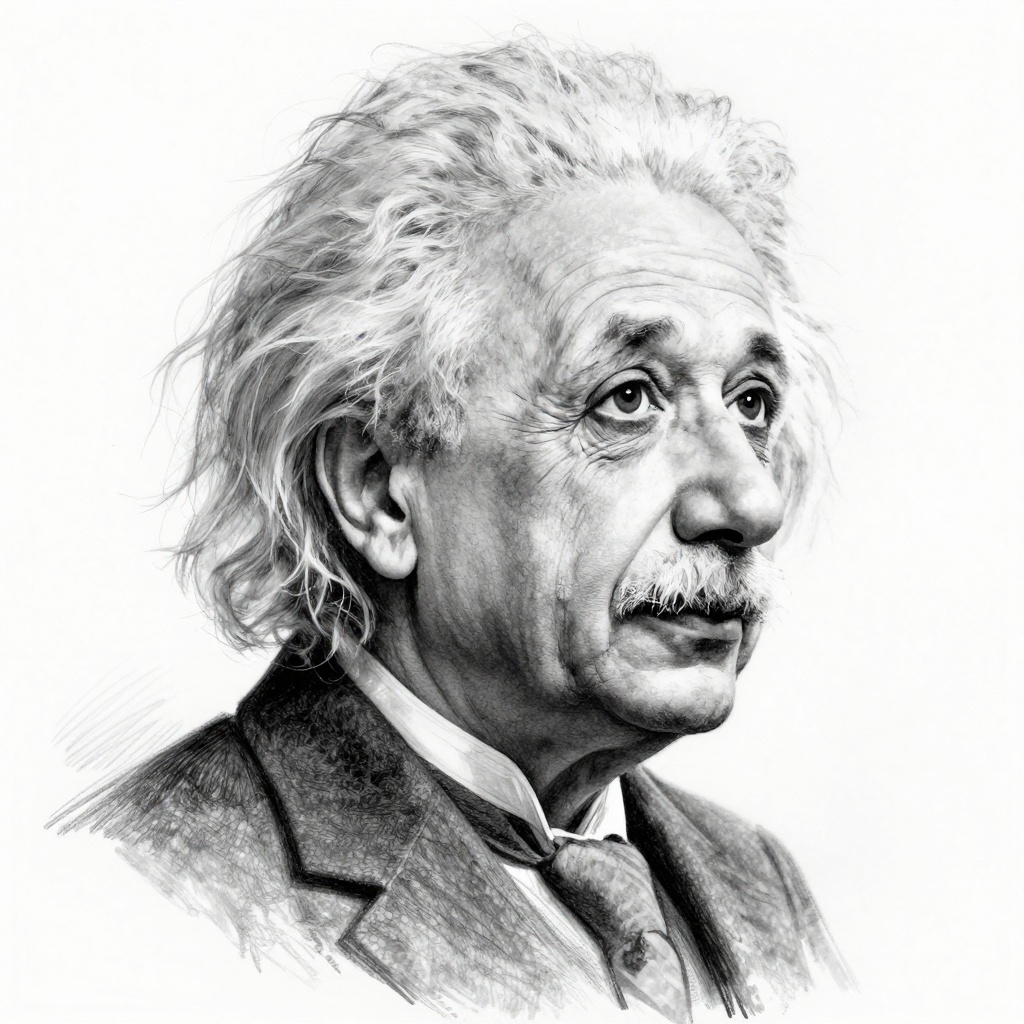
Comments