Quote · Added 28 March 2026
In the middle of every difficulty lies opportunity.
No ratings yet
Filed underdifficulty·opportunity·resilience
Quote · Added 28 March 2026
Filed underdifficulty·opportunity·resilience
We usually experience difficulty as pure obstacle—something blocking us from where we want to go. A missed deadline, a failed relationship, financial pressure, a skill we can't master. Our instinct is to see it as wasted time, a detour we have to endure. But Einstein's observation catches something real: difficulties force us to think differently than we otherwise would.
When things go smoothly, we repeat what works. We're on autopilot. But when something breaks, we have to stop and actually pay attention. We ask questions we wouldn't normally ask. A failed project might reveal that you're better suited to different work. A conflict with someone close might show you patterns you've been blind to. A health scare reorganizes what actually matters. These aren't consolation prizes—they're genuine insights that easy times rarely deliver.
The catch is that opportunity doesn't appear automatically. You have to look for it. Sometimes the difficulty is genuinely just difficult, and there's nothing profound to extract. But when you shift from "this is ruining my plans" to "what is this trying to teach me," you're often surprised by what you find.
1879–1955·lived 76 years
Albert Einstein was a renowned theoretical physicist known for developing the theory of relativity, one of the two pillars of modern physics. He is best known for his mass-energy equivalence formula E=mc^2 and was awarded the Nobel Prize in Physics in 1921 for his explanation of the photoelectric effect.
Also by Albert Einstein
God does not play dice with the universe.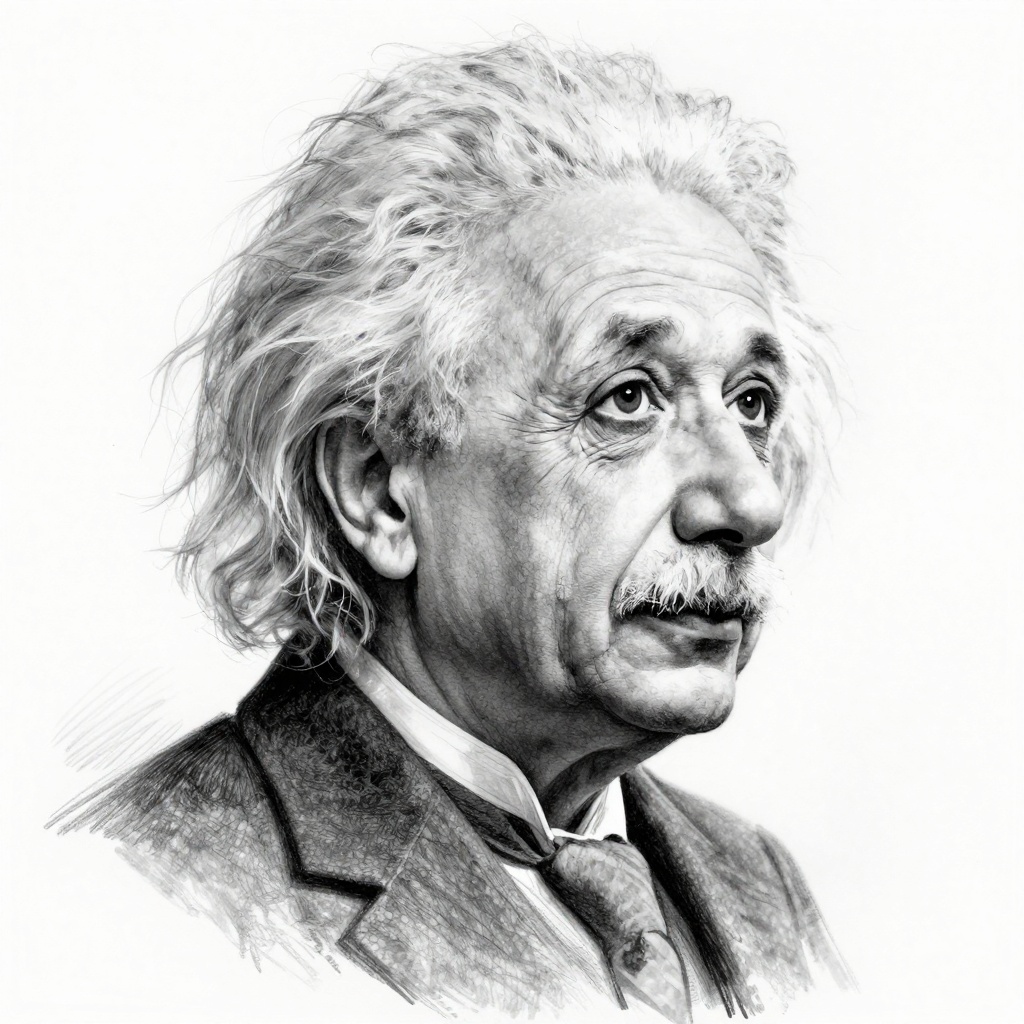
Comments