Quote · Added 28 February 2026
If I had an hour to solve a problem I'd spend 55 minutes thinking about the problem and 5 minutes thinking about solutions.
No ratings yet
Quote · Added 28 February 2026
Most of us do the exact opposite. We spot a problem and immediately start hunting for fixes—reading articles, asking friends, trying things. It feels productive. It feels like progress. But Einstein's instinct points to something we keep learning the hard way: the person who really understands the problem usually solves it faster than the person who rushes to solutions.
Think about a relationship conflict, a work setback, or even a nagging health issue. The temptation is to jump straight to answers. But if you actually sit with the problem for a while—really examining it, asking why it exists, noticing what you might be missing—the path forward often becomes obvious. Sometimes you realize the problem you thought you had isn't even the real one. Spending that extra time untangling what's actually going on is less flashy than swinging into action, but it's also less likely to leave you solving the wrong thing beautifully.
The counterintuitive part is that this approach actually saves time overall. Those 55 minutes of thinking feel slow, even lazy. But they're where real insight lives. The 5 minutes of action that follows tends to be remarkably efficient because you know exactly what you're doing.
1879–1955·lived 76 years
Albert Einstein was a renowned theoretical physicist known for developing the theory of relativity, one of the two pillars of modern physics. He is best known for his mass-energy equivalence formula E=mc^2 and was awarded the Nobel Prize in Physics in 1921 for his explanation of the photoelectric effect.
Also by Albert Einstein
God does not play dice with the universe.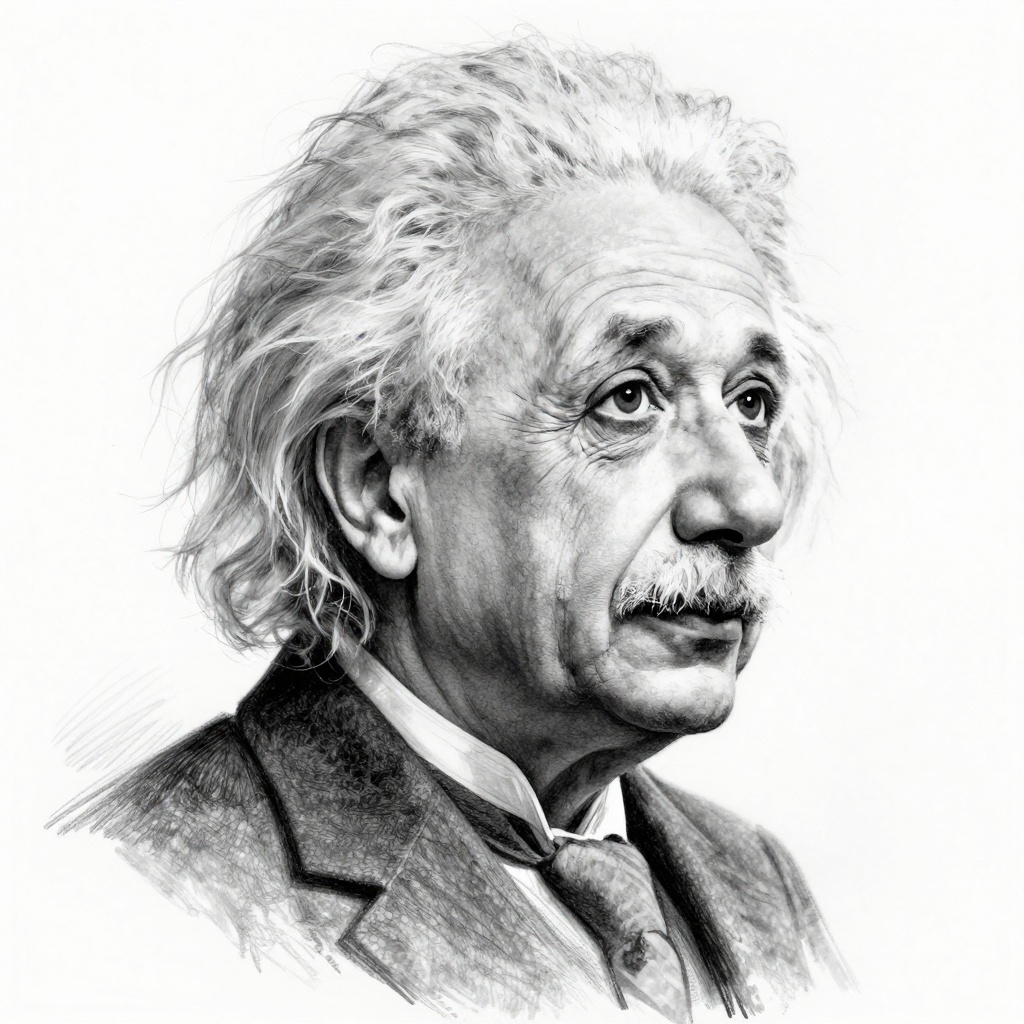
Comments