Quote · Added 14 February 2026
I think and think for months and years. Ninety-nine times, the conclusion is false. The hundredth time I am right.
Albert EinsteinIdeas and Opinions, 1954
No ratings yet
Filed underconclusion·perseverance·failure
Quote · Added 14 February 2026
Filed underconclusion·perseverance·failure
Most of us have been taught to fear being wrong. We avoid committing to an idea until we're certain, or we pretend confidence we don't actually feel. But Einstein is describing something different: a willingness to be wrong repeatedly as the actual path to being right. The math is humbling. If you're right one percent of the time after months or years of thinking, that means ninety-nine percent of your effort looked like failure in the moment.
This matters now because we live in a culture that rewards quick answers and punishes visible mistakes. Social media celebrates the person who sounds certain, not the person quietly working through ninety-nine wrong conclusions. But real breakthroughs—whether in your career, relationships, or how you understand yourself—almost always require this grinding, unsexy process. You sit with a problem. You try something. It doesn't work. You adjust. You try again. Most of the time you're just collecting data about what doesn't work.
The counterintuitive part is that this isn't a sign you're not smart enough. It's actually what thinking deeply looks like. The person who gets it right on the first try probably wasn't thinking hard enough to begin with. You're not failing your way to success so much as you're learning your way there, one wrong turn at a time.
1879–1955·lived 76 years
Albert Einstein was a renowned theoretical physicist known for developing the theory of relativity, one of the two pillars of modern physics. He is best known for his mass-energy equivalence formula E=mc^2 and was awarded the Nobel Prize in Physics in 1921 for his explanation of the photoelectric effect.
Also by Albert Einstein
God does not play dice with the universe.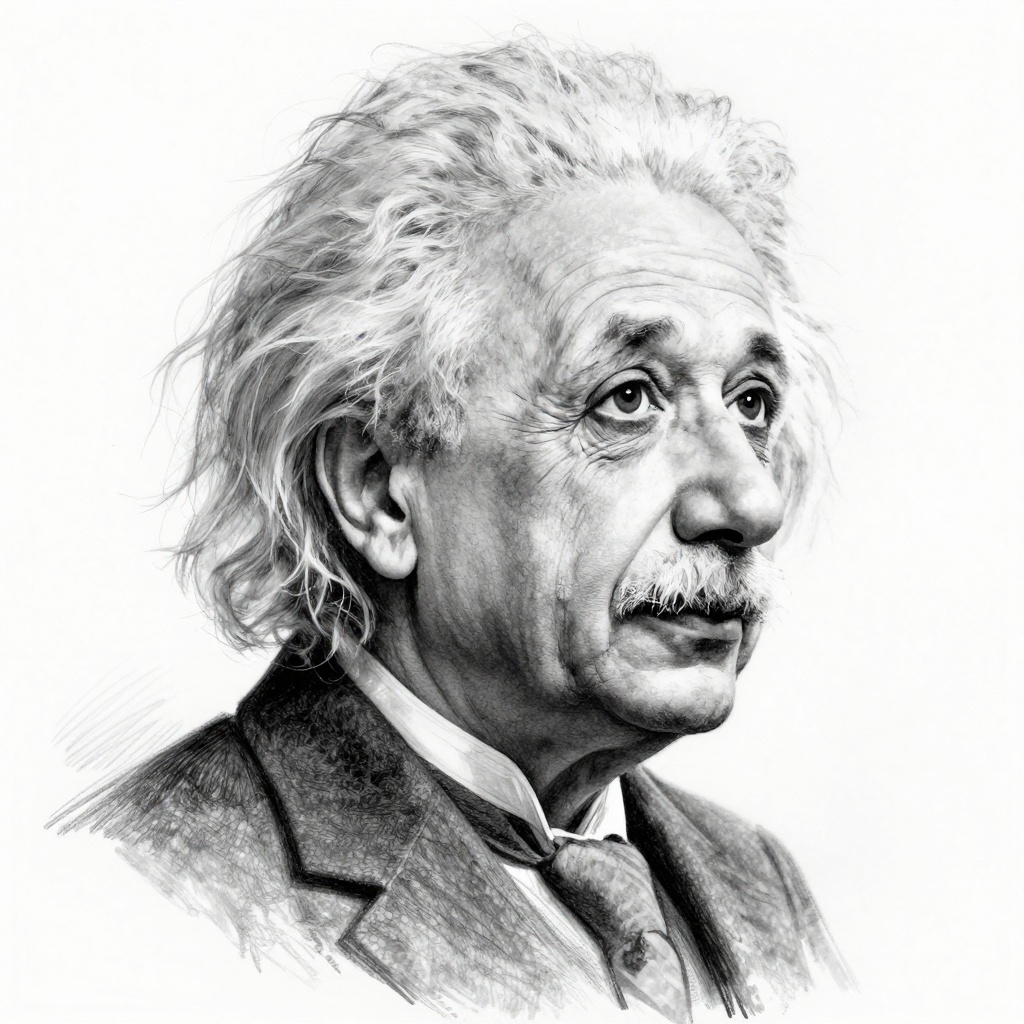
Comments