Quote · Added 14 February 2026
Confusion of goals and perfection of means seems, in my opinion, to characterize our age.
Albert EinsteinThe World As I See It, 1949
No ratings yet
Filed underconfusion·goals·perfection
Quote · Added 14 February 2026
Filed underconfusion·goals·perfection
We're living in an age where people become expert at doing things that don't actually matter. Someone might have a perfectly organized life—their calendar color-coded, their fitness tracked to the decimal, their inbox at zero—while having no real idea what they're actually trying to build toward. The machinery of productivity has become so polished that we can mistake motion for direction.
This shows up everywhere. Companies optimize their processes obsessively but lose sight of why they exist. Students master test-taking but haven't decided what knowledge they actually want. We perfect our morning routines and our work systems, sometimes spending more energy on the optimization than on asking whether we're optimizing the right things.
The tricky part is that clarity about what matters is harder than perfecting how to get there. It's uncomfortable and requires real thinking instead of just better execution. But there's something almost freeing in recognizing that a beautifully inefficient effort toward something you genuinely care about beats a flawlessly executed effort toward something that doesn't. The question "Why am I doing this?" needs to come before "How can I do this better?"
1879–1955·lived 76 years
Albert Einstein was a renowned theoretical physicist known for developing the theory of relativity, one of the two pillars of modern physics. He is best known for his mass-energy equivalence formula E=mc^2 and was awarded the Nobel Prize in Physics in 1921 for his explanation of the photoelectric effect.
Also by Albert Einstein
God does not play dice with the universe.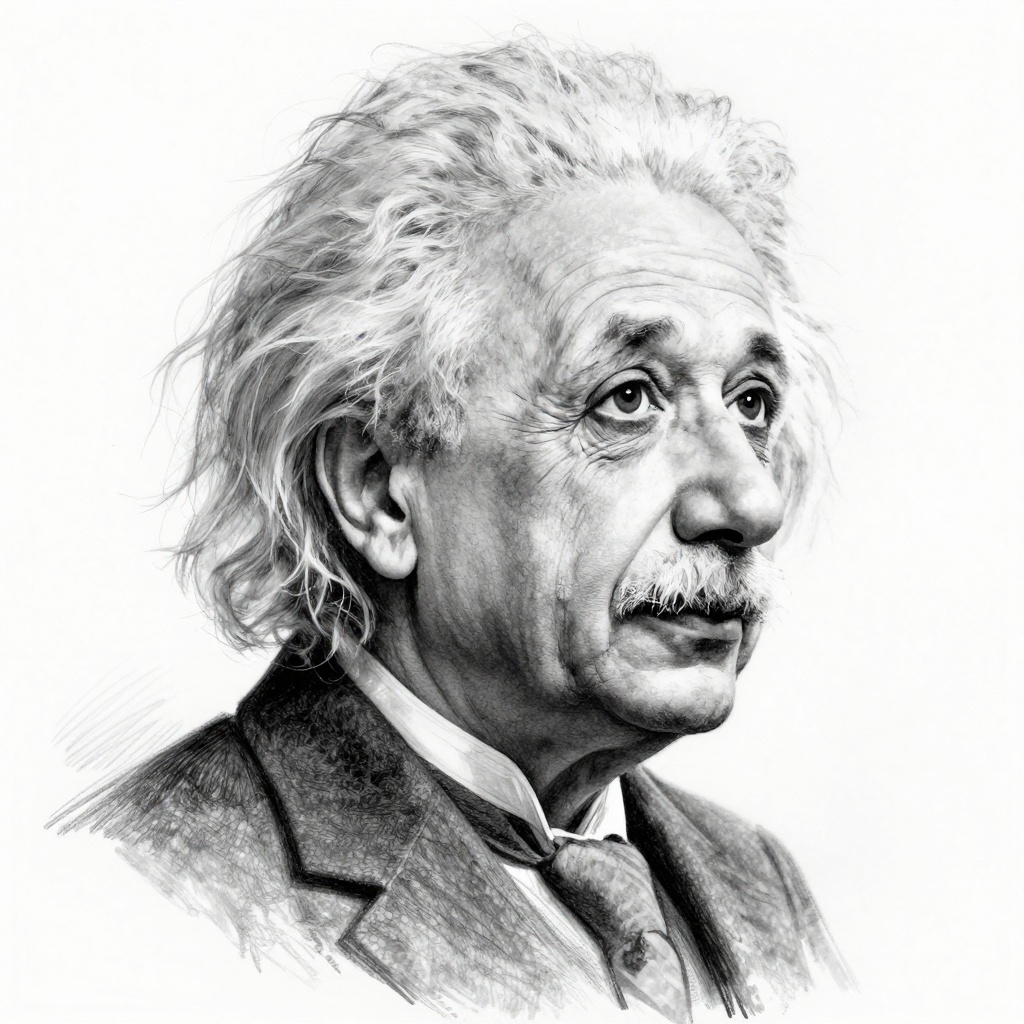
Comments