Quote · Added 13 February 2026
Common sense is the collection of prejudices acquired by age eighteen.
Albert EinsteinThe Universe and Dr. Einstein, Harper's Magazine, May 1948
No ratings yet
Quote · Added 13 February 2026
We like to think of common sense as obvious truth—the stuff everyone just knows. But Einstein was onto something darker: most of what feels self-evident to us is actually just inherited assumptions we picked up so early, we forgot we learned them at all. Your gut reaction to what's "normal" in relationships, money, ambition, or how people should behave? That's not universal wisdom. That's your particular culture, family, and generation speaking through you.
The tricky part is that this doesn't mean common sense is worthless. It's actually useful—shared prejudices let society function. The problem emerges when we mistake familiarity for truth. We reject ideas that feel weird not because they're actually wrong, but because they clash with the defaults we absorbed by eighteen. History is full of "obvious" beliefs that were just common sense to their time: that women couldn't do math, that stomach ulcers came from stress, that you shouldn't question authority. They felt rock solid until they didn't.
The real skill isn't abandoning common sense entirely. It's learning to notice when you're following it, and asking yourself whether you're following it because it works or just because it's comfortable. That small pause—that's where actual thinking starts.
1879–1955·lived 76 years
Albert Einstein was a renowned theoretical physicist known for developing the theory of relativity, one of the two pillars of modern physics. He is best known for his mass-energy equivalence formula E=mc^2 and was awarded the Nobel Prize in Physics in 1921 for his explanation of the photoelectric effect.
Also by Albert Einstein
God does not play dice with the universe.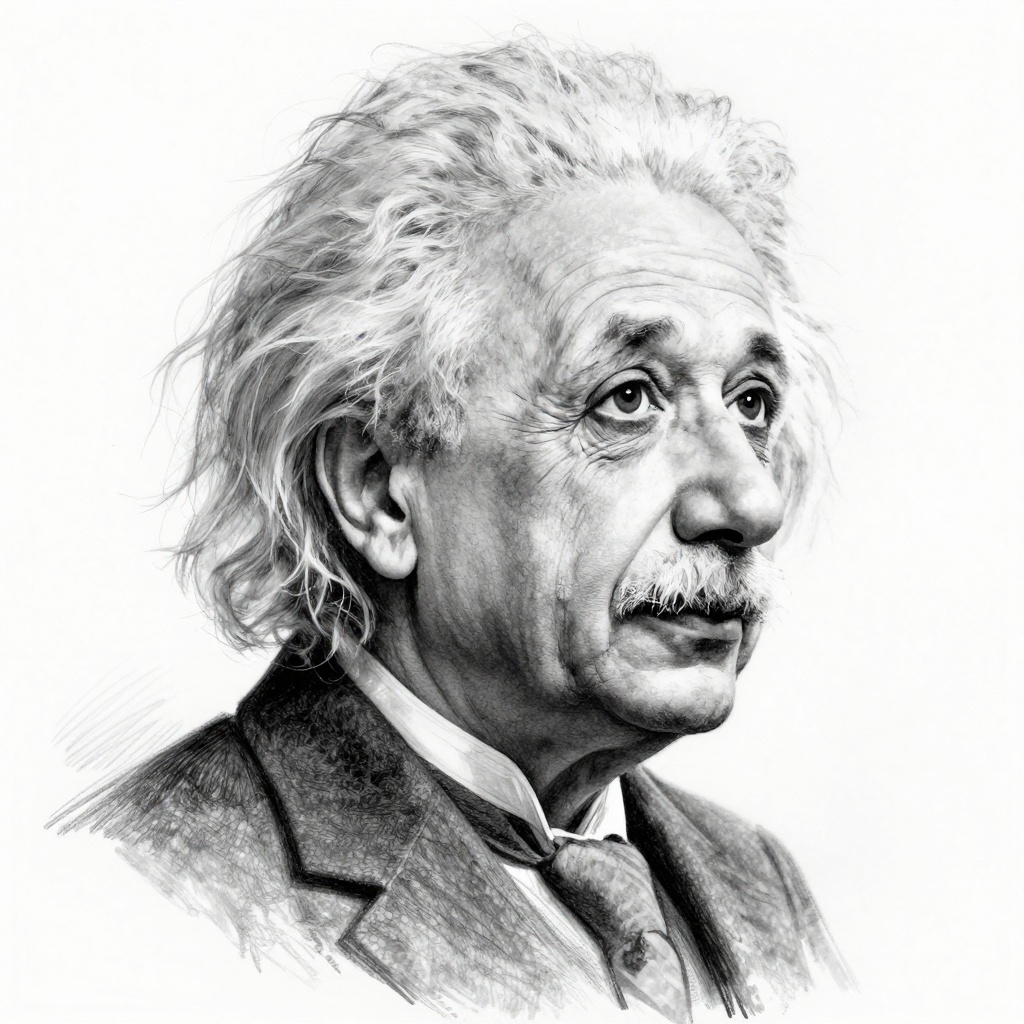
Comments