Quote · Added 13 February 2026
Coincidence is God's way of remaining anonymous.
Albert EinsteinMisattributed to Albert Einstein, PastWisdom
No ratings yet
Filed undercoincidence·faith·mystery
Quote · Added 13 February 2026
Filed undercoincidence·faith·mystery
We live in a world obsessed with explanations. When something good happens, we want to know exactly why. When something falls into place perfectly, we search for the mechanism, the reason, the hidden hand. This quote nudges at that impulse—suggesting that sometimes the universe arranges things in ways we can't neatly categorize or claim to understand.
The sneaky part is that it works both directions. A chance encounter that changes your life, a random conversation that leads somewhere unexpected, a unlikely series of events that worked out exactly as needed—we can call it coincidence and move on. Or we can sense something purposeful in it, something larger than pure randomness. The quote respects both readings at once. It says the invisible force doesn't announce itself. It doesn't need credit or belief. It just works through the ordinary machinery of accident and timing.
This matters because it gives us permission to feel wonder without needing proof. We don't have to choose between being rational people and sensing that life sometimes unfolds with strange grace. A coincidence might just be what you call a meaningful pattern when you're not ready to name it anything grander.
1879–1955·lived 76 years
Albert Einstein was a renowned theoretical physicist known for developing the theory of relativity, one of the two pillars of modern physics. He is best known for his mass-energy equivalence formula E=mc^2 and was awarded the Nobel Prize in Physics in 1921 for his explanation of the photoelectric effect.
Also by Albert Einstein
God does not play dice with the universe.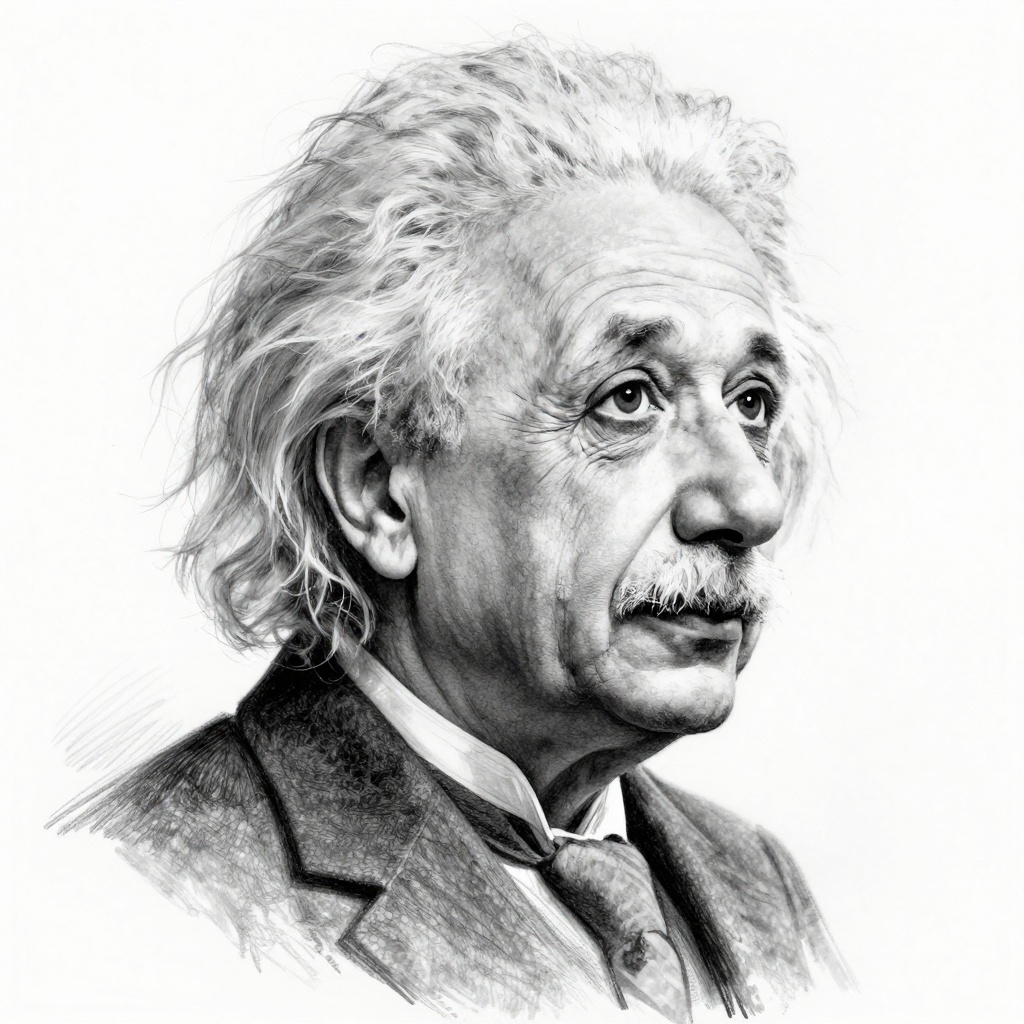
Comments