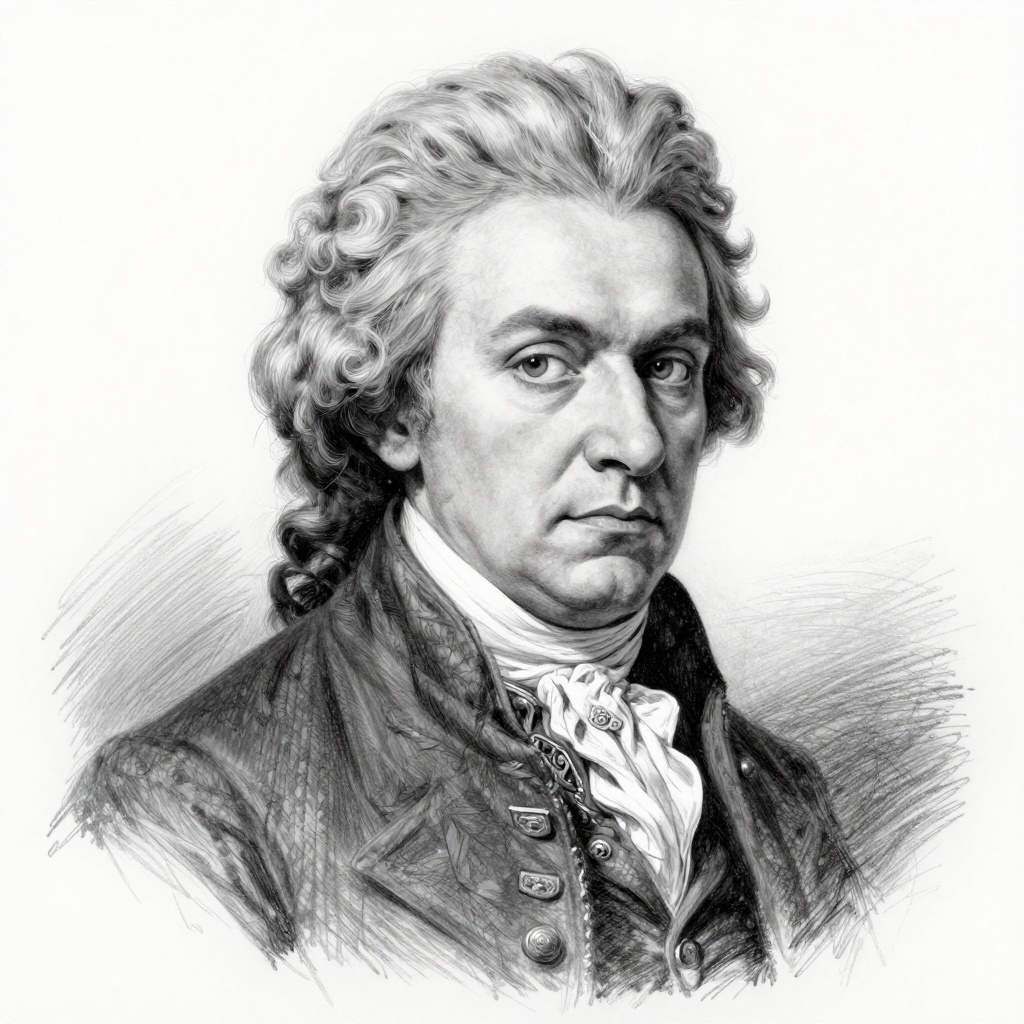
Neither a lofty degree of intelligence nor imagination nor both together go to the making of genius. Love, lov... — Wolfgang Amadeus Mozart

Neither a lofty degree of intelligence nor imagination nor both together go to the making of genius. Love, love, love, that is the soul of genius.

Author: Wolfgang Amadeus Mozart

Insight: We're taught that genius is about raw talent or IQ—the rare gift that lets someone see patterns others miss. But Mozart is pointing at something stranger and more honest: brilliance without passion is just technical skill. A person can be clever enough to solve complex problems or imaginative enough to dream up wild ideas, yet still produce work that feels hollow or lifeless. What separates truly great work from merely competent work is care—an almost obsessive attachment to getting something right because it matters to you. This lands differently in our current moment. We celebrate productivity and optimization, treating creative work as output to be measured. But the friction Mozart identifies is real: you can follow all the rules, master the craft, even win accolades, and still know something's missing. That something is usually love in the broadest sense—not sentimentality, but genuine investment. Whether you're writing, building, parenting, or problem-solving, the work that moves people is the work done by someone who couldn't not do it, who cared enough to keep going when cleverness alone would've quit. The uncomfortable truth is you can't manufacture that feeling. But you can recognize when you're chasing something out of obligation rather than genuine curiosity, and that recognition itself is worth something.

Care matters more than cleverness

Neither a lofty degree of intelligence nor imagination nor both together go to the making of genius. Love, love, love, that is the soul of genius.

We're taught that genius is about raw talent or IQ—the rare gift that lets someone see patterns others miss. But Mozart is pointing at something stranger and more honest: brilliance without passion is just technical skill. A person can be clever enough to solve complex problems or imaginative enough to dream up wild ideas, yet still produce work that feels hollow or lifeless. What separates truly great work from merely competent work is care—an almost obsessive attachment to getting something right because it matters to you.

This lands differently in our current moment. We celebrate productivity and optimization, treating creative work as output to be measured. But the friction Mozart identifies is real: you can follow all the rules, master the craft, even win accolades, and still know something's missing. That something is usually love in the broadest sense—not sentimentality, but genuine investment. Whether you're writing, building, parenting, or problem-solving, the work that moves people is the work done by someone who couldn't not do it, who cared enough to keep going when cleverness alone would've quit.

The uncomfortable truth is you can't manufacture that feeling. But you can recognize when you're chasing something out of obligation rather than genuine curiosity, and that recognition itself is worth something.

AI generated

Comments

Sign in to leave a comment or reply to one.

Sign in

Wolfgang Amadeus Mozart

Wolfgang Amadeus Mozart (1756–1791) was an Austrian composer and prodigy who is widely regarded as one of the greatest composers in the history of Western music. Known for his operas, symphonies, piano concertos, and chamber music, Mozart created timeless works such as "The Magic Flute," "Piano Sonata No. 11," and "Symphony No. 40."

Graph

Related