Quote · Added 5 July 2026
Either write things worth reading, or do things worth the writing.
No ratings yet
Filed underwriting·purpose·creativity
Quote · Added 5 July 2026
Filed underwriting·purpose·creativity
We live in an age where everyone is supposed to have something to say, all the time. Social media has made it so that not posting feels like you're falling behind, so we end up sharing half-formed thoughts, mundane updates, and recycled observations just to keep up the appearance of being interesting. But Franklin's challenge cuts through this nicely: if you're going to spend your time and attention on something, make sure it's actually worth someone else's time and attention.
The real bite here is that most of us try to do both—to live ordinary lives while simultaneously narrating them as though they're fascinating. But Franklin is suggesting that energy spent on the words is energy not spent on the living, and vice versa. The people we actually respect tend to be doing one or the other genuinely. They're either out there doing remarkable things they don't have time to write about, or they're carefully crafting something with real substance that took serious thought. Either way, they're not just filling space.
What makes this unsettling is that it implies our endless communication might actually be a distraction from either living fully or thinking deeply. It's permission to choose silence, to do less writing and more doing, or to write less frequently but make it count.
1706–1790·lived 84 years
Benjamin Franklin (1706–1790) was an American polymath, writer, printer, politician, and inventor. He is known for his role in founding the United States, as well as his scientific discoveries and inventions, such as the lightning rod and bifocals. Franklin was one of the Founding Fathers of the United States and played a crucial part in drafting the Declaration of Independence and the U.S. Constitution.
Also by Benjamin Franklin
To be humble to superiors is duty, to equals courtesy, to inferiors nobleness.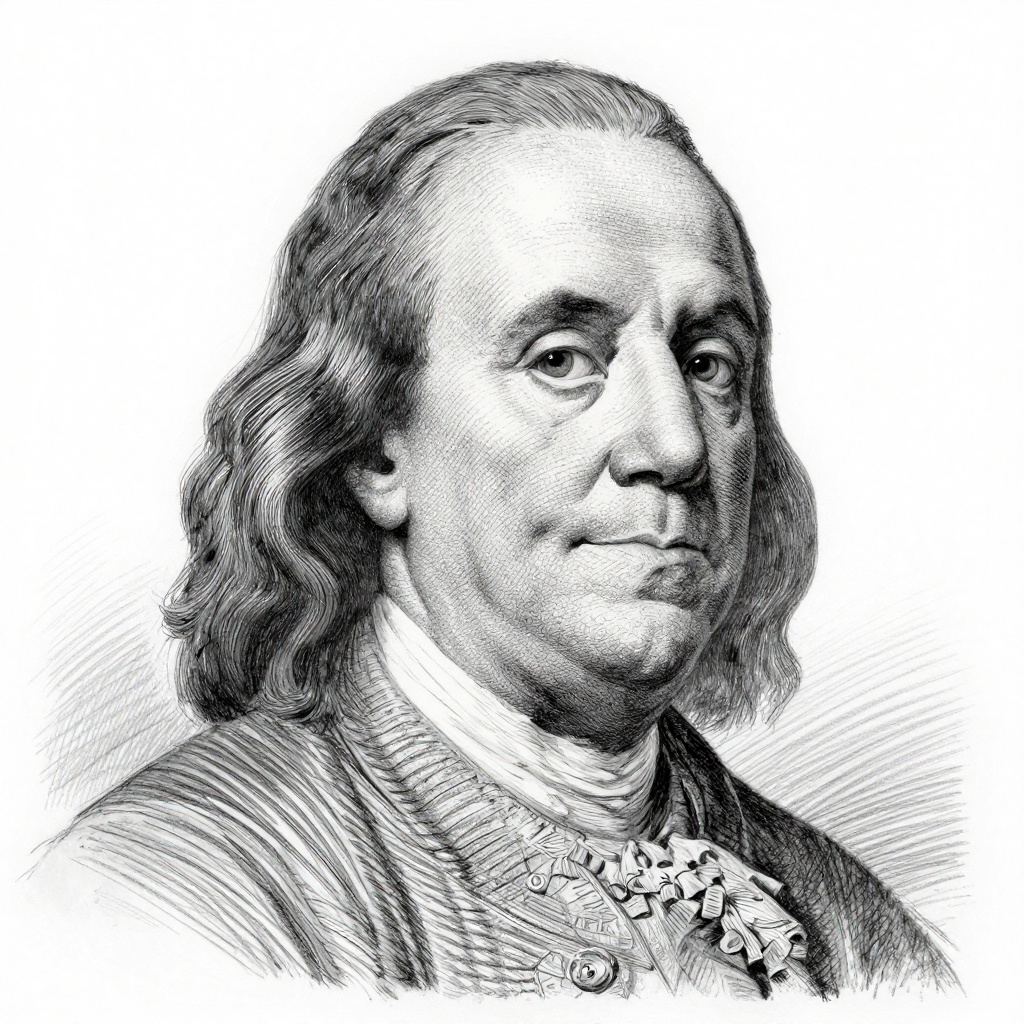
Comments