Quote · Added 28 June 2026
Explore
Reading
AI generatedHumility shifts with power dynamics
We tend to think of humility as a one-size-fits-all virtue—something you either have or you don't. But Franklin's insight is more practical: humility means something different depending on who you're talking to, and that's not being fake. It's being clear-eyed about the actual relationship.
With someone more powerful or knowledgeable than you, humility is protective and wise. You can learn more by listening than by posturing. But the trickier part is how you treat equals—that's where courtesy matters most, because there's no power difference forcing respect. You have to choose it. And then there's something almost counterintuitive about treating people below you with "nobleness." It's not duty, it's not even required. Which is exactly why it matters. How you act when nobody's watching, when there's no consequence for coldness, reveals what you actually believe about being human.
This matters now because we're often juggling different hierarchies at once—you might be junior at work but senior in your friend group, or confident in one space and uncertain in another. Franklin's pointing out that adjusting your approach isn't inconsistency. It's respect.
The author
All 95 quotes by Benjamin Franklin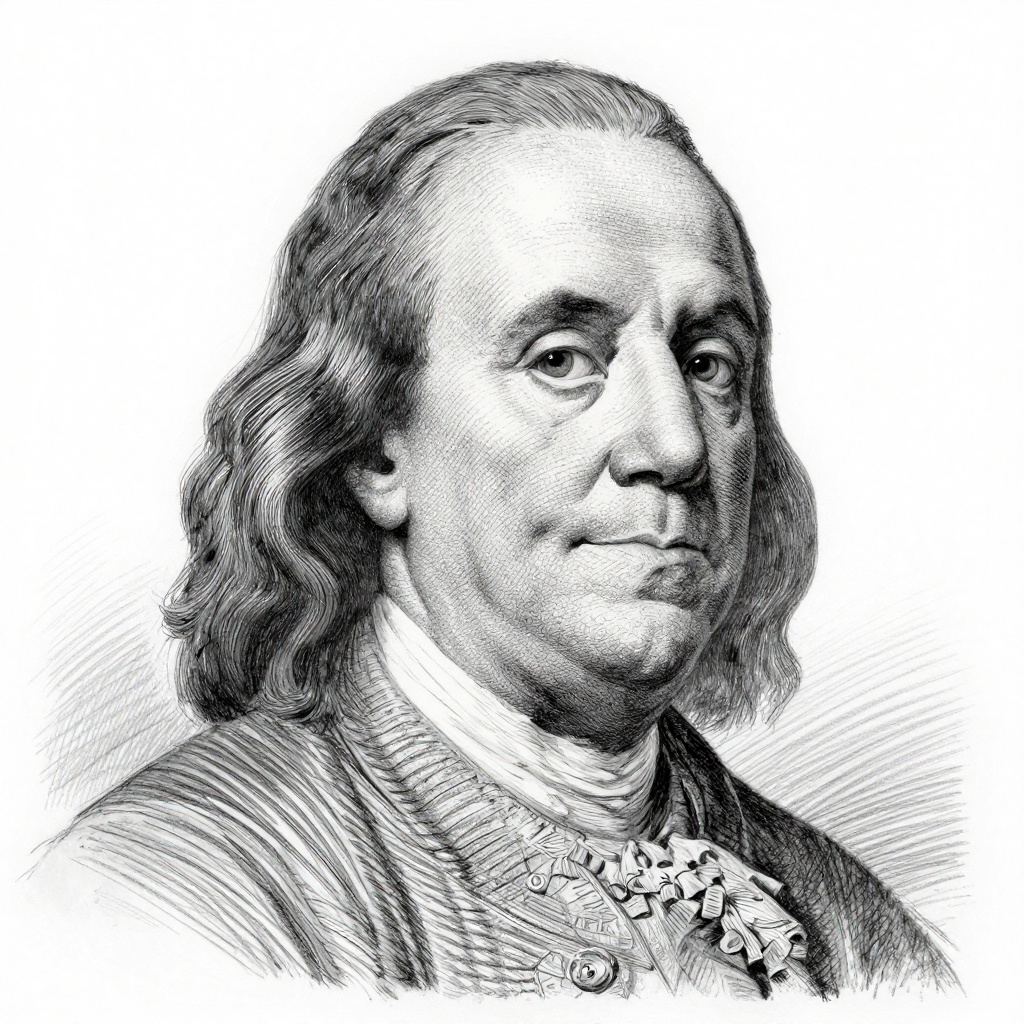
Benjamin Franklin
1706–1790·lived 84 years
Benjamin Franklin (1706–1790) was an American polymath, writer, printer, politician, and inventor. He is known for his role in founding the United States, as well as his scientific discoveries and inventions, such as the lightning rod and bifocals. Franklin was one of the Founding Fathers of the United States and played a crucial part in drafting the Declaration of Independence and the U.S. Constitution.
Also by Benjamin Franklin
Either write things worth reading, or do things worth the writing.
Comments