Quote · Added 28 February 2026
We are all inventors, each sailing out on a voyage of discovery, guided each by a private chart, of which there is no duplicate. The world is all gates, all opportunities.
Filed underinvention·discovery·opportunity
Quote · Added 28 February 2026
Filed underinvention·discovery·opportunity
There's something quietly radical in this idea that you're not following a map someone else drew. Most of us grow up absorbing templates—the career path that makes sense, the relationship milestones we're "supposed" to hit, the way a productive life should look. But Emerson's pointing at something harder to ignore: you actually can't follow anyone else's chart, even if you wanted to. Your specific combination of fears, curiosities, accidents, and strengths is unrepeatable. That's not poetic fluff. It means the advice that worked perfectly for your friend might miss the mark entirely for you, and that's not a failure on your part.
The second part—"the world is all gates, all opportunities"—feels almost aggressive in our moment. We tend to experience the opposite feeling: doors closing, paths narrowing, a sense that the interesting possibilities are locked away for other people. But Emerson isn't saying success comes easy. He's saying the material for your particular voyage is everywhere. An obstacle in one person's path might be exactly the opening you need. The creativity isn't in having a blank slate; it's in recognizing that your constraints, your location, your specific problems are features, not bugs. They're the contours of your own private chart.
1803–1882·lived 78 years
Ralph Waldo Emerson (1803–1882) was an American essayist, lecturer, and poet who led the Transcendentalist movement of the mid-19th century. He is known for his philosophical essays, particularly "Nature" and "Self-Reliance," which emphasize individualism, self-reliance, and the importance of nature as a spiritual force.
Also by Ralph Waldo Emerson
Be silly, be honest, be kind.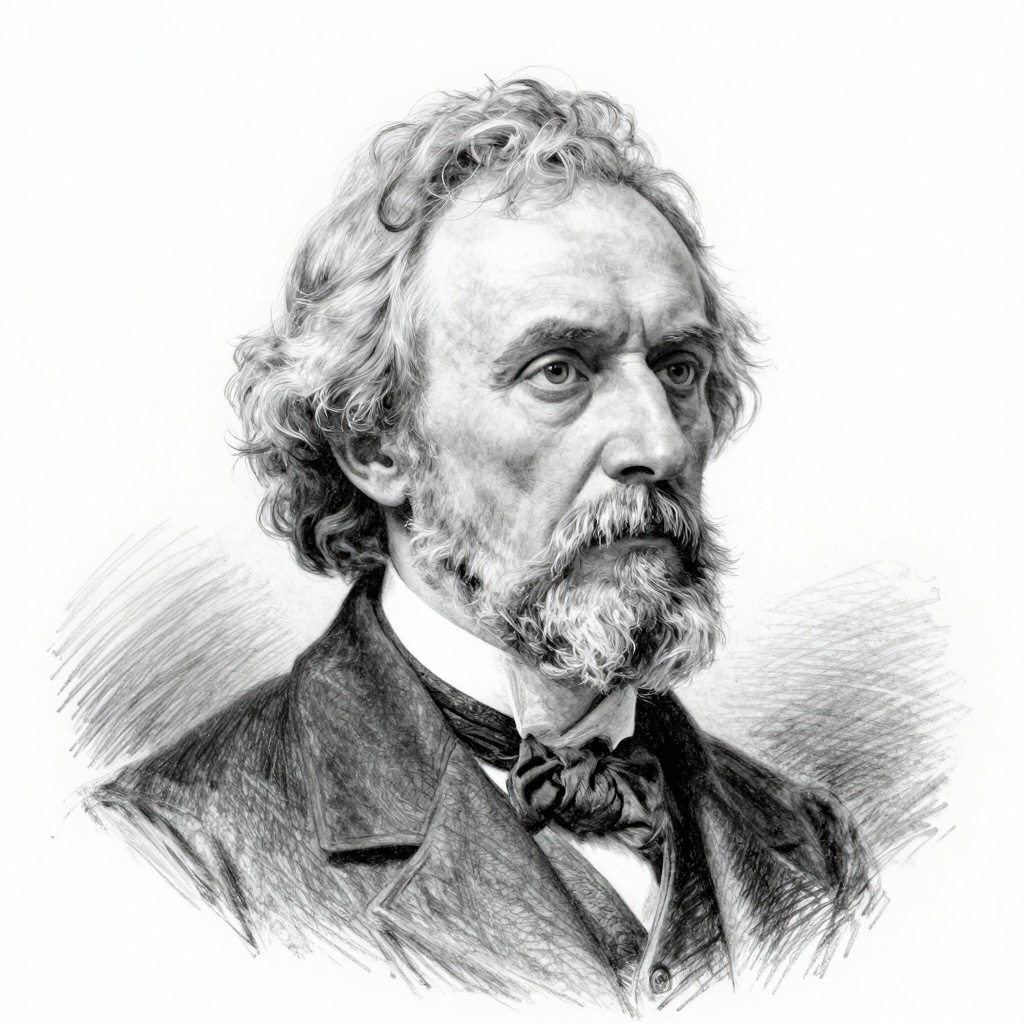
Comments