Quote · Added 14 February 2026
Nothing is at last sacred but the integrity of your own mind.
Ralph Waldo EmersonSelf-Reliance, 1841
Quote · Added 14 February 2026
We live in an era designed to make you doubt your own thinking. Algorithms learn what you click, then serve you more of it. Social media turns strangers' opinions into a constant ambient pressure. Your workplace, your family, your news feed—they all have ideas about what you should believe and how you should act. It's exhausting partly because it works. We start filtering our thoughts through what others expect, until we're not sure which convictions are actually ours.
Emerson's point isn't about being stubborn or ignoring good advice. It's about recognizing that your mind is the only territory you ultimately control. You can lose money, status, relationships, even health. But if you abandon your ability to think for yourself—to notice when something feels true versus when you're just repeating what sounds respectable—you've lost the foundation everything else rests on. That's the real crisis.
The unsurprising part: having integrity of mind requires actual effort now. It means sometimes sitting with confusion instead of grabbing the nearest hot take. It means noticing when you're performing beliefs rather than thinking them. It means being willing to change your mind, which is different from never having one in the first place. Your own judgment might be imperfect, but it's the only mirror you can trust.
1803–1882·lived 78 years
Ralph Waldo Emerson (1803–1882) was an American essayist, lecturer, and poet who led the Transcendentalist movement of the mid-19th century. He is known for his philosophical essays, particularly "Nature" and "Self-Reliance," which emphasize individualism, self-reliance, and the importance of nature as a spiritual force.
Also by Ralph Waldo Emerson
Be silly, be honest, be kind.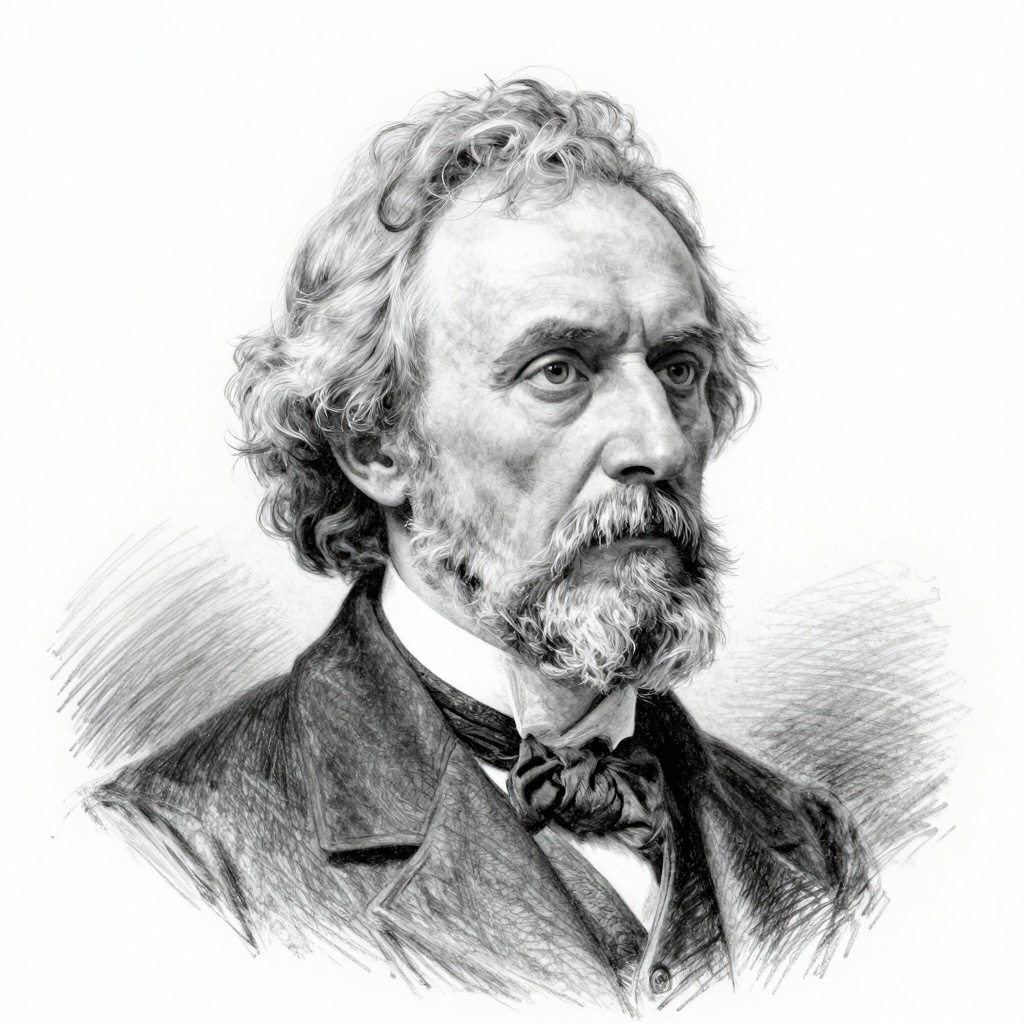
Comments