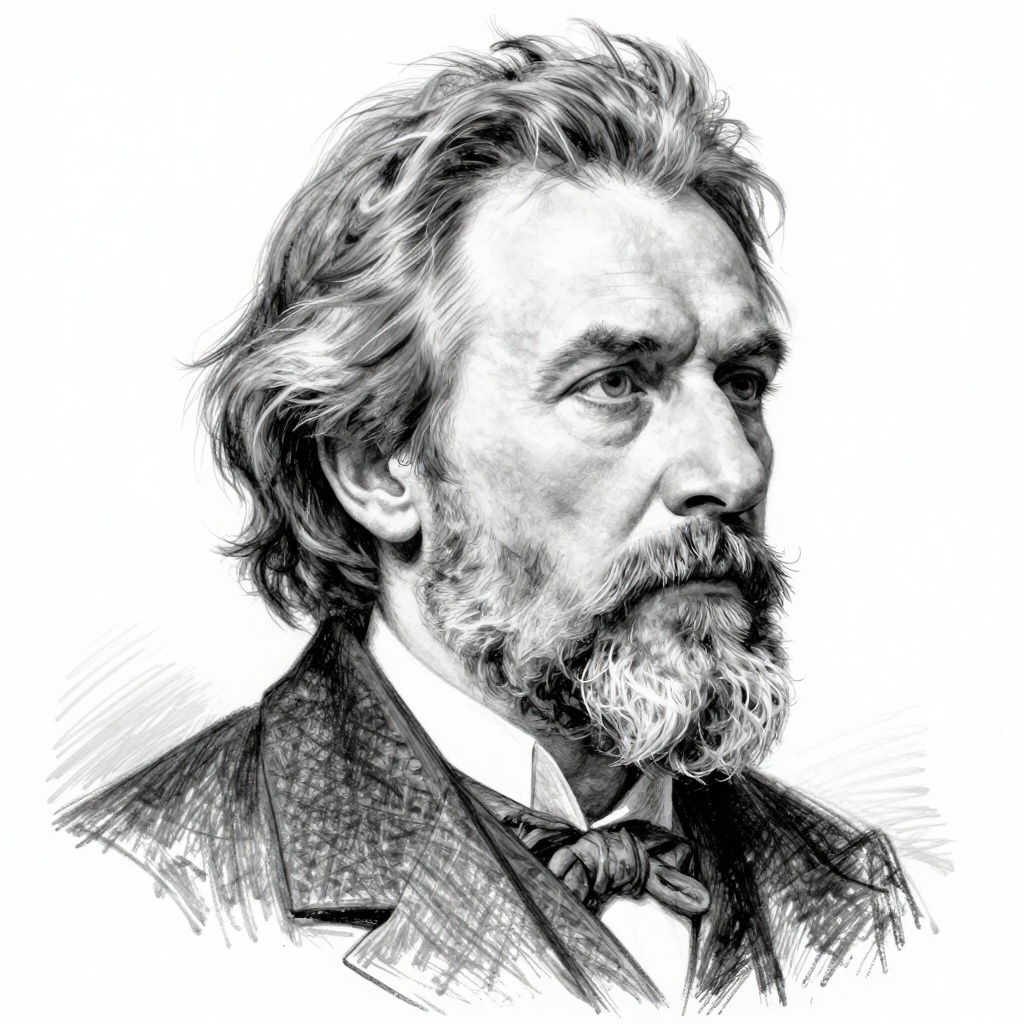
The most difficult subjects can be explained to the most slow- witted man if he has not formed any idea of the... — Leo Tolstoy
The most difficult subjects can be explained to the most slow- witted man if he has not formed any idea of them already; but the simplest thing cannot be made clear to the most intelligent man if he is firmly persuaded that he knows already, without a shadow of doubt, what is laid before him.
Author: Leo Tolstoy
Insight: We've all been that intelligent person Tolstoy describes, haven't we? The one who walks into a conversation certain we already understand something, only to realize three months later we never actually got it. The problem isn't our intelligence—it's that our certainty acts like a lock. Once we decide we know what something means, our brain stops listening. We hear the words but filter them through what we already believe, missing the actual information entirely. The flip side is almost counterintuitive: a beginner's mind, even attached to someone who struggles with complex ideas, stays open. That openness creates space for understanding to actually land. This matters more now than ever, when we're drowning in information and everyone's competing to sound authoritative. The urge to seem like we already know something is almost reflexive, especially online where admitting ignorance feels risky. What Tolstoy's really pointing at is that humility isn't weakness—it's the only honest tool for learning. The smartest move isn't to defend what you think you know. It's to get genuinely curious about where you might be wrong, to hold your beliefs a little lighter, and to let yourself be surprised by the simplest things.
Source: Confession, p. 39, 1882