Quote · Added 11 February 2026
To every action there is always opposed an equal reaction.
Isaac NewtonPhilosophiæ Naturalis Principia Mathematica, 1687
No ratings yet
Quote · Added 11 February 2026
We usually think of Newton's law as physics—billiard balls clicking together, rockets shooting upward. But it's quietly reshaping how we live right now. Every text you send, every boundary you set, every time you push harder at work to get ahead, creates an equal and opposite force somewhere else. The person you're texting gets distracted. The boundary you set might create tension in the relationship. The extra hours you work come out as fatigue.
This doesn't mean you shouldn't act. It means understanding that doing anything meaningful involves tradeoffs you actually need to see. The parent who finally insists on phone-free dinner nights might face real complaints. The person who starts saving money instead of spending on experiences loses something too. We often act as though we can have the win without the cost, then feel surprised or resentful when the reaction shows up. That resentment is just Newton reminding us that nothing moves in just one direction.
The practical version: before you push hard on something, honestly picture what pushes back. Not to paralyze you, but so you're making a real choice, not a surprised one. The reaction is coming anyway. Knowing it's there means you can decide if it's worth it.
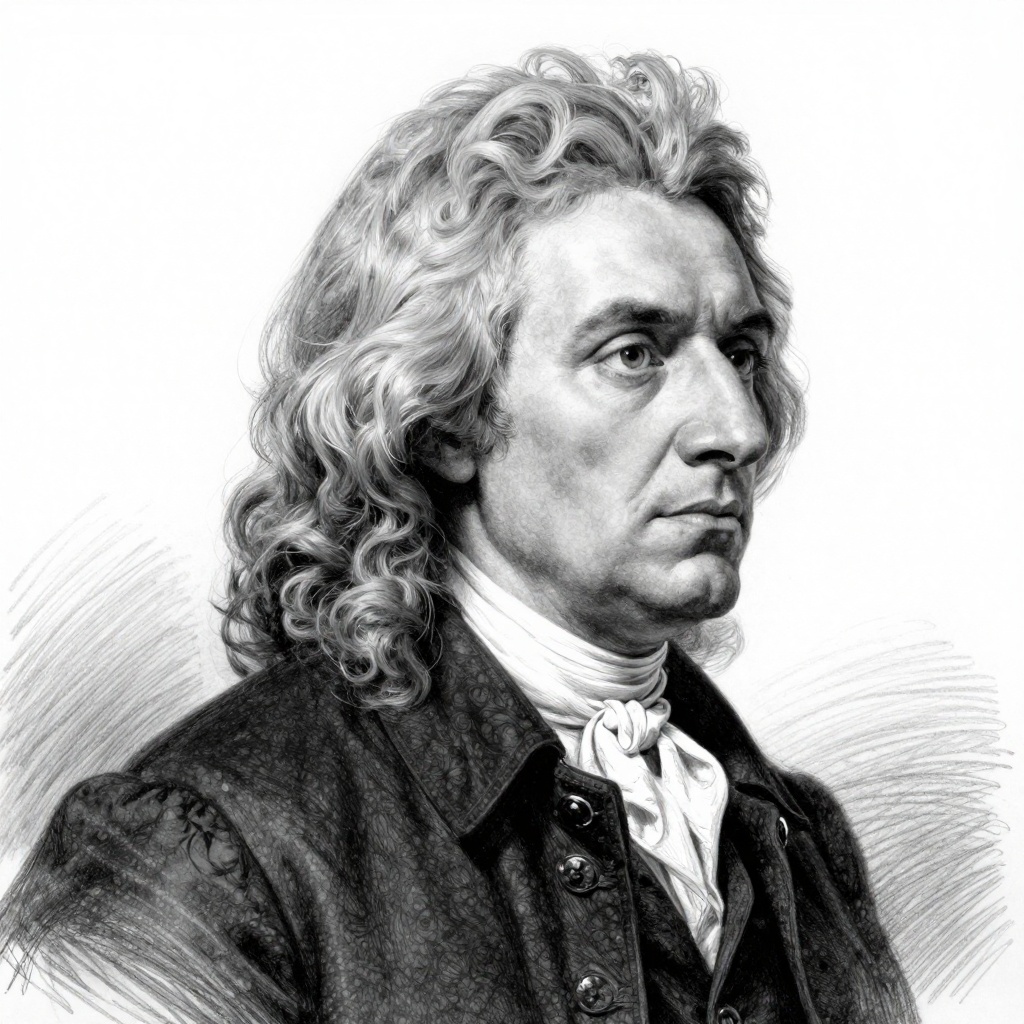
1643–1727·lived 84 years
Isaac Newton (1643–1727) was an English mathematician, physicist, and astronomer, widely recognized for formulating the laws of motion and universal gravitation. His work laid the foundation for classical mechanics and greatly advanced our understanding of the natural world.
Comments