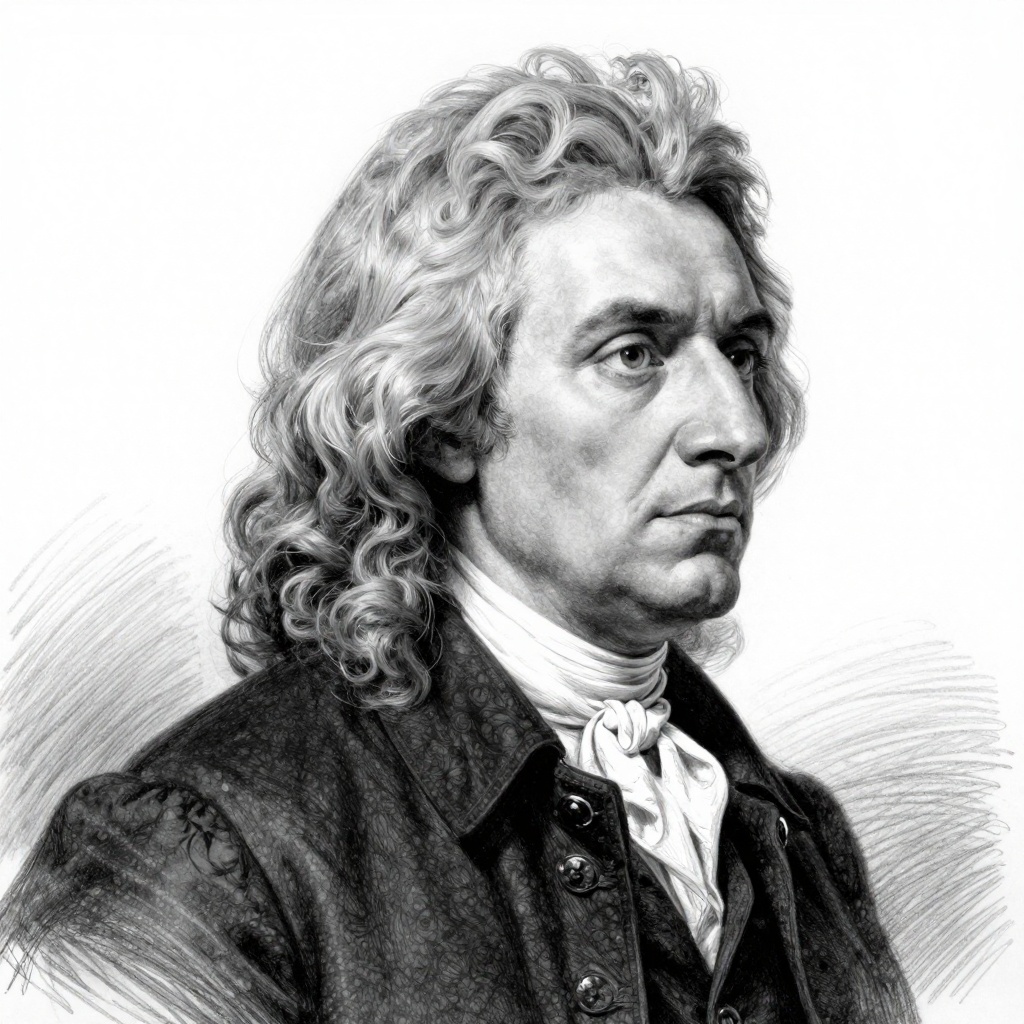
I do not know what I may appear to the world, but to myself I seem to have been only like a boy playing on the... — Isaac Newton

I do not know what I may appear to the world, but to myself I seem to have been only like a boy playing on the seashore, and diverting myself in now and then finding a smoother pebble or a prettier shell than ordinary, whilst the great ocean of truth lay all undiscovered before me.

Author: Isaac Newton

Insight: There's something deeply human about Newton saying this near the end of his life—after revolutionizing physics, mathematics, and our understanding of light. He's not being falsely modest. He's genuinely recognizing that for all his discoveries, he'd only scratched the surface of how reality actually works. The ocean was still mostly unexplored. This matters now because we live in an age of expertise and confident takes. We're drowning in people who sound absolutely certain about everything—politics, health, technology, what other people should do. Newton's admission cuts against that grain. He's the guy who figured out gravity, and he's saying, "I barely know anything." That's not weakness; it's clarity. Real understanding often feels less like climbing a mountain to the peak and more like standing at an endless beach, occasionally picking up something interesting. The non-obvious part? His metaphor suggests that not knowing can be joyful. He's not bitter about the vastness of undiscovered truth. He's delighted by each small pebble. That reframes curiosity from anxiety (there's so much I don't know) into wonder (look what I found today). The humility and the joy aren't separate—they're the same thing.

The boy on the endless beach

I do not know what I may appear to the world, but to myself I seem to have been only like a boy playing on the seashore, and diverting myself in now and then finding a smoother pebble or a prettier shell than ordinary, whilst the great ocean of truth lay all undiscovered before me.

There's something deeply human about Newton saying this near the end of his life—after revolutionizing physics, mathematics, and our understanding of light. He's not being falsely modest. He's genuinely recognizing that for all his discoveries, he'd only scratched the surface of how reality actually works. The ocean was still mostly unexplored.

This matters now because we live in an age of expertise and confident takes. We're drowning in people who sound absolutely certain about everything—politics, health, technology, what other people should do. Newton's admission cuts against that grain. He's the guy who figured out gravity, and he's saying, "I barely know anything." That's not weakness; it's clarity. Real understanding often feels less like climbing a mountain to the peak and more like standing at an endless beach, occasionally picking up something interesting.

The non-obvious part? His metaphor suggests that not knowing can be joyful. He's not bitter about the vastness of undiscovered truth. He's delighted by each small pebble. That reframes curiosity from anxiety (there's so much I don't know) into wonder (look what I found today). The humility and the joy aren't separate—they're the same thing.

AI generated

Comments

Sign in to leave a comment or reply to one.

Sign in

Isaac Newton

Isaac Newton (1643–1727) was an English mathematician, physicist, and astronomer, widely recognized for formulating the laws of motion and universal gravitation. His work laid the foundation for classical mechanics and greatly advanced our understanding of the natural world.

Graph

Related