Quote · Added 17 March 2026
I can calculate the motion of heavenly bodies but not the madness of people.
No ratings yet
Quote · Added 17 March 2026
We live in an age of unprecedented measurement. We can predict eclipses centuries in advance, model climate systems, even quantify happiness on a scale of one to ten. And yet we still can't reliably predict what people will do—especially ourselves. Newton's admission captures something we run into constantly: the universe follows rules we can learn, but human behavior often feels like it's playing by a different game entirely.
The real sting of this observation is that we keep trying anyway. We build algorithms to recommend what we'll watch, create financial models based on rational choice theory, set New Year's resolutions we half-know we won't keep. There's something humbling about recognizing that the most chaotic system we'll ever encounter isn't in the stars but in the people around us—and in the mirror. The madness Newton refers to isn't just irrationality; it's inconsistency, contradiction, the way we want conflicting things simultaneously.
Maybe that's exactly why understanding people matters more than understanding planets. We can't calculate our way through relationships, decisions, or growth. We can only show up, stay curious, and accept that being predictable would mean we'd stopped changing.
1643–1727·lived 84 years
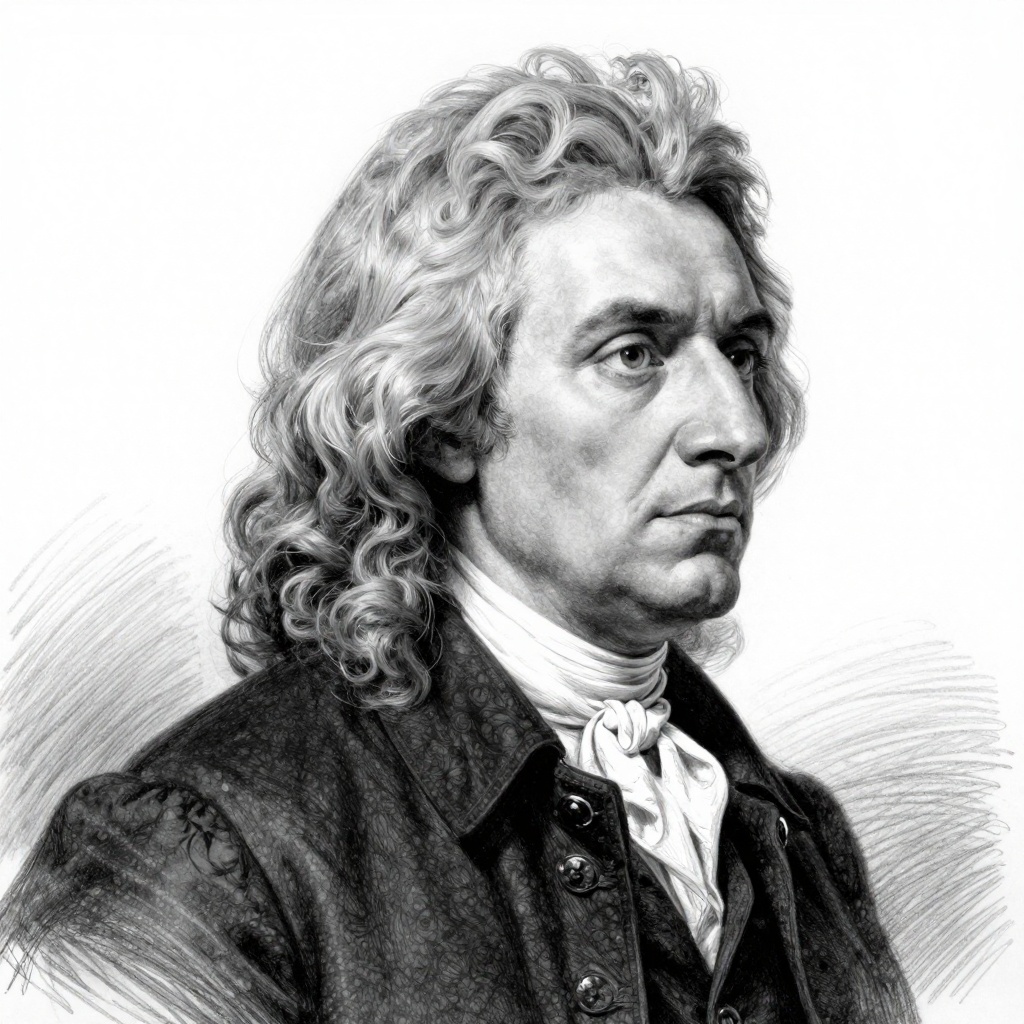
Isaac Newton (1643–1727) was an English mathematician, physicist, and astronomer, widely recognized for formulating the laws of motion and universal gravitation. His work laid the foundation for classical mechanics and greatly advanced our understanding of the natural world.
Comments