Quote · Added 14 February 2026
Under a government which imprisons any unjustly, the true place for a just man is also a prison.
Henry David ThoreauCivil Disobedience, 1849
No ratings yet
Quote · Added 14 February 2026
There's something radical about Thoreau's logic here, and it cuts against how most of us actually live. We see injustice happening—inequality, unfair laws, cruelty—and we tell ourselves that the solution is to stay out of trouble, keep our heads down, and work within the system. But Thoreau is saying something different: if you're truly just and your government is unjust, your complicity matters. You're implicated just by being a functioning member of a system built on wrongdoing.
This hits harder now because we're all more aware of injustice than ever. We see it constantly online, in policy debates, in how different people are treated. The uncomfortable part of Thoreau's idea is that he's not really giving us an escape hatch. He's not saying you have to literally go to jail. He's saying that if you benefit from an unjust system without resisting it, there's a kind of moral dissonance between who you claim to be and what you're actually doing. The just person can't just be personally decent—there's supposed to be friction, refusal, some cost to your comfort.
The modern twist is that we've gotten very good at feeling morally superior while changing nothing. We can scroll, share, and sympathize from a distance. Thoreau would probably say that's exactly the compromise he's warning against.
1817–1862·lived 44 years
Henry David Thoreau was an American essayist, poet, and philosopher, known for his transcendentalist writings advocating for individualism, nature appreciation, and civil disobedience. He is best known for his book "Walden, or Life in the Woods," which reflects on simple living in natural surroundings and has inspired generations of environmentalists and activists.
Also by Henry David Thoreau
That man is richest whose pleasures are cheapest.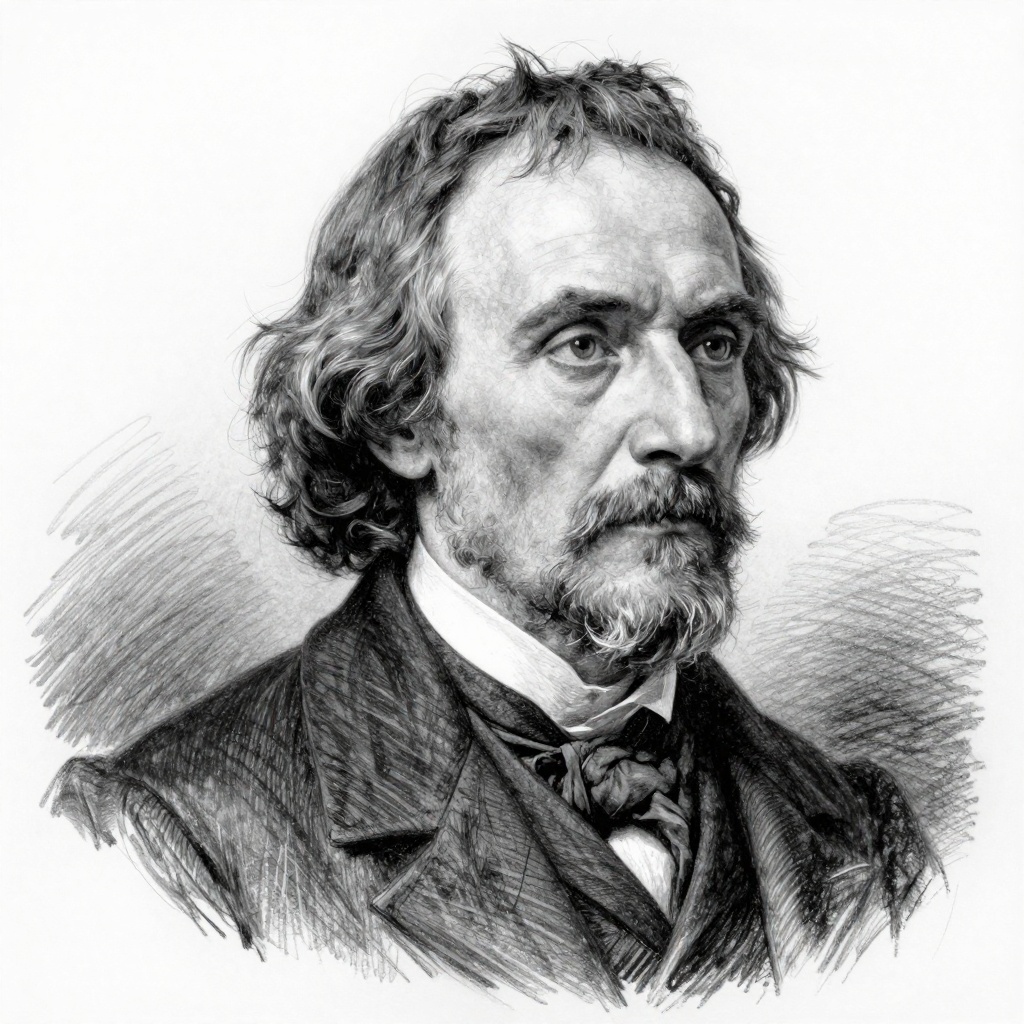
Comments