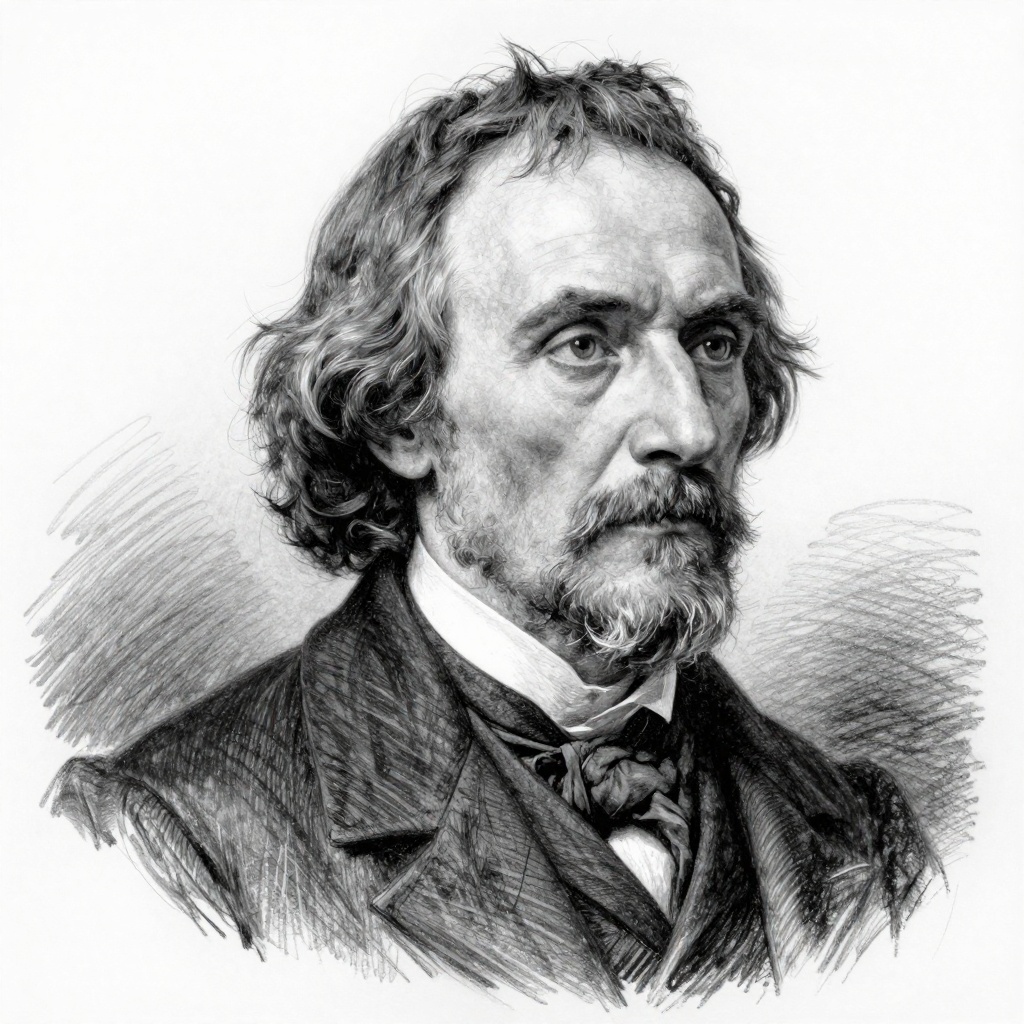
If a man does not keep pace with his companions, perhaps it is because he hears a different drummer. Let him s... — Henry David Thoreau

If a man does not keep pace with his companions, perhaps it is because he hears a different drummer. Let him step to the music which he hears, however measured or far away.

Author: Henry David Thoreau

Insight: There's a comfort in this quote that runs deeper than the typical "just be yourself" advice. Thoreau isn't saying nonconformity is noble or that you should rebel for rebellion's sake. He's saying something quieter: maybe you're not broken or slow or stubborn. Maybe you're actually listening to something real that other people can't hear yet. The tricky part is distinguishing between a genuine inner compass and simple stubbornness or fear dressed up as principle. We all know people who claim they're "marching to their own beat" when they're really just afraid of commitment or avoiding the work that conformity requires. The difference usually shows itself over time. Someone following a real drummer—their own values, curiosity, or calling—tends to move with purpose and pay a real price for it. They're not just contrarian; they're actually building something, or pursuing something that matters to them specifically. What makes Thoreau's version timeless is the permission it gives us in a world obsessed with metrics and pace. You don't need to justify why your timeline looks different, why you're building something nobody else cares about yet, or why the standard path never quite fit. But you do need to actually hear the music, not just imagine it.

Source: Walden, or Life in the Woods, p. 326, 1854

If a man does not keep pace with his companions, perhaps it is because he hears a different drummer. Let him step to the music which he hears, however measured or far away.

Henry David ThoreauWalden, or Life in the Woods, p. 326, 1854

Listen to what only you can hear

There's a comfort in this quote that runs deeper than the typical "just be yourself" advice. Thoreau isn't saying nonconformity is noble or that you should rebel for rebellion's sake. He's saying something quieter: maybe you're not broken or slow or stubborn. Maybe you're actually listening to something real that other people can't hear yet.

The tricky part is distinguishing between a genuine inner compass and simple stubbornness or fear dressed up as principle. We all know people who claim they're "marching to their own beat" when they're really just afraid of commitment or avoiding the work that conformity requires. The difference usually shows itself over time. Someone following a real drummer—their own values, curiosity, or calling—tends to move with purpose and pay a real price for it. They're not just contrarian; they're actually building something, or pursuing something that matters to them specifically.

What makes Thoreau's version timeless is the permission it gives us in a world obsessed with metrics and pace. You don't need to justify why your timeline looks different, why you're building something nobody else cares about yet, or why the standard path never quite fit. But you do need to actually hear the music, not just imagine it.

Comments

Sign in to leave a comment or reply to one.

Sign in

Henry David Thoreau

Henry David Thoreau was an American essayist, poet, and philosopher, known for his transcendentalist writings advocating for individualism, nature appreciation, and civil disobedience. He is best known for his book "Walden, or Life in the Woods," which reflects on simple living in natural surroundings and has inspired generations of environmentalists and activists.

Graph

Related