Quote · Added 8 February 2026
It is not knowledge, but the act of learning, not possession but the act of getting there, which grants the greatest enjoyment.
Carl Friedrich GaussLetter to Farkas Bolyai, 2 September 1808
Quote · Added 8 February 2026
There's something deeply backwards about how we approach most things. We fixate on the finish line—the degree, the promotion, the savings account hitting a certain number—as if that's where satisfaction lives. But anyone who's actually achieved something they cared about knows the weird letdown that can follow. The trophy sits on the shelf. The goal is reached. Then what?
The real juice is in the struggle itself, in that moment when a confusing problem suddenly makes sense, or when you realize you're genuinely better at something than you were last month. Learning is active. It requires you to be alive to what you're doing, to pay attention, to stumble and correct course. Getting there means you're moving, changing, building momentum. Possession is static—it just sits there.
This matters now especially because we're drowning in finished products. We can consume the world's knowledge in seconds but miss the texture of actually grappling with something hard. We skip to the answer instead of sitting with the question. The paradox is that people who get genuinely good at things—who build real confidence—almost always describe the process itself as the best part, not the arrival. The enjoyment isn't a reward waiting at the end. It's built into every step of the climb.
1777–1855·lived 77 years
Carl Friedrich Gauss was a German mathematician and physicist who made significant contributions to many fields, including number theory, algebra, statistics, and electromagnetism. He is known for his work in mathematics, such as the discovery of the prime number theorem and Gaussian distribution, as well as for his development of Gaussian units in electromagnetism. Gauss is often referred to as the "Prince of Mathematicians."
Also by Carl Friedrich Gauss
Ask her to wait a moment - I am almost done.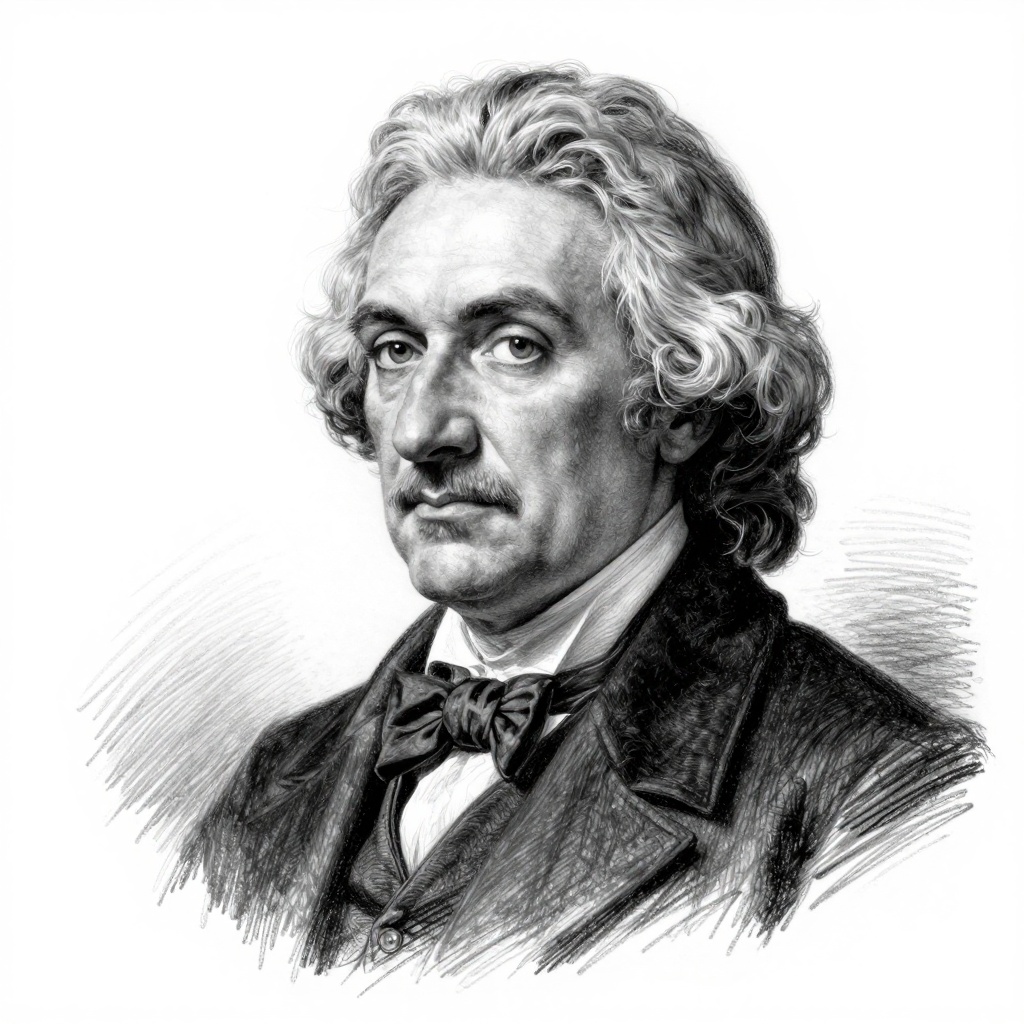
Comments