Quote · Added 14 February 2026
We become just by performing just action, temperate by performing temperate actions, brave by performing brave action.
AristotleNicomachean Ethics, Book II, 350 BC
Quote · Added 14 February 2026
We're often waiting for permission to become the person we want to be—holding off on acting brave until we feel brave, or staying quiet about our values until we've somehow earned the right to speak up. But Aristotle flips this backwards in a way that actually works: you don't feel your way into action. You act your way into feeling.
This matters because it means character isn't something you're born with or stuck with. It's built through repetition, like a muscle. The shy person who speaks up once doesn't suddenly transform, but they've cracked something open. Do it again, and again, and eventually the nervousness doesn't disappear—you just become someone who acts despite it. The person who decides to be generous doesn't wait until they feel naturally giving; they give, and generosity becomes part of who they are.
The tricky part we often miss is that this works both ways. You also become impatient by staying impatient, cynical by making cynical choices, careless by cutting corners repeatedly. You're not building character through grand gestures or perfect moments. You're building it in small, almost boring choices—what you do when no one's watching, how you treat the person who can't help you, whether you follow through on small promises. That's where character actually lives.
d. 322
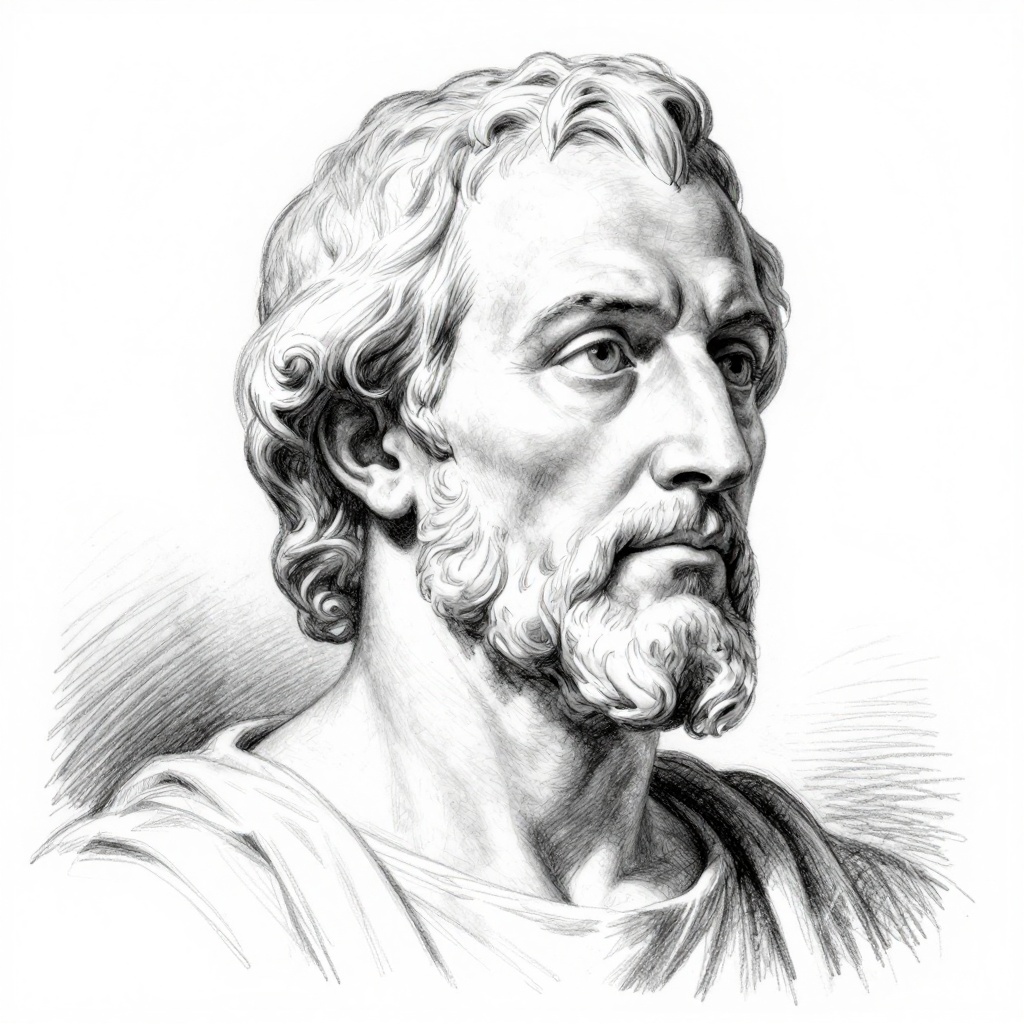
Aristotle was a Greek philosopher and polymath who lived from 384 to 322 BC. He is known for being one of the greatest thinkers in Western philosophy and for his contributions to a wide array of subjects including metaphysics, ethics, politics, biology, and logic. Aristotle was a student of Plato and the teacher of Alexander the Great.
Comments