Quote · Added 14 February 2026
The ultimate value of life depends upon awareness and the power of contemplation rather than upon mere survival.
Filed underlife·awareness·contemplation
Quote · Added 14 February 2026
Filed underlife·awareness·contemplation
There's a real trap in how we live now: we confuse staying busy with staying alive. We hit our targets, pay our bills, show up to things, and call it a day. But Aristotle points at something harder to measure—the difference between existing and actually living. He's saying that just getting through your life, accumulating experiences or achievements without really thinking about them, misses the point entirely.
The twist is that this isn't about becoming a philosopher or abandoning practical life. It's about the moments when you actually notice what's happening. When you sit with a problem long enough to understand it. When you read something that changes how you see things. When you have a conversation that matters. These aren't luxuries—they're what make life worth living. A person who works hard but never reflects on why, who achieves goals but never asks if they matter, is sleepwalking through their own existence.
The real pressure today is that contemplation feels like a luxury we can't afford. But Aristotle would say it's the opposite: it's the foundation. Without it, we're just grinding. The power to step back, to think clearly about what we're doing and why—that's what separates a life well-lived from a life merely completed.
d. 322
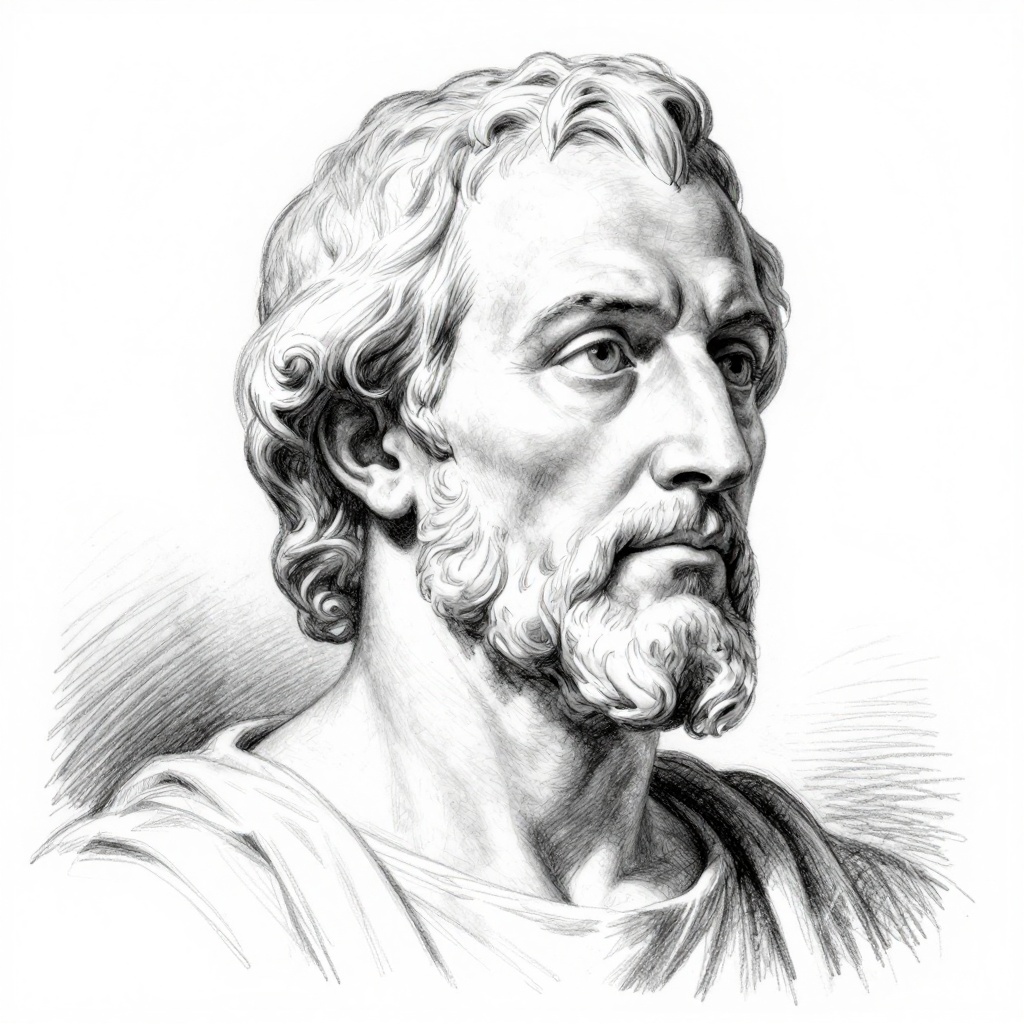
Aristotle was a Greek philosopher and polymath who lived from 384 to 322 BC. He is known for being one of the greatest thinkers in Western philosophy and for his contributions to a wide array of subjects including metaphysics, ethics, politics, biology, and logic. Aristotle was a student of Plato and the teacher of Alexander the Great.
Comments