Quote · Added 14 February 2026
The state comes into existence for the sake of life and continues to exist for the sake of good life.
AristotlePolitics, Book I, 350 BC
Quote · Added 14 February 2026
Most of us think of government as something that exists to enforce rules or collect taxes—a necessary hassle, basically. But Aristotle's observation points at something we actually expect from power, even if we don't always name it: that government should make life better, not just possible.
There's a crucial difference hiding in his words. A state that only keeps you alive—that prevents total chaos and starvation—is doing the minimum. But a state that exists for "the good life" is aiming at something richer: safety, yes, but also room for friendship, work that matters, time to think, access to beauty or culture or learning. When you feel frustrated that your city lacks parks, or that your job doesn't pay enough to breathe, or that infrastructure crumbles—you're experiencing this gap between mere survival and actual living.
The tricky part is that we rarely agree on what "good life" means. One person sees it in freedom from interference; another in robust community services. This doesn't make Aristotle wrong so much as it reveals why politics will always be contentious. We're not just arguing about whether systems work—we're arguing about what life should feel like to live in them.
d. 322
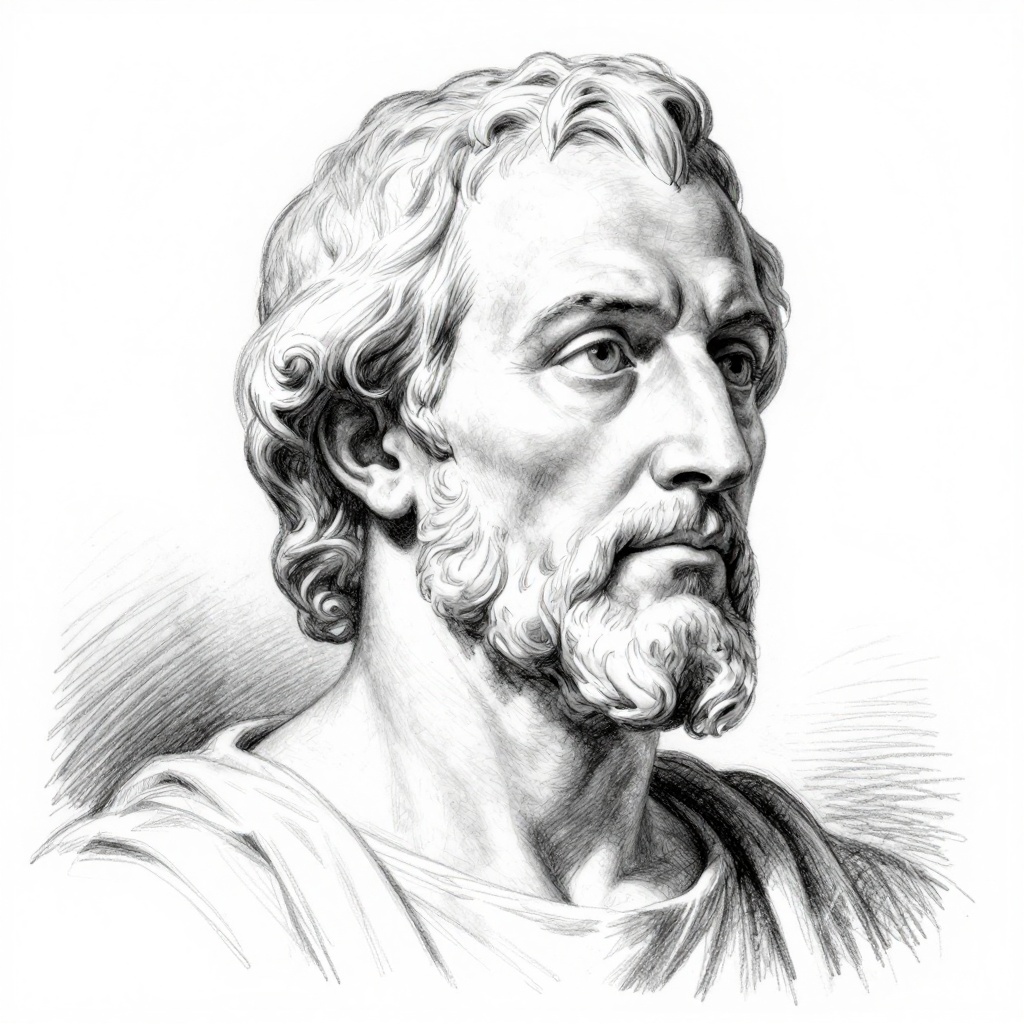
Aristotle was a Greek philosopher and polymath who lived from 384 to 322 BC. He is known for being one of the greatest thinkers in Western philosophy and for his contributions to a wide array of subjects including metaphysics, ethics, politics, biology, and logic. Aristotle was a student of Plato and the teacher of Alexander the Great.
Comments