Quote · Added 14 February 2026
The soul never thinks without a picture.
AristotleOn the Soul, 3.3
Quote · Added 14 February 2026
When you try to remember something important—a conversation that hurt, a moment of joy, a decision you need to make—you don't retrieve pure thought floating in abstract space. You remember a picture. The light in a room. Someone's facial expression. The way your stomach felt. Aristotle noticed what our brains confirm every day: we can't actually think in pure logic alone. We need images, sensations, and scenes to grab onto.
This matters more now than ever, actually. We're drowning in abstract information—numbers, statistics, policy debates—yet we struggle to care about things until we see them. A climate graph doesn't move us like footage of an actual flood. We don't feel invested in a relationship until we recall specific moments together. This is why storytellers, filmmakers, and even good teachers win our attention: they give our thinking something visual to hold.
The weird part? This limitation isn't a weakness. It's the secret to genuine understanding. When you force yourself to picture something concretely—to imagine how a decision will actually look and feel in your life—you think better. You stop spinning in circles and start thinking with your whole self. The soul thinks in pictures because pictures are how the soul thinks.
d. 322
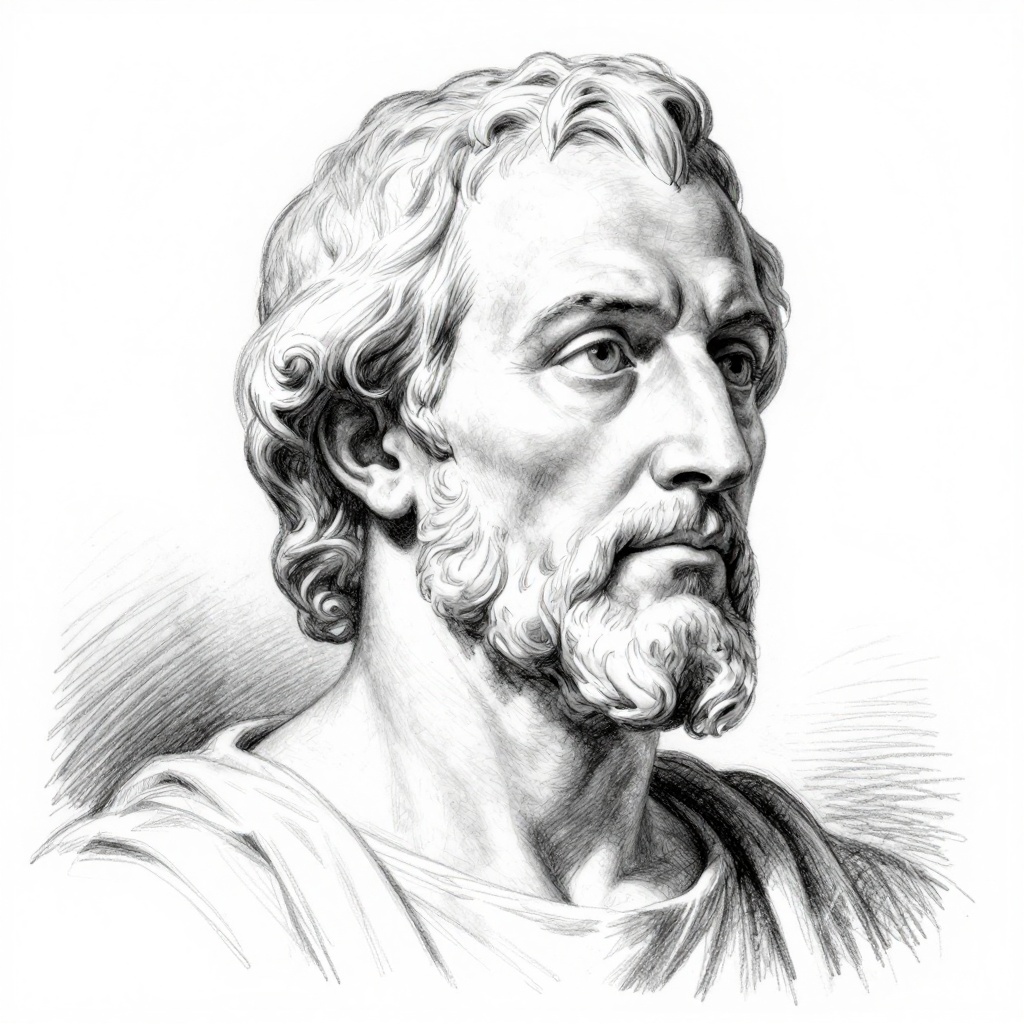
Aristotle was a Greek philosopher and polymath who lived from 384 to 322 BC. He is known for being one of the greatest thinkers in Western philosophy and for his contributions to a wide array of subjects including metaphysics, ethics, politics, biology, and logic. Aristotle was a student of Plato and the teacher of Alexander the Great.
Comments