Quote · Added 14 February 2026
The secret to humor is surprise.
AristotleWhat Theory Best Explains Humor?, SPSP, 2023
Quote · Added 14 February 2026
Humor works because it trips us up. We're expecting one thing, mentally preparing for a certain direction, and then suddenly the punchline yanks us somewhere else entirely. That moment of dissonance—when reality doesn't match our prediction—creates the laugh. It's why the same joke lands differently depending on whether you saw it coming. Once you know the twist, the surprise evaporates and so does the funny.
This explains why your sense of humor changes as you get older, and why what cracked you up at fifteen might feel tired now. You've learned the patterns. You anticipate the moves. A truly funny person isn't just someone with a good memory for jokes—they're someone who still finds ways to violate your expectations, who reads the room and knows what you think is coming next, then deliberately goes sideways.
The flip side is that surprise without substance isn't actually funny; it's just random. The best humor sneaks up on something true. It catches you off guard precisely because it reveals something real that you weren't quite ready to see. That's why a perfectly-timed observation about something mundane—how we all pretend our lives are fine—can hit harder than an elaborate setup with nowhere genuine to land.
d. 322
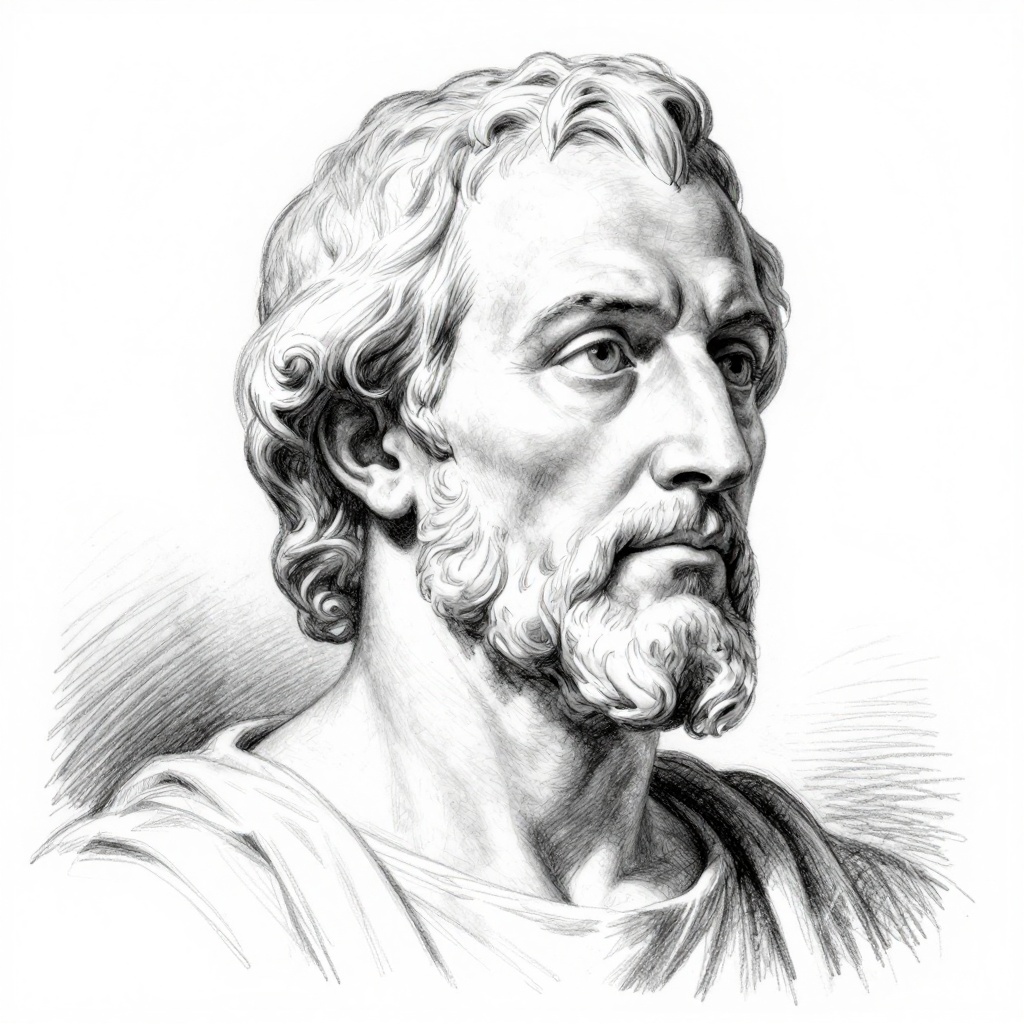
Aristotle was a Greek philosopher and polymath who lived from 384 to 322 BC. He is known for being one of the greatest thinkers in Western philosophy and for his contributions to a wide array of subjects including metaphysics, ethics, politics, biology, and logic. Aristotle was a student of Plato and the teacher of Alexander the Great.
Comments