Quote · Added 14 February 2026
The educated differ from the uneducated as much as the living from the dead.
AristotleNicomachean Ethics, 2009
Filed undereducation·difference·life
Quote · Added 14 February 2026
Filed undereducation·difference·life
There's something almost shocking about how hard Aristotle was willing to push this idea. He wasn't saying educated people are slightly better informed or have nicer jobs. He was saying the difference is as fundamental as existence itself. And the strange part? He might have been onto something, even if we'd phrase it differently today.
The real point isn't that educated people are somehow more alive in a literal sense. It's that education genuinely rewires how you move through the world. An educated person asks different questions, notices patterns others miss, and can imagine possibilities that seem invisible to someone without that training. It's not arrogance—it's almost like gaining new senses. You start seeing cause and effect where others see randomness. You can read a contract, understand a political argument, or recognize when you're being manipulated. That matters.
But here's where it gets complicated: Aristotle's claim can feel defensive or elitist in a way that doesn't quite hold up anymore. Education is real and valuable, sure. But some of the most perceptive people you'll meet never finished college. And plenty of credentialed people move through life half-asleep. Maybe the truer insight is that genuine curiosity—whether cultivated in a classroom or through hard-won life experience—is what actually separates the awake from the sleepwalking.
d. 322
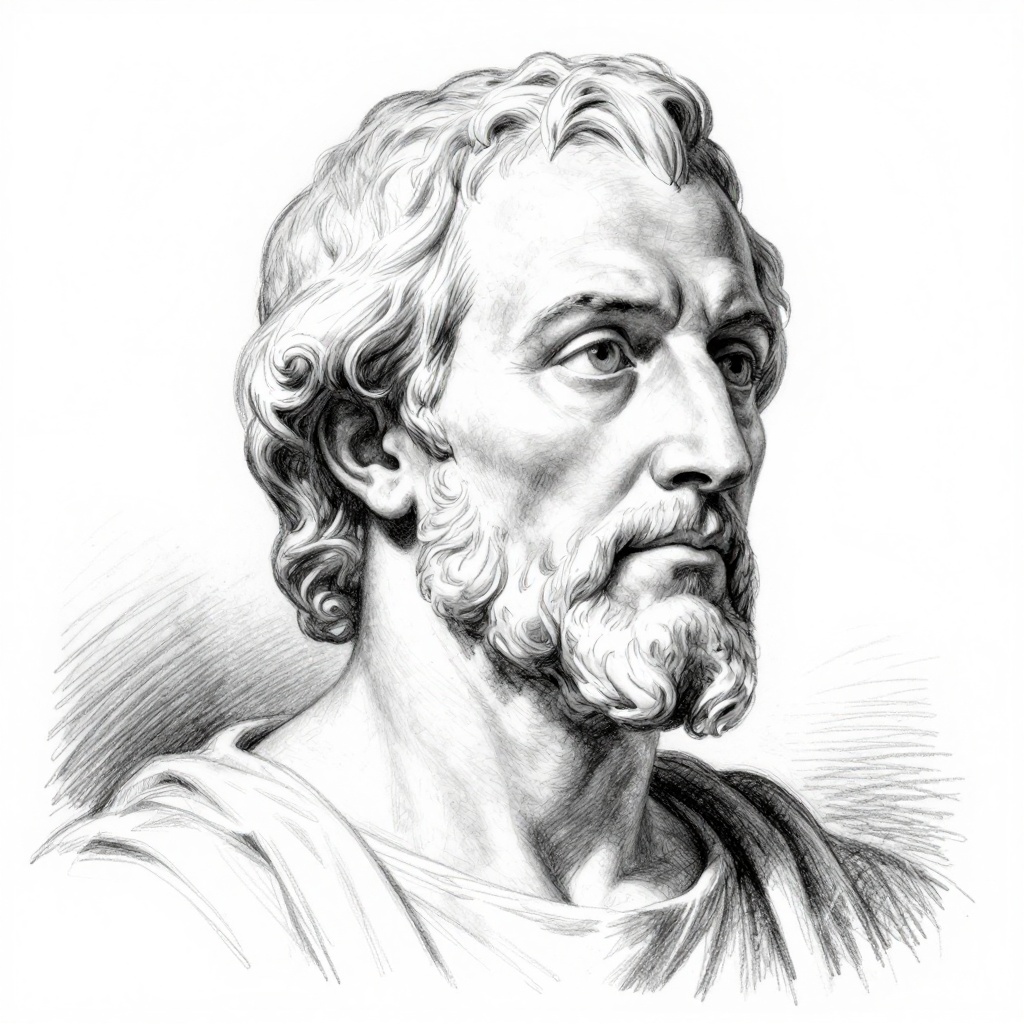
Aristotle was a Greek philosopher and polymath who lived from 384 to 322 BC. He is known for being one of the greatest thinkers in Western philosophy and for his contributions to a wide array of subjects including metaphysics, ethics, politics, biology, and logic. Aristotle was a student of Plato and the teacher of Alexander the Great.
Comments