Quote · Added 14 February 2026
Poetry is finer and more philosophical than history; for poetry expresses the universal, and history only the particular.
AristotlePoetics, Section 1451b
Filed underpoetry·philosophy·universality
Quote · Added 14 February 2026
Filed underpoetry·philosophy·universality
When we think of history, we imagine facts and dates—who did what, when it happened. Poetry feels like the opposite: dreamy, vague, maybe even made up. But Aristotle's point flips this around. A historical account tells you that one person faced a choice and took a particular path. Poetry shows you something deeper: what it feels like to stand at a crossroads, the weight of fear or duty, the shape of human struggle itself. The specific becomes a door into the universal.
This matters because we often treat facts and feelings as separate things. We assume that learning "what really happened" is the serious work, while exploring themes through stories is just entertainment. But history alone leaves us collecting information without necessarily understanding ourselves. When you read a poem or novel about betrayal, loneliness, or ambition, you're not learning what happened to one fictional person—you're recognizing patterns you've felt or witnessed. You're seeing the skeleton of human experience laid bare.
The tension here is worth sitting with: we need both. History grounds us in reality and consequence. But poetry and storytelling do something history can't quite manage—they make the universal visible, so we recognize ourselves in it.
d. 322
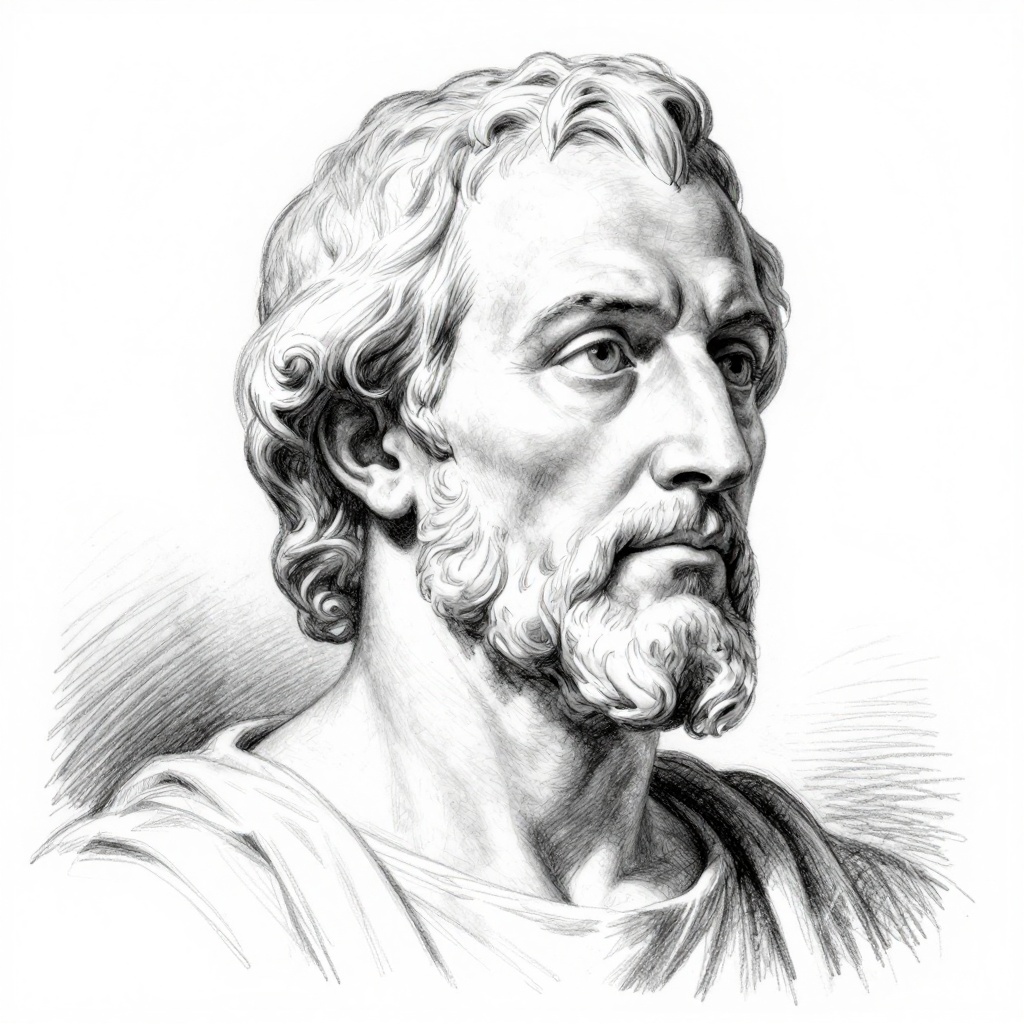
Aristotle was a Greek philosopher and polymath who lived from 384 to 322 BC. He is known for being one of the greatest thinkers in Western philosophy and for his contributions to a wide array of subjects including metaphysics, ethics, politics, biology, and logic. Aristotle was a student of Plato and the teacher of Alexander the Great.
Comments