Quote · Added 14 February 2026
Pleasure in the job puts perfection in the work.
AristotleNicomachean Ethics, Book 10, 350 BC
Filed underwork·pleasure·perfection
Quote · Added 14 February 2026
Filed underwork·pleasure·perfection
There's something quietly radical about this idea, especially now when we're trained to separate "work" from "joy." We've built entire careers on the assumption that suffering through tasks somehow makes them more legitimate or valuable. But Aristotle's point cuts through that: when you actually enjoy what you're doing, something shifts. Your attention deepens. Your standards rise naturally, not through gritted teeth, but because you care.
The tricky part is that this doesn't mean work always feels fun. It means finding the thread of genuine interest in what you're doing—the problem you're solving, the person you're helping, the thing you're building or learning. A parent handling the hundredth bedtime story finds pleasure not in repetition but in the connection. A carpenter might hate sawing dust but love the precision of a joint fitting perfectly. That's where excellence actually comes from.
What makes this relevant today is that we're constantly choosing between "practical" work that drains us and "passion" work that feels impossible to afford. But Aristotle suggests there's another option: looking for genuine engagement within whatever you're doing. Not toxic positivity, not forced enthusiasm—just real interest. That's what turns obligation into craft.
d. 322
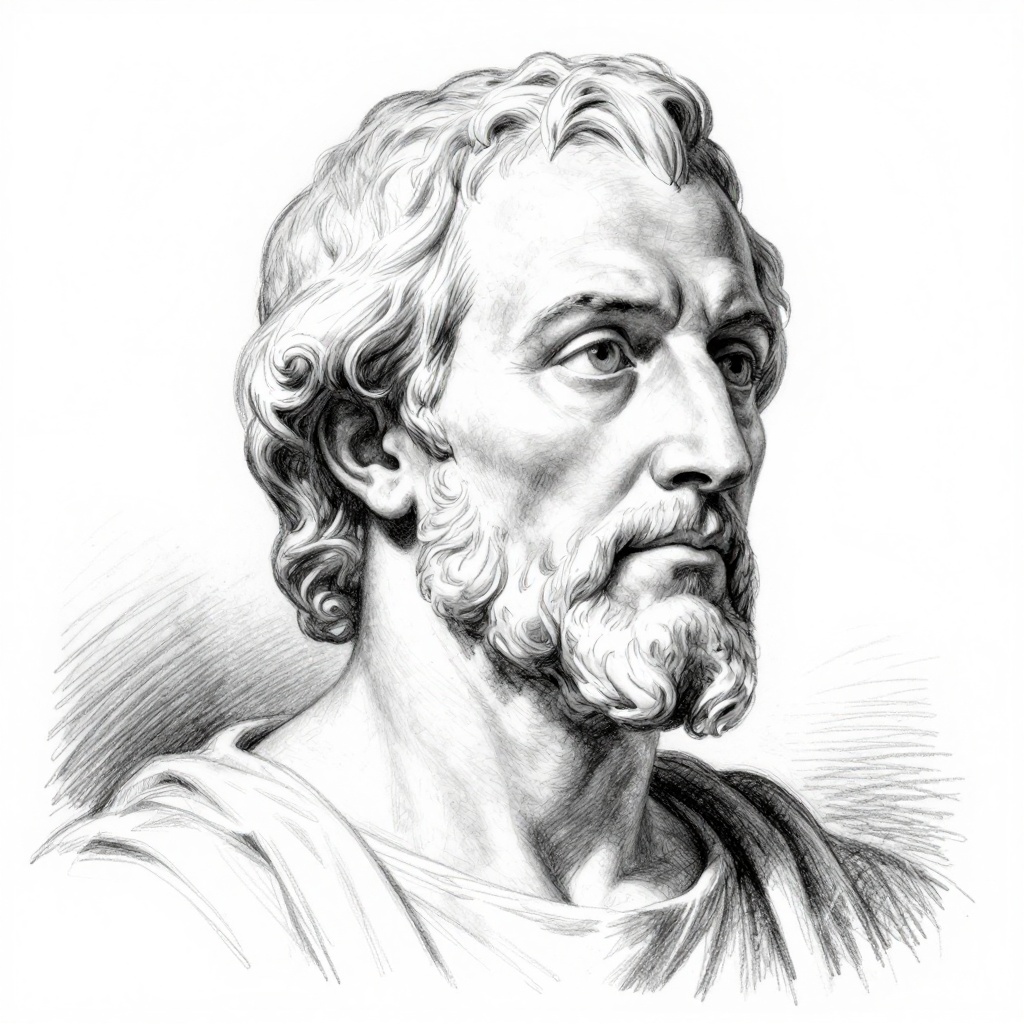
Aristotle was a Greek philosopher and polymath who lived from 384 to 322 BC. He is known for being one of the greatest thinkers in Western philosophy and for his contributions to a wide array of subjects including metaphysics, ethics, politics, biology, and logic. Aristotle was a student of Plato and the teacher of Alexander the Great.
Comments