Quote · Added 9 February 2026
Mothers are fonder than fathers of their children because they are more certain they are their own.
AristotleNicomachean Ethics, Book 8, Chapter 12
Quote · Added 9 February 2026
There's something almost brutally honest about this observation—and while the biology behind it has shifted in modern times, the underlying insight still holds surprising weight. Aristotle was pointing at something we rarely discuss openly: certainty breeds attachment. A mother's physical bond to pregnancy and birth creates an undeniable, biological proof of ownership in a way that historically gave fathers no such guarantee. That fundamental difference in certainty did shape how people invested emotionally.
But here's what's interesting for us now: the logic applies far beyond parenthood. We tend to care more fiercely about things we feel we fully own or control—our projects, our relationships, our reputations. Uncertainty breeds distance. This is why people often love their own ideas more than borrowed ones, why we fuss over our own mistakes but shrug off similar ones in others. It's also why commitment deepens attachment. The more you're genuinely bound to something, the more you fight for it.
The uncomfortable part is recognizing how this plays out in modern relationships. If fathers historically felt less certain about their children, they also often felt less invested. Today, when we can choose our level of involvement, the question becomes: are we staying distant because something is genuinely uncertain, or because we haven't chosen to become certain?
d. 322
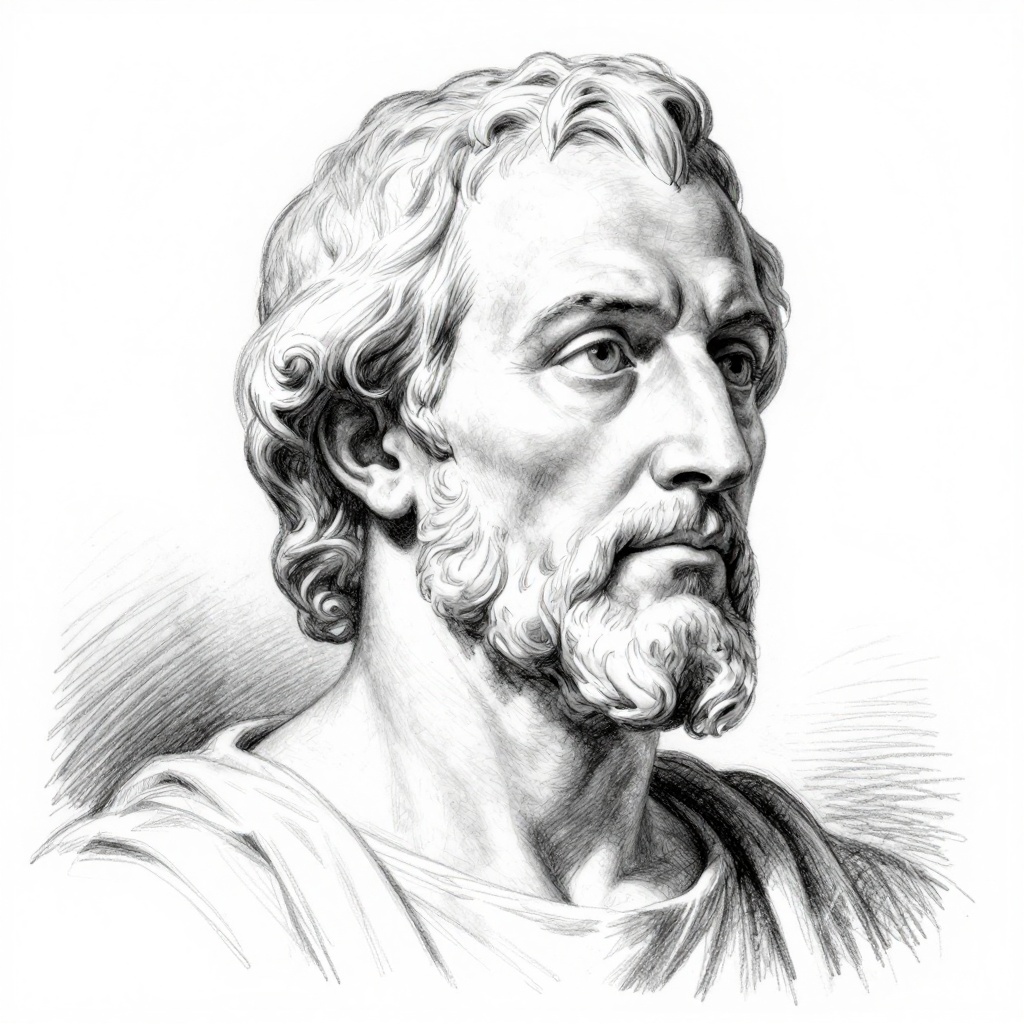
Aristotle was a Greek philosopher and polymath who lived from 384 to 322 BC. He is known for being one of the greatest thinkers in Western philosophy and for his contributions to a wide array of subjects including metaphysics, ethics, politics, biology, and logic. Aristotle was a student of Plato and the teacher of Alexander the Great.
Comments