Quote · Added 14 February 2026
Moral excellence comes about as a result of habit. We become just by doing just acts, temperate by doing temperate acts, brave by doing brave acts.
AristotleNicomachean Ethics, Book II, 350 BC
Quote · Added 14 February 2026
We often think of being a good person as something you either are or aren't—like a fixed trait you're born with. But Aristotle's insight flips this around: you don't become honest because you're naturally honest. You become honest by making honest choices, repeatedly, until it stops feeling like a struggle and starts feeling like who you are. The same goes for patience, kindness, or courage. These aren't things you suddenly decide to be. They're muscles that strengthen through use.
This matters because it takes the pressure off perfection while simultaneously putting it back on consistency. You're not hoping to wake up one day as a braver or kinder person. You're building that version of yourself through the small, unglamorous decisions you make every single day. Skip the lie, even when no one would know. Do the hard conversation. Show up when it's inconvenient. Each time you do it, you're not just doing the right thing in that moment—you're rewiring who you're becoming.
The tricky part is that this cuts both ways. You also become callous by doing callous things, selfish by prioritizing yourself repeatedly. Character isn't destiny, but it's not magical either. It's the compound result of a thousand small choices, which means you have more control—and more responsibility—than you might think.
d. 322
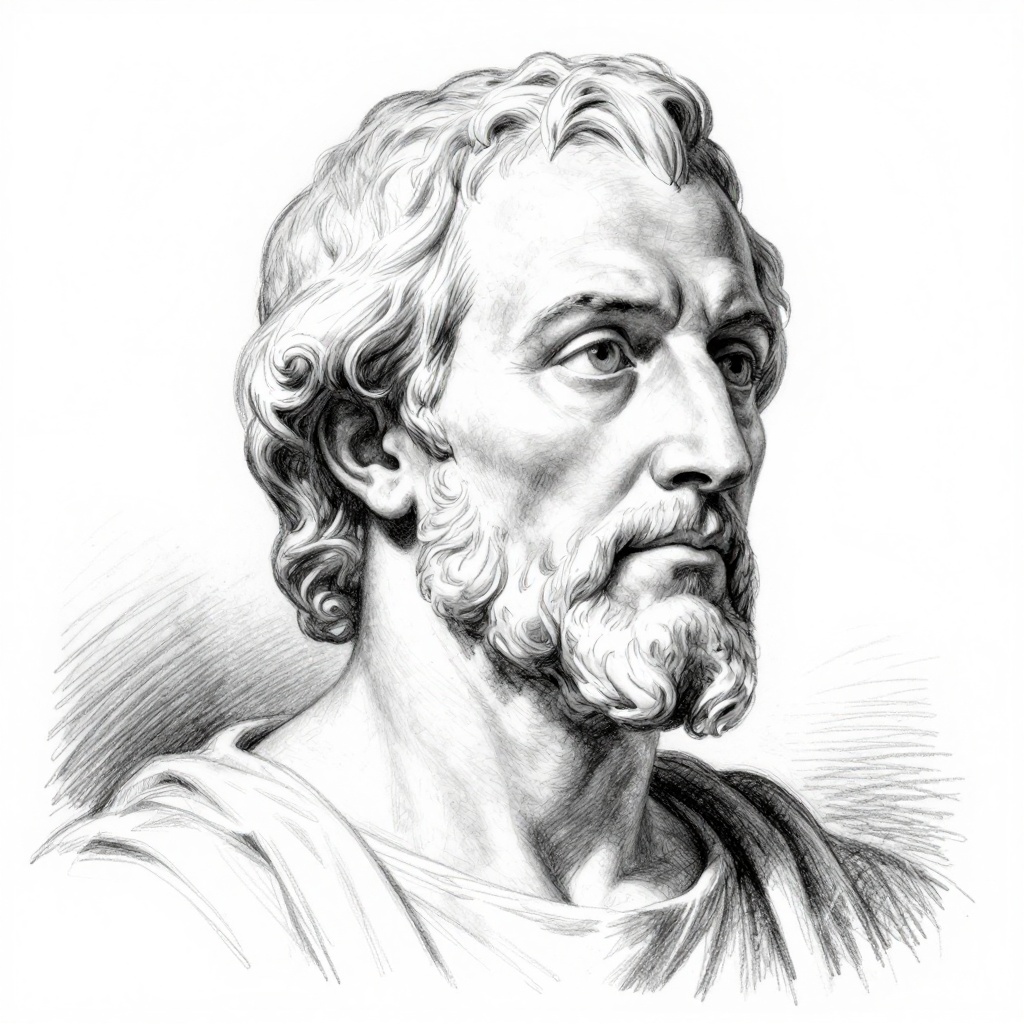
Aristotle was a Greek philosopher and polymath who lived from 384 to 322 BC. He is known for being one of the greatest thinkers in Western philosophy and for his contributions to a wide array of subjects including metaphysics, ethics, politics, biology, and logic. Aristotle was a student of Plato and the teacher of Alexander the Great.
Comments