Quote · Added 17 February 2026
Life is only meaningful when we are striving for a goal.
Filed underlife·purpose·achievement
Quote · Added 17 February 2026
Filed underlife·purpose·achievement
There's something almost counterintuitive about this one, because we often think of a meaningful life as something we arrive at—some destination where we finally feel fulfilled. But Aristotle's insight flips that around: the meaningfulness isn't in the destination at all. It's in the striving itself, the forward movement, the fact that you're genuinely working toward something that matters to you.
This shows up everywhere in modern life, often in ways we don't immediately recognize. People who retire and have "nothing to do" frequently report emptiness, not relief. Parents raising kids find that the struggle—the actual work of caring and teaching—creates more satisfaction than leisure ever does. Even hobbies feel meaningful when they're challenging us to improve, to create, to push forward in some way. The moment something becomes too easy or we stop caring about the outcome, it becomes hollow.
The tricky part is that our culture sometimes sells us the opposite story: that success means you can finally relax and coast. But Aristotle suggests that coasting is where meaning dies. The real fuel isn't comfort or achievement frozen in time—it's having something ahead of you that you genuinely care about reaching. Without that pull forward, life becomes background noise rather than something you're actually living.
d. 322
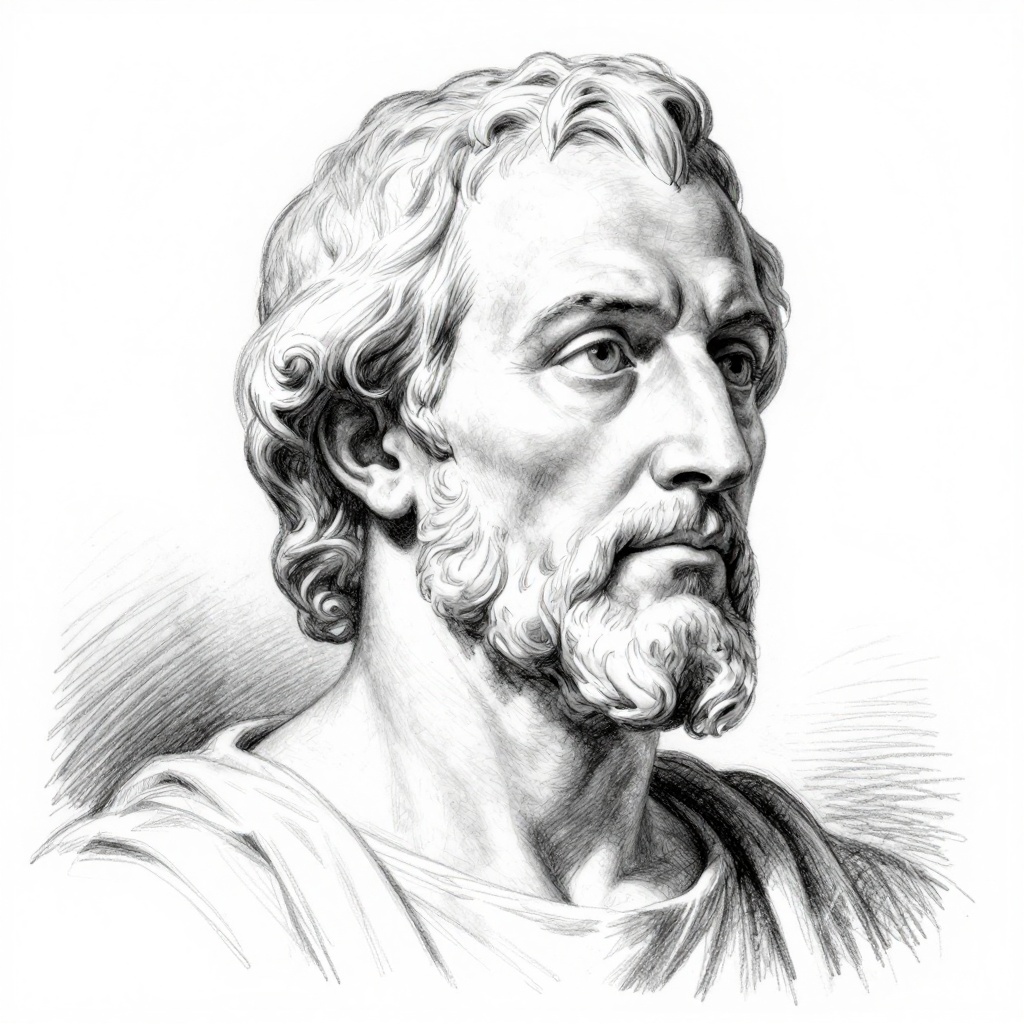
Aristotle was a Greek philosopher and polymath who lived from 384 to 322 BC. He is known for being one of the greatest thinkers in Western philosophy and for his contributions to a wide array of subjects including metaphysics, ethics, politics, biology, and logic. Aristotle was a student of Plato and the teacher of Alexander the Great.
Comments