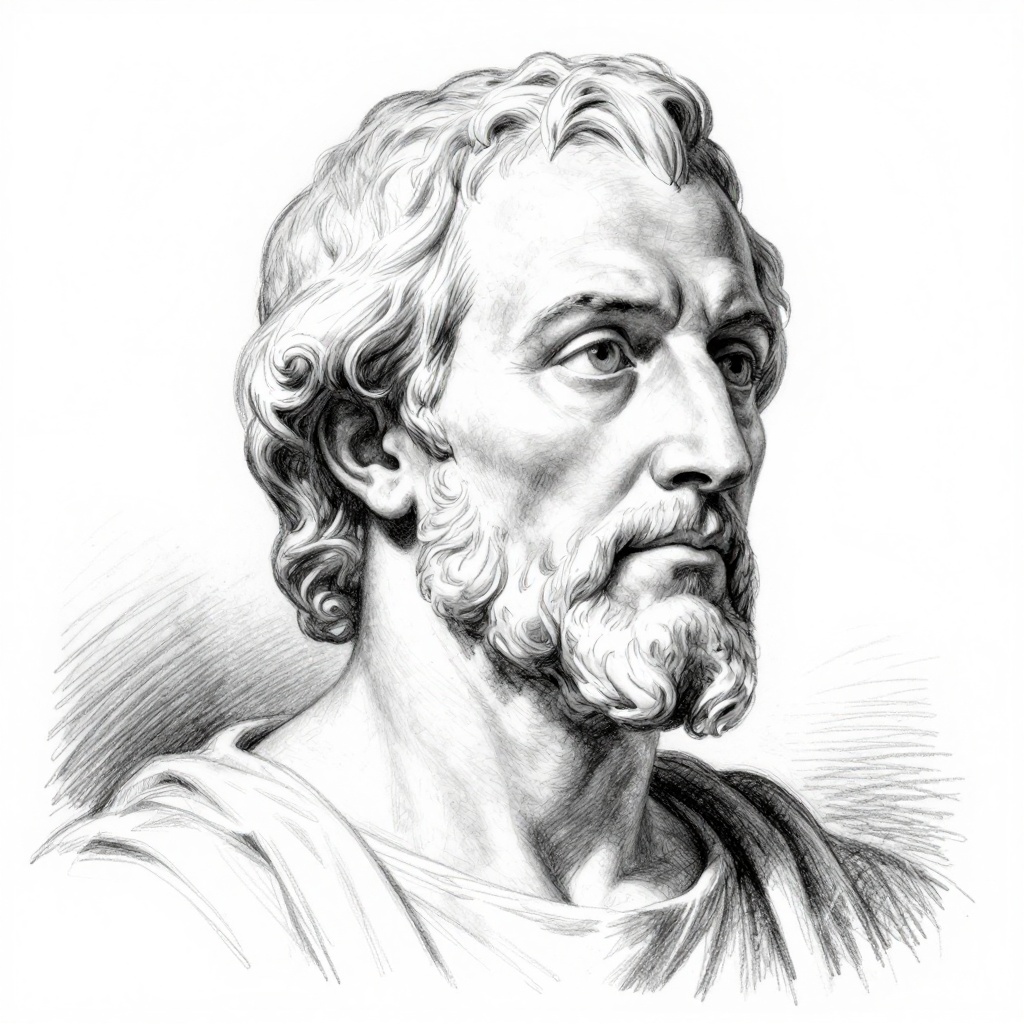
Jealousy is both reasonable and belongs to reasonable men, while envy is base and belongs to the base, for the... — Aristotle

Jealousy is both reasonable and belongs to reasonable men, while envy is base and belongs to the base, for the one makes himself get good things by jealousy, while the other does not allow his neighbour to have them through envy.

Author: Aristotle

Insight: There's something clarifying about Aristotle's old distinction here, because most of us use jealousy and envy interchangeably—but he's drawing a line that actually maps onto real human experience. Jealousy, in his reading, is about protecting or pursuing something you value. It's the feeling that spurs you to work harder, show up better, or defend what matters. It points inward. Envy, by contrast, is pure subtraction: it's not "I want that for myself" but rather "I don't want you to have it." One builds; one tears down. The tricky part is that both can wear the same face. You might think you're jealous—motivated to improve yourself—when you're actually just envious, hoping someone else fails so you feel better by comparison. That sideways glance at someone's success, the satisfaction when they stumble: that's envy working quietly. And it costs you nothing to indulge it, which is maybe why it spreads so easily. What makes this still sharp is social media, where both feelings get amplified and blurred together. The person who sees someone's promotion and gets inspired to level up their own work? That's the jealousy Aristotle meant. The person scrolling through wins and feeling hollowed out—that's the envy he warned about. One is a compass. The other is a leak.

Source: Nicomachean Ethics, Book II, 1108a34-37

Jealousy is both reasonable and belongs to reasonable men, while envy is base and belongs to the base, for the one makes himself get good things by jealousy, while the other does not allow his neighbour to have them through envy.

AristotleNicomachean Ethics, Book II, 1108a34-37

Building yourself or tearing others down

There's something clarifying about Aristotle's old distinction here, because most of us use jealousy and envy interchangeably—but he's drawing a line that actually maps onto real human experience. Jealousy, in his reading, is about protecting or pursuing something you value. It's the feeling that spurs you to work harder, show up better, or defend what matters. It points inward. Envy, by contrast, is pure subtraction: it's not "I want that for myself" but rather "I don't want you to have it." One builds; one tears down.

The tricky part is that both can wear the same face. You might think you're jealous—motivated to improve yourself—when you're actually just envious, hoping someone else fails so you feel better by comparison. That sideways glance at someone's success, the satisfaction when they stumble: that's envy working quietly. And it costs you nothing to indulge it, which is maybe why it spreads so easily.

What makes this still sharp is social media, where both feelings get amplified and blurred together. The person who sees someone's promotion and gets inspired to level up their own work? That's the jealousy Aristotle meant. The person scrolling through wins and feeling hollowed out—that's the envy he warned about. One is a compass. The other is a leak.

Comments

Sign in to leave a comment or reply to one.

Sign in

Aristotle

Aristotle was a Greek philosopher and polymath who lived from 384 to 322 BC. He is known for being one of the greatest thinkers in Western philosophy and for his contributions to a wide array of subjects including metaphysics, ethics, politics, biology, and logic. Aristotle was a student of Plato and the teacher of Alexander the Great.

Graph

Related