Quote · Added 14 February 2026
It is the mark of an educated mind to be able to entertain a thought without accepting it.
AristotleNicomachean Ethics, 2000
Filed underthought·education·open-mindedness
Quote · Added 14 February 2026
Filed underthought·education·open-mindedness
We live in a time when disagreement feels like a personal attack. Someone shares an idea, and we immediately sort it into "agree" or "disagree" boxes, as if there's no middle ground. But here's what gets lost: the ability to sit with an idea, turn it over, understand why someone believes it—all without having to adopt it as your own truth.
This skill is rarer than it should be. It means reading that article arguing against your politics and actually following the logic instead of dismissing it. It means listening to your friend's life philosophy without needing to convince them they're wrong. It's intellectual flexibility, and it's one of the most practical things an educated person can develop. It makes you harder to manipulate, more persuasive when you do argue, and genuinely more interesting to talk to.
The real benefit? When you stop treating every idea like a test you have to pass or fail, you learn more. You pick up wisdom from places you'd otherwise dismiss. You spot the weak points in your own thinking because you've practiced understanding other viewpoints from the inside. That's not weakness or indecision—it's the foundation of actually knowing what you believe and why.
d. 322
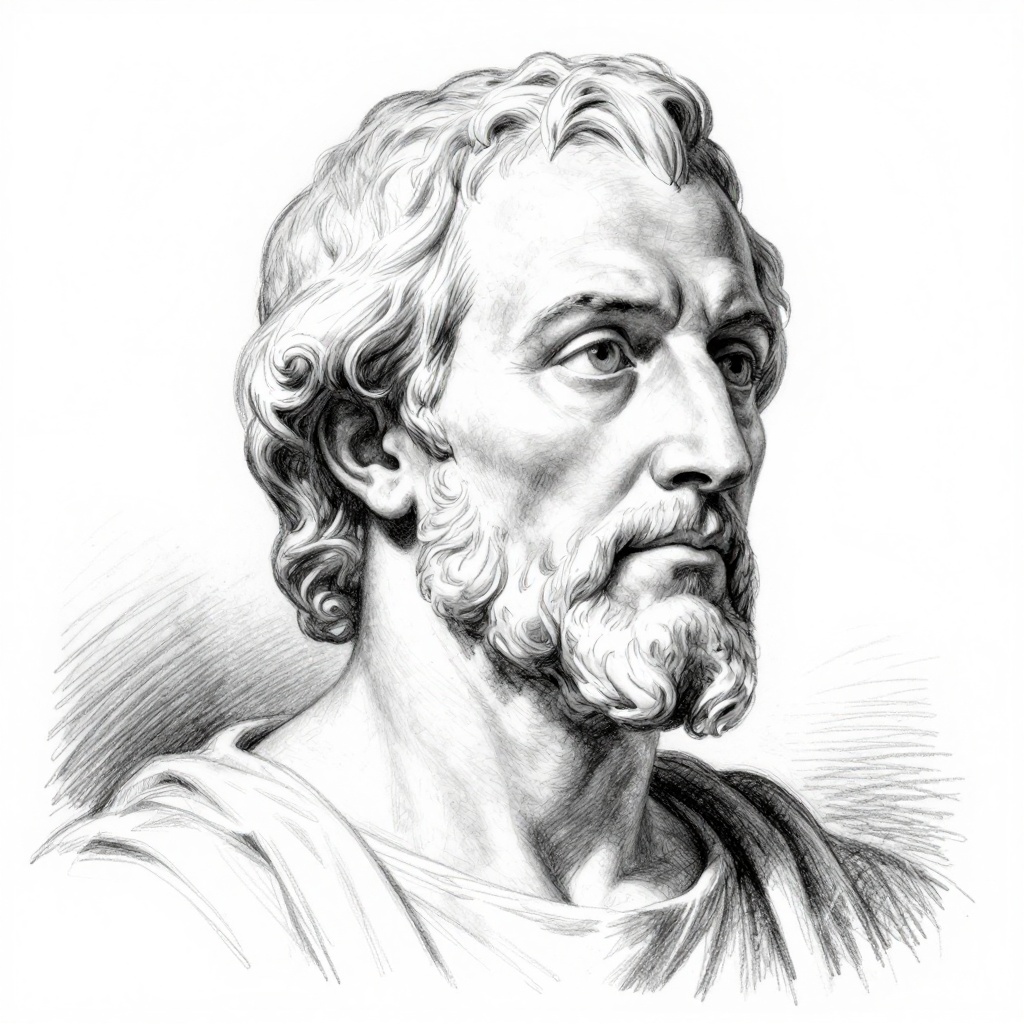
Aristotle was a Greek philosopher and polymath who lived from 384 to 322 BC. He is known for being one of the greatest thinkers in Western philosophy and for his contributions to a wide array of subjects including metaphysics, ethics, politics, biology, and logic. Aristotle was a student of Plato and the teacher of Alexander the Great.
Comments