Quote · Added 14 February 2026
It is best to rise from life as from a banquet, neither thirsty nor drunken.
AristotleNicomachean Ethics, p. 109, 2009
Filed underlife·moderation·balance
Quote · Added 14 February 2026
Filed underlife·moderation·balance
Most of us swing between two extremes: either we're constantly reaching for the next thing, convinced we haven't had enough, or we've binged so hard on experience that we're exhausted and numb. Aristotle's image of the banquet cuts right through this. He's not saying you should barely taste the food or leave early out of some misguided restraint. He's saying the goal is actually satisfaction—that sweet spot where you've genuinely enjoyed something without being consumed by wanting more of it or destroyed by excess.
This matters because our culture rarely models this middle path. We're encouraged to either deny ourselves or go all-in, to white-knuckle through or surrender completely. But rising from a banquet "neither thirsty nor drunken" means having enough judgment to know when something was good and when to stop. It's finishing a conversation feeling connected rather than drained. It's enjoying your work without letting it colonize your entire life.
The tricky part? This kind of balance requires real attention. You have to actually notice when you're satisfied, which is harder than it sounds in a world designed to keep you reaching. But there's real freedom in it—not the freedom to have everything, but the freedom to have tasted life well and still walk away clear-headed.
d. 322
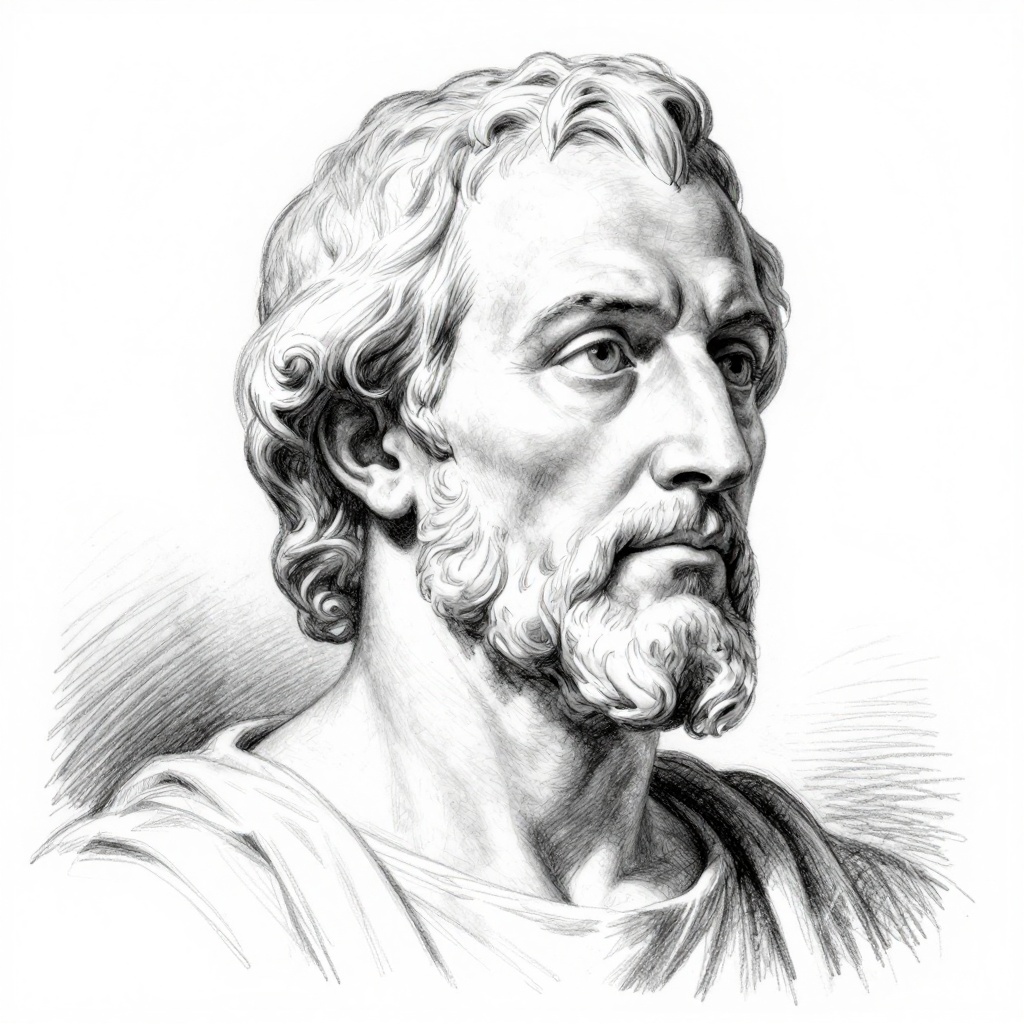
Aristotle was a Greek philosopher and polymath who lived from 384 to 322 BC. He is known for being one of the greatest thinkers in Western philosophy and for his contributions to a wide array of subjects including metaphysics, ethics, politics, biology, and logic. Aristotle was a student of Plato and the teacher of Alexander the Great.
Comments