Quote · Added 14 February 2026
I count him braver who overcomes his desires than him who conquers his enemies; for the hardest victory is over self.
AristotleNicomachean Ethics, Book III, 2000
Quote · Added 14 February 2026
We tend to celebrate the dramatic victories—the underdog who beats the odds, the person who stands up to someone powerful. But Aristotle is pointing at something quieter and often harder: the battle nobody else sees. Saying no to what you want, changing your mind when you're comfortable being wrong, starting that project instead of scrolling, showing up when you're tired. These don't come with applause, which is partly why they're so genuinely difficult.
The tricky part is that external enemies stay defeated. You beat them once and it's done. But your own desires? They show up every single day in new shapes. You can be disciplined about the gym for two months, then suddenly you're not. You can be kind to someone for years and lose it in one frustrated moment. This is why people often feel like they're failing even when they're doing fine—they're measuring themselves against an impossible standard of never wanting the easier path.
What makes this wisdom relevant now is how our culture treats self-control as something you either have or don't, like a fixed trait. Aristotle's angle is different. He's saying bravery isn't about never feeling the pull of your desires. It's about feeling that pull and choosing something else anyway. That's learnable. That's something you practice, like courage itself.
d. 322
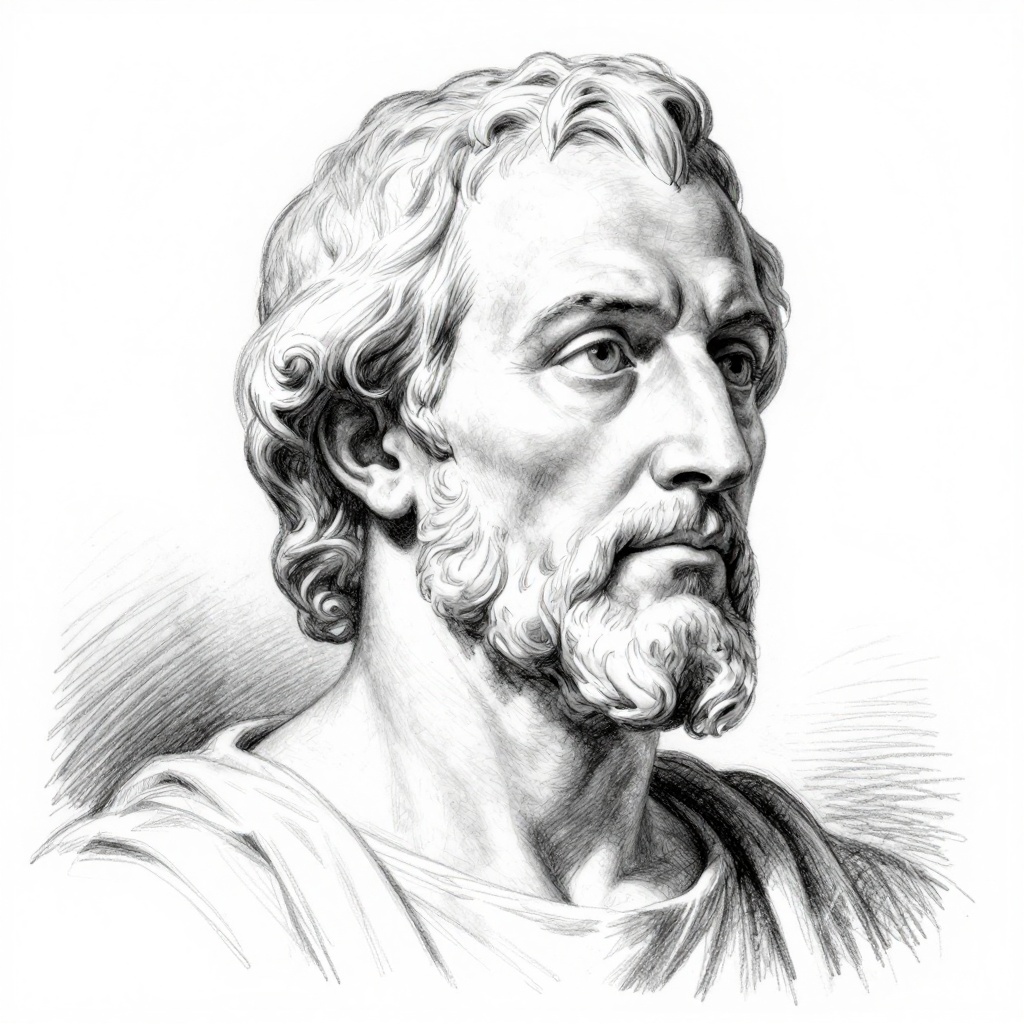
Aristotle was a Greek philosopher and polymath who lived from 384 to 322 BC. He is known for being one of the greatest thinkers in Western philosophy and for his contributions to a wide array of subjects including metaphysics, ethics, politics, biology, and logic. Aristotle was a student of Plato and the teacher of Alexander the Great.
Comments