Quote · Added 8 February 2026
Weakness of attitude becomes weakness of character.
Albert EinsteinSpeech made in honor of Thomas Mann, when Mann was given the Einstein Prize given by the Jewish Forum January 1939
No ratings yet
Quote · Added 8 February 2026
We usually think of character as something fixed—you either have integrity or you don't. But Einstein is pointing at something subtler: how you habitually think about yourself shapes who you actually become. When you repeatedly tell yourself you can't do something, or that obstacles are too big, or that trying is pointless, you're not just having negative thoughts. You're building neural pathways and reinforcing a version of yourself that believes in your own limits.
The tricky part is that attitude feels invisible in the moment. It's just how you're thinking on a Tuesday morning. But compounded over months and years, a defeatist attitude does real damage. You start making smaller choices based on that attitude—you skip the gym, you don't speak up in meetings, you don't try for the job. And then you have actual evidence that you failed, which seems to confirm your original doubt. The weakness wasn't the obstacle; it was your willingness to accept defeat before you even tried.
The flip side works too. A stubborn refusal to accept limitations, even when things are genuinely hard, actually rewires how you approach problems. It becomes character—not delusional optimism, but the kind of quiet persistence that shows up.
1879–1955·lived 76 years
Albert Einstein was a renowned theoretical physicist known for developing the theory of relativity, one of the two pillars of modern physics. He is best known for his mass-energy equivalence formula E=mc^2 and was awarded the Nobel Prize in Physics in 1921 for his explanation of the photoelectric effect.
Also by Albert Einstein
God does not play dice with the universe.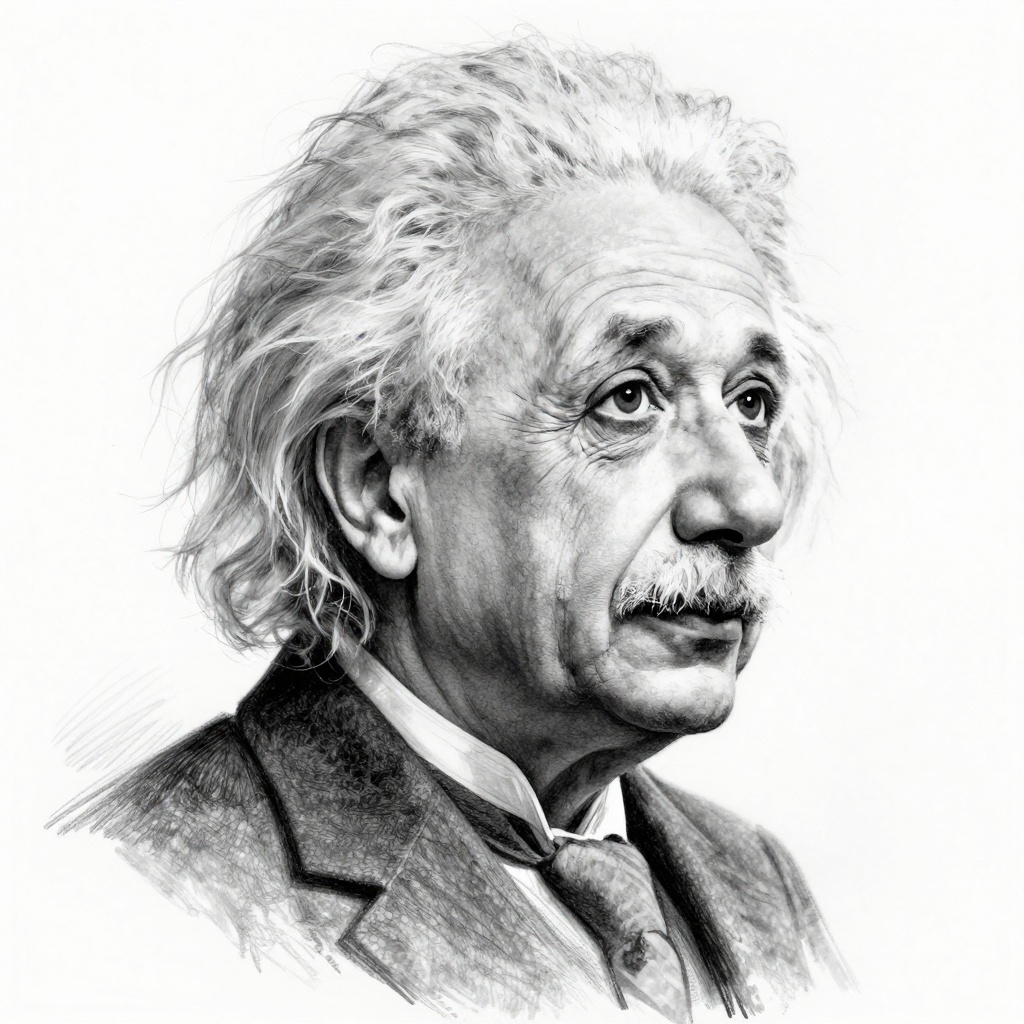
Comments