Quote · Added 15 February 2026
Our death is not an end if we can live on in our children and the younger generation. For they are us; our bodies are only wilted leaves on the tree of life.
No ratings yet
Quote · Added 15 February 2026
There's something almost physically comforting about this idea, especially if you've ever caught yourself doing something your parent did, or heard your own words coming back at you through your child's mouth. We tend to think of ourselves as isolated individuals with a clear expiration date, but Einstein's suggestion is stranger and more hopeful: you're already scattered into the world through the people you influence, the habits you pass on, the way you taught someone to think.
The tricky part is that this works whether you have biological children or not. Every person you genuinely shape—a student, a friend you've challenged, a sibling you've supported—carries forward something of how you see the world. Your skepticism or your kindness or your way of asking questions becomes their skepticism or kindness or curiosity. It's not metaphorical so much as it is literally how ideas and values move through time.
What makes this view radical is that it removes some of the sting from mortality without requiring any religion or afterlife belief. You don't vanish; you transform. The anxiety of being forgotten or irrelevant doesn't disappear entirely, but it shifts. The question stops being "Will I last forever?" and becomes the more practical one: "Am I leaving something worth carrying forward?"
1879–1955·lived 76 years
Albert Einstein was a renowned theoretical physicist known for developing the theory of relativity, one of the two pillars of modern physics. He is best known for his mass-energy equivalence formula E=mc^2 and was awarded the Nobel Prize in Physics in 1921 for his explanation of the photoelectric effect.
Also by Albert Einstein
God does not play dice with the universe.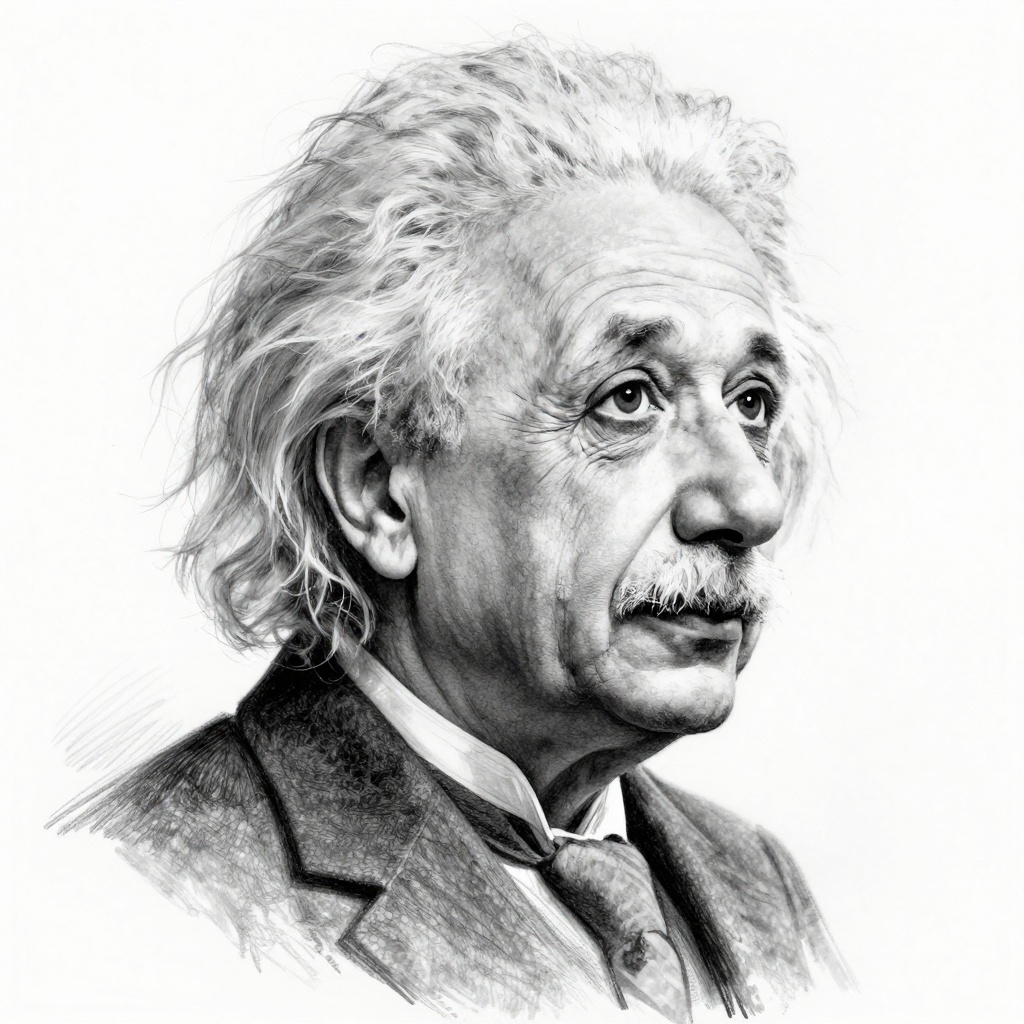
Comments