Quote · Added 13 February 2026
Only a life lived for others is a life worthwhile.
Albert EinsteinThe World as I See It, 1931
No ratings yet
Quote · Added 13 February 2026
There's something quietly radical about this idea, especially now when we're constantly told to optimize ourselves—build our brand, maximize our potential, chase our goals. Einstein isn't arguing for self-sacrifice or martyrdom. He's suggesting that the meaningful parts of a life aren't the achievements you collect or the comfort you accumulate, but the moments when you actually matter to someone else.
Think about the people you remember fondly, the days that stick with you. They're rarely the ones spent alone improving yourself. They're usually times you showed up for someone—helped a friend through something real, made a stranger feel less alone, taught someone what you knew, noticed someone who was invisible. These moments feel different because they matter in a way that's outside yourself. You're not performing; you're just genuinely useful.
The tricky part is that this doesn't mean abandoning your own life. It means recognizing that your life and other people's lives aren't separate things competing for your attention. The person who's good at their work, who takes care of themselves, who builds something—those things become worthwhile precisely because they ripple outward. Living for others doesn't mean becoming a doormat. It means letting that awareness reshape what you actually want to be good at.
1879–1955·lived 76 years
Albert Einstein was a renowned theoretical physicist known for developing the theory of relativity, one of the two pillars of modern physics. He is best known for his mass-energy equivalence formula E=mc^2 and was awarded the Nobel Prize in Physics in 1921 for his explanation of the photoelectric effect.
Also by Albert Einstein
God does not play dice with the universe.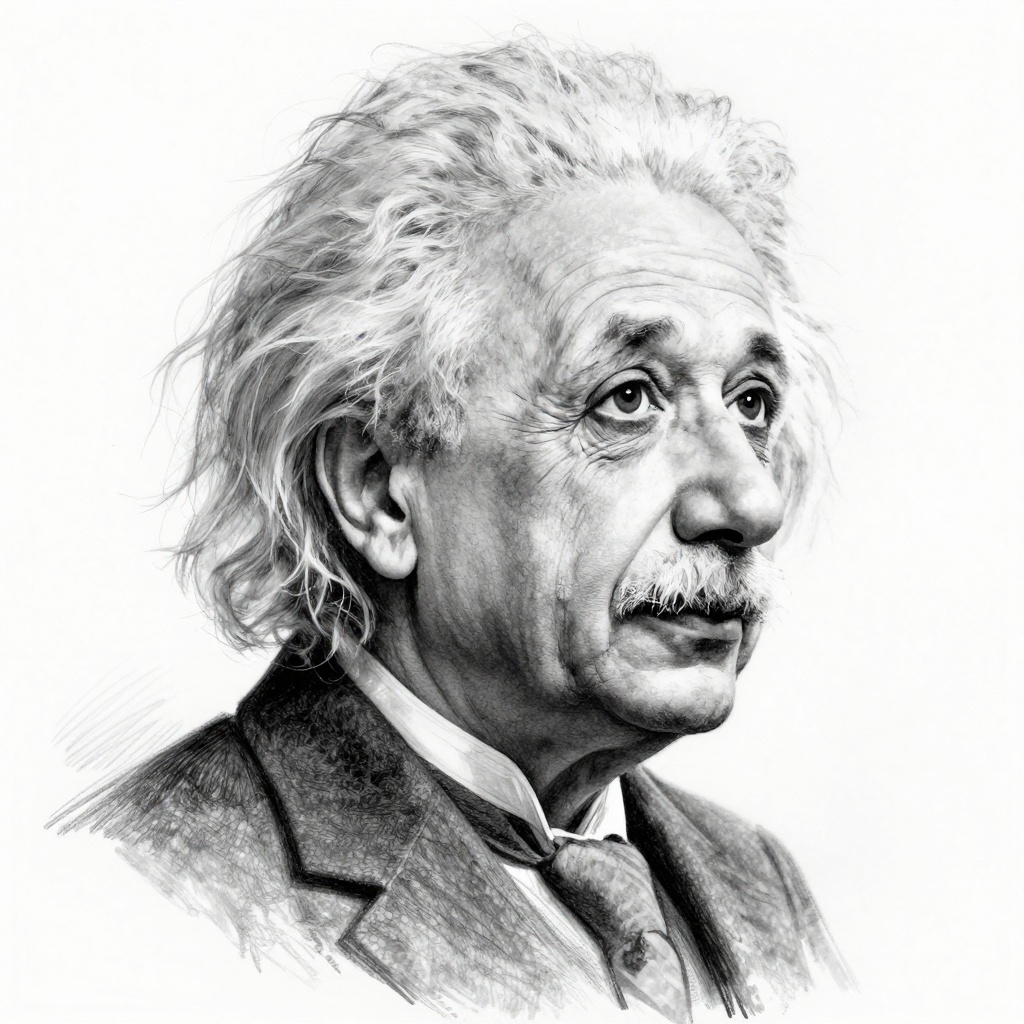
Comments