Quote · Added 13 February 2026
No amount of experimentation can ever prove me right; a single experiment can prove me wrong.
Albert EinsteinThe Faith of a Science Teacher, 2020
No ratings yet
Filed underexperiment·truth·uncertainty
Quote · Added 13 February 2026
Filed underexperiment·truth·uncertainty
This isn't just how science works—it's how growth works. We're all running experiments constantly, testing whether a new routine sticks, whether a relationship is worth the effort, whether a career pivot makes sense. We gather evidence for our choices and feel increasingly confident. But then one unexpected result can crack the whole thing open. A single brutal conversation, a failed attempt, one metric that contradicts everything we believed.
The twist is that most of us operate backwards. We defend our ideas furiously while seeking only evidence that proves us right. We're looking for confirmation, not correction. But Einstein's insight suggests that the real power isn't in piling up wins—it's in staying genuinely curious about what could go wrong. The person who admits "this one failure changes everything" is actually more grounded in reality than someone who's collected a hundred small victories.
What makes this hard is that it requires a kind of humility we're rarely taught. It means holding your beliefs loosely enough that contradictory evidence can actually register, rather than just bounce off. In an age where we're all defending our positions online, maybe the most scientific thing we could do is ask ourselves: what single piece of evidence would actually make me reconsider?
1879–1955·lived 76 years
Albert Einstein was a renowned theoretical physicist known for developing the theory of relativity, one of the two pillars of modern physics. He is best known for his mass-energy equivalence formula E=mc^2 and was awarded the Nobel Prize in Physics in 1921 for his explanation of the photoelectric effect.
Also by Albert Einstein
God does not play dice with the universe.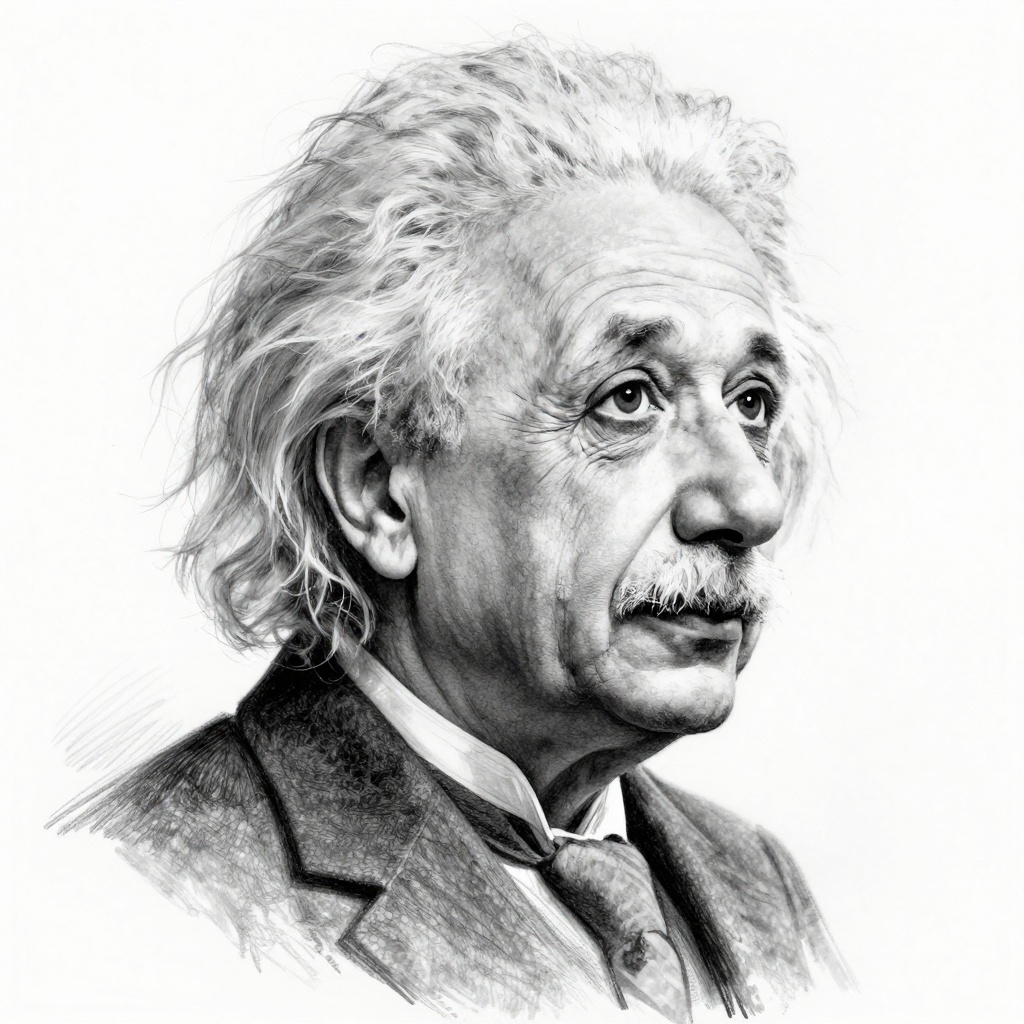
Comments