Quote · Added 28 February 2026
Learn from yesterday, live for today.
No ratings yet
Filed underlearning·mindfulness·growth
Quote · Added 28 February 2026
Filed underlearning·mindfulness·growth
We're oddly bad at this balance. Most of us spend our mental energy either replaying old mistakes—rehearsing conversations, wincing at decisions—or frantically optimizing for a future that hasn't arrived yet. We barely inhabit the actual day we're living. The irony is that yesterday's lessons only matter if we're present enough today to actually apply them. Rushing ahead into tomorrow's worries means we miss the chance to use what we've learned.
The tricky part is that "learn from yesterday" doesn't mean obsess over it. It means extracting the useful signal—what actually worked, what didn't—and then letting it go. The lesson is portable; the regret is dead weight. Once you've learned something, carrying the guilt or replaying the scene just keeps you stuck. That's the actual learning moment: deciding what to take forward and what to release.
Living for today doesn't require abandoning plans or wisdom. It means doing the thing in front of you with your actual attention. Making that phone call fully present. Having that conversation without half your mind three steps ahead. Most of us find that when we're genuinely focused on what's happening now, we make better decisions anyway—partly because we're actually thinking, not just reacting to phantom futures or ghost pasts.
1879–1955·lived 76 years
Albert Einstein was a renowned theoretical physicist known for developing the theory of relativity, one of the two pillars of modern physics. He is best known for his mass-energy equivalence formula E=mc^2 and was awarded the Nobel Prize in Physics in 1921 for his explanation of the photoelectric effect.
Also by Albert Einstein
God does not play dice with the universe.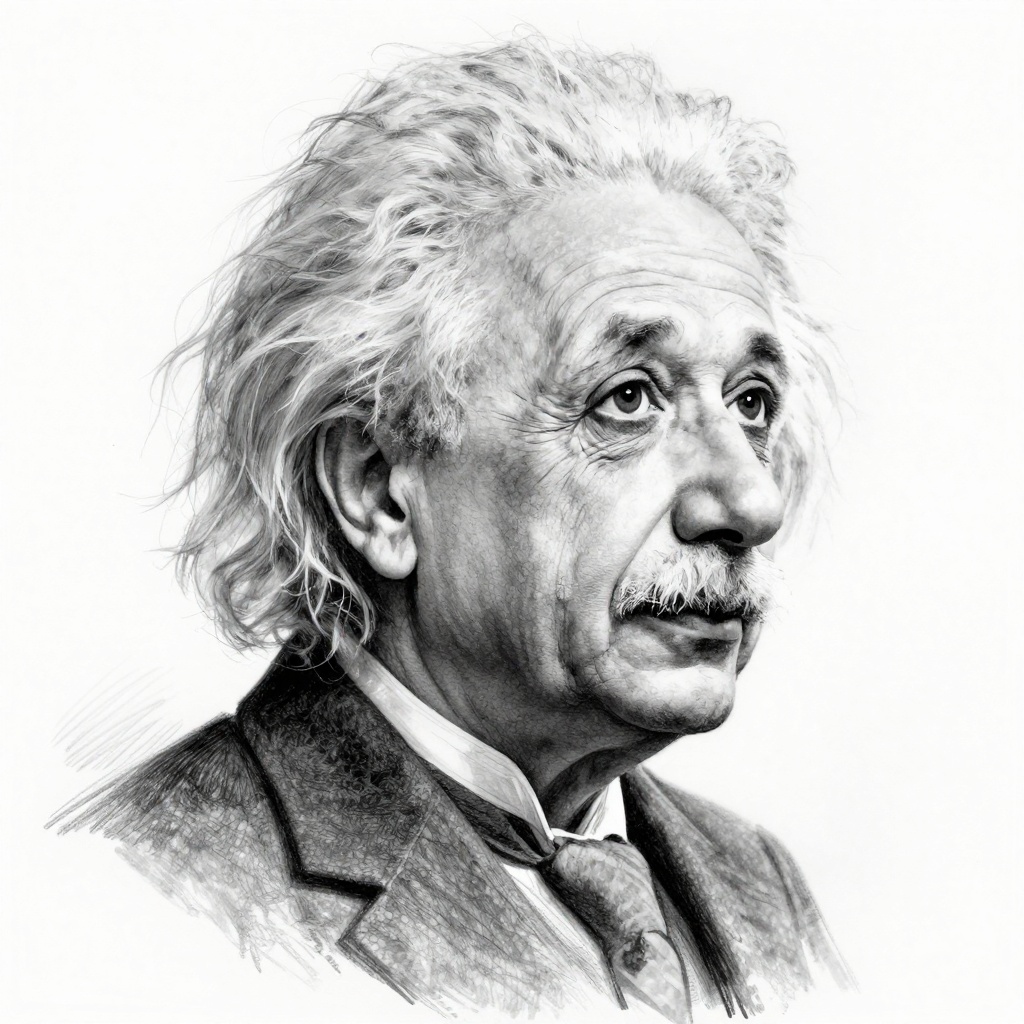
Comments